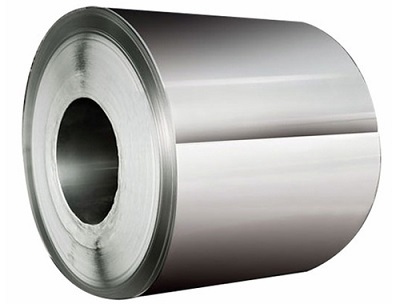
SS 301

ss 301

Type 301 (S30100) is an austenitic stainless steel with a nominal composition of 17% chromium and 7% nickel. The high strengths of this grade of steel in the six available conditions or tempers, its resistance to atmosphere corrosion and its bright, attractive surface make it an excellent choice for decorative structural applications. By varying the chemical composition within the limits set by the ASTM specifications and by temper rolling, a broad range of magnetic and mechanical properties can be obtained for various applications.

Specification

ASTM: A167, A177, A554, A666 UNS: S30100 AMS: 5901

Chemical Composition, %

   Cr  Mn  Si  Ni P  S  C  N
MIN  16.00 --  --  6.00 -- -- --  --
 MAX 18.00  2.00  1.00 8.00 0.045  0.030  0.15  0.10

 For more details click the PDF here

  • Resistance to Corrosion: Type 301 is resistant to a variety of corrosive media. However, the corrosion properties are not as good as the 18-8 chromium-nickel steels. Its susceptibility to carbide precipitation during welding restricts its use in many applications in favour of Types 304 or 304L.
  • Resistance to Oxidation:  Type 301 possesses good resistance to oxidation at temperatures up to 1550°F (840°C). At 1600°F (871°C) it exhibits an oxidation weight gain of 10mg/cm² in 1,000 hours. Therefore, this stainless steel is not suggested for use at 1600°F or above.

Features

  • Provides good strength and ductility when cold worked
  • Has excellent corrosion resistance
  • Well suited to welding and forming and drawing
  • Attractive surface

Applications

  • Aircraft Structural Parts
  • Trailer Bodies
  • Architectural (roof drainage/door frames, etc.)
  • Auto body trim wheel covers
  • Utensils and tableware

Physical Properties

  • Melting Range: 2550-2590°F (1399-1421°C)
  • Specific Gravity: 0.285 lb/in³
  • Density: 0.285 lb/in³
  • Modulus of Elasticity in Tension: 28 x 106 psi (193 GPa)

For more details click the PDF here with all regulations here

Linear Coefficient of Thermal Expansion

    Temperature Range Coefficients
 °C  °F cm/cm .°C  in/in/°F
20 -100 62 - 212 16.6 x 10⁶ 9.2 x 10⁶
50 - 300 68 - 572  17.6 x 10⁶ 9.8 x 10⁶ 
20 - 500 68 - 932 18.6 x 10⁶  10.3 x 10⁶
20 - 700 68 - 1292 19.5 x 10⁶  10.8 x 10⁶ 
20 -871  68 - 1600  19.8 x 10⁶ 11.0 x 10⁶  


Thermal Conductivity

    Temperature Range
°C °F  Microhm-cm   Microhm-in
 20-100  62-212 16.3  9.4
 20-100  62-932  21.4 12.4


Electrical Resistivity (Annealed Condition)

     Temperature Range
 °C  °F Microhm-cm  Microhm-in
 20 68 72  28.3
 100  212  78 30.7
 200  392 86 33.8
400 752 100 39.4
 600  1112  111  43.7
 800  1472  121 47.6
900 1652 126 49.6


Specific Heat

  Temperature Range  
 °C °F  J/Kg°K   Btu/lb/°K
0-100 32-212 500 0.12


Mechanical Properties

Type 301 is used in the annealed and cold rolled conditions. In the work-hardened condition, Type 301 develops higher tensile strength than the other stable austenitic grades. Minimum properties for plate, sheet and strip per ASTM A240 and A666 follow.

Minimum Room Temperature Mechanical Properties, ASTM A240 and A666 Specifications

  Tensile Strenght, Min   0.2% Yield Strenght, Min  Elong. In 2" (50mm)
Condition  Ksi (Mpa)  Ksi   (Mpa) % min.
 Annealed  75  (515)  30  (205) 40
1/4 Hard  125 (862)  75  (517)  25
 1/2 Hard   150 (1,034)  110  (758)  18*
 3/4 Hared  175  (1,207)   135  (931)  12*
 Full hard  185   (1,276)   140  (965)  9*

 For more details click the PDF SS 301 here and with all regulations here


favicon bacd

+(39) 347 051 5328

Italy - Kazakhstan

09.00am to 18.00pm

About

We offer the best and economical solutions, backed by 27+ years of experience and international standards knowledge, echnological changes, and industrial systems.

Marketing Materials

Spring Renovation
Industry
US Gas Company
Construct
Plus Project
Vam Drilling Service
X Project
X Project
Cabrrus Training

Marketing Materials1

Spring Renovation
Industry
US Gas Company
Construct
Plus Project
Vam Drilling Service
ultrasonic sensor
ultrasonic sensor
Cabrrus Training