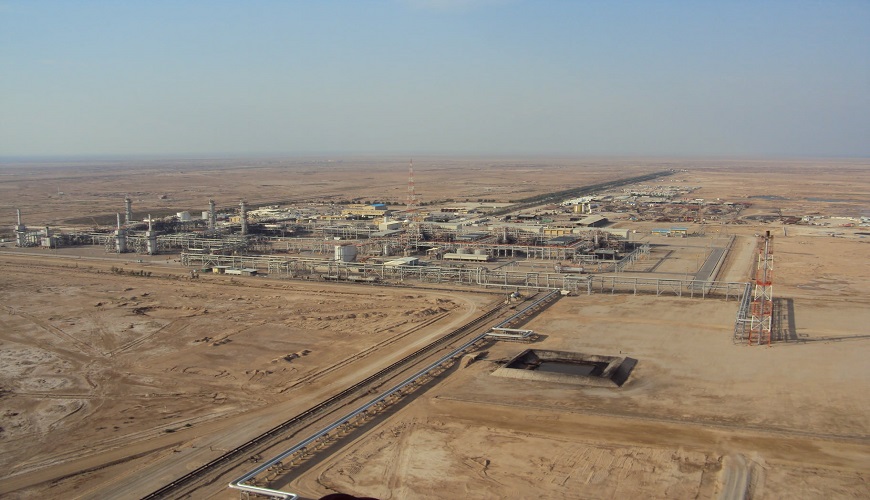
Eni Iran BV Darquain Oil Field
This project was my first one abroad from 2008 to 2012. The project includes three oil trains and three gas trains, including early production. Practically I followed the construction phase, commissio...
Read More
Chemical engineers develop raw materials into a range of useful products. A career in the field will see you creating petrochemicals, medicine and plastics.
As a chemical engineer, you'll be involved in the design and development of a range of products. Your work will focus on changing the chemical, biochemical and physical state of a substance to turn it into something else, such as making plastic from oil.
You'll need to understand how to alter raw materials into required products, while taking into consideration health and safety and cost issues.
You can work in a variety of industries including:
Chemical engineering involves the production and manufacturing of products through chemical processes. This includes designing equipment, systems, and processes for refining raw materials and for mixing, compounding, and processing chemicals.
Chemical engineers translate processes developed in the lab into practical applications for the commercial production of products, and then work to maintain and improve those processes. They rely on the main foundations of engineering: math, physics, and chemistry. Biology also plays an increasingly important role.
Broadly, chemical engineers conceive and design processes involved in chemical manufacturing. The main role of chemical engineers is to design and troubleshoot processes for the production of chemicals, fuels, foods, pharmaceuticals, and biologicals, to name just a few. They are most often employed by large-scale manufacturing plants to maximize productivity and product quality while minimizing costs.
Chemical engineers affect the production of almost every article manufactured on an industrial scale. Some typical tasks include:
Chemical engineering is most often found in large-scale manufacturing plants, where the goal is to maximize productivity and product quality while minimizing costs. The aerospace, automotive, biomedical, electronic, environmental, medical, and military industries use chemical engineering to develop and improve their technical products, such as:
Your daily activities will be extremely diverse and largely depend on the role and the sector in which you work. However, you'll generally need to:
Work closely with process chemists and control engineers to ensure the process plant is set up to provide maximum output levels and efficient running of the production facility
Design plant and equipment configuration so that they can be readily adapted to suit the product range and the process technologies involved, taking environmental and economic aspects into account
Examples of work activities in specific sectors include:
According to a recent salary survey by the Institution of Chemical Engineers (IChemE), graduates earn a median salary of around £28,600.
The median salary for chemical engineers under 25 in the early stage of their careers is about £30,000, rising to a median salary of £54,000 for more experienced engineers.
Salaries for chartered chemical engineers can be significantly higher. For example, the median salary for chartered engineers with an undergraduate degree is around £78,500. Work in certain industries, for example, the finance, insurance and risk sector, or oil and contracting, can attract higher salaries.
Salaries vary according to a range of factors, such as your location - salaries for those working in London and the South East are typically higher than elsewhere. Other factors influencing salary levels include the sector you work in, the size and the nature of the industry, and whether you have chartered status.
Working hours are typically 9am to 5pm, possibly with some extra hours. Jobs in processing and manufacturing may involve shift work, including evenings and weekends.
You'll need a degree in chemical, process or biochemical engineering to become a chemical engineer. To gain chartered engineer status as your career develops, your degree should be accredited by the Institution of Chemical Engineers.
Once you've completed appropriate industrial experience and professional development, you'll then be able to apply to become chartered.
The following degree subjects may be particularly relevant:
Several employers may accept an HND or foundation degree in the physical or applied sciences, although you might work at a lower level to begin with. You'll need to complete further qualifications if you wish to become chartered.
A number of employers and professional organisations offer financial sponsorship for students studying chemical engineering at university. Companies typically advertise sponsorship schemes on their websites.
You'll need to have:
Employers look for graduates with relevant work experience and may favour recruiting candidates from their own work placement schemes. These are generally vacation placements, typically lasting six to twelve weeks, or extended placements, which vary in length from six months to a year. This type of placement can offer the opportunity to work on a more extensive project in industry.
Undertaking a period of work experience will give you the opportunity to put into practice what you're learning on your course, learn about different areas of operation, manage small projects, develop soft skills in areas such as communication and problem-solving, and build up a network of contacts.
Some chemical engineering degree courses include a year out in industry. Many university departments offer help in securing an industrial placement.
Any company involved in the large-scale conversion of raw materials into a product needs chemical engineers.
Employers are as diverse as the products they produce and cover a range of industrial sectors, including:
There are also opportunities at companies that design and manufacture chemical process plants and equipment, although this may require mechanical engineering knowledge.
You could also work at engineering consultancy and contracting firms. In these roles, you're likely to design and commission a new plant or modify an existing one.
Look for job vacancies at:
Of course, as a materials engineer, you need to have a thorough understanding of materials and their components to an atomic level. This will differ according to the materials you are specialising in, but there are many skills that materials engineers need outside of their knowledge of science and mathematics. These less academic skills include:
Combining scientific and engineering knowledge with problem-solving and communication skills, materials engineering is a broad discipline with a range of career opportunities in a wealth of sectors.
Although the exact tasks differ according to industry, material used and the size of the organisation, there are still similarities across the roles. In essence, materials engineers work with different materials to improve their performance and create new materials to improve products and technologies.
This requires an understanding of the properties and behaviours of different substances, raw materials and products. Materials engineers will often specialise in certain materials including ceramics, composites, plastics, and metals.
As well as improving the durability, strength or other desirable properties of an item, materials engineers consider factors such as cost efficiencies and ease of processing and production.
The broad nature of the skills required for materials engineering means that it is a profession that is in demand in a range of industries, organisations and agencies.





We offer the best and economical solutions, backed by 27+ years of experience and international standards knowledge, echnological changes, and industrial systems.


