
Flange Information
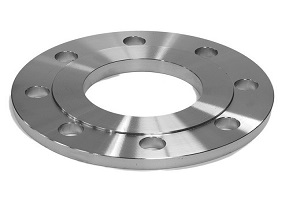
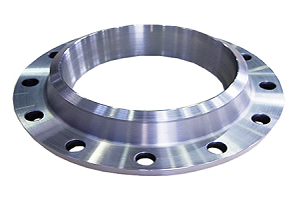
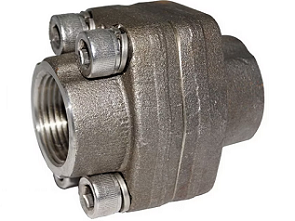
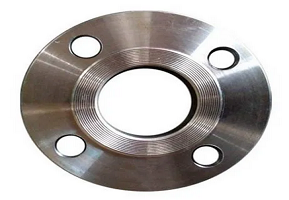
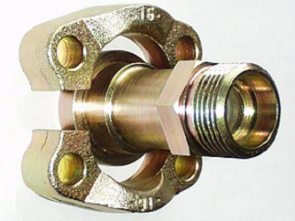
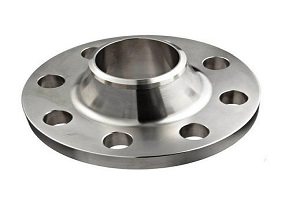
Flanges are important components of most mechanical systems. They offer a mechanical means of joining or assembling parts such as pipes, fittings, and valves. Besides, they can also be disassembled when used, making them ideal for use with systems that would require maintenance.
Understanding Flanges
Understanding flanges is essential for anyone working with piping systems, as they play a crucial role in the system's overall functionality and safety. Flanges serve as connection points that allow for easy assembly, disassembly, inspection, and maintenance of various pipeline components. Knowledge of flange standards, such as ANSI, ASME, and DIN, helps ensure compatibility across different systems and applications. Each flange has specific pressure ratings, known as classes, which denote the maximum pressure it can withstand, ranging from low to high-pressure environments. Selecting the appropriate flange requires assessing factors such as material compatibility, pressure, temperature conditions, and environmental exposure. Proper understanding and selection can prevent potential issues such as leaks, corrosion, and mechanical failure, making flange knowledge integral to the successful operation of piping networks
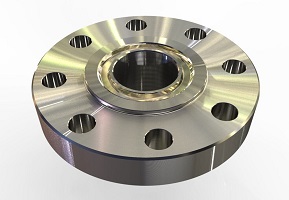
Ring Joints and Spiral Gaskets
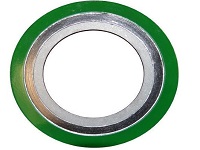
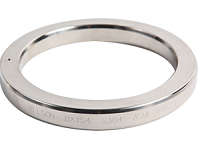
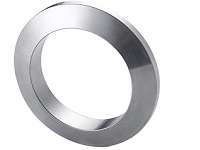
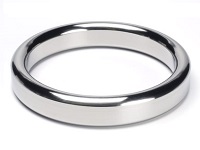
Bolts Torque Sequence and Flange working Pressure
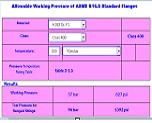
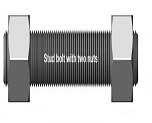
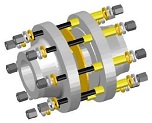
In Australia the BS and AS flange standards are essentially the same but have been metricated. Consequently metric sizes are stated as ‘DN’ (Nominal Diameter) in mm. Equivalent imperial sizing is rounded to the nearest multiple of 25mm (for 2” and over) as below. However the actual dimensions and bore sizes have not changed. ‘NB’ (Nominal Bore) is also sometimes used when referring to valve sizes.
|
Metric to Imperial ASME Pipe & Valve Size Conversion Chart
The most common flanging used in Australia in oil, gas and mining is now ANSI flanging to ANSI B16.5. However in general industrial, commercial and waste/water industries AS2129 Table flanging is the most common. Increasingly European PN rated flanges are also specified in BS4504 as well as AS4331 and EN 1092-1. BS4504 is now obsolete and is replaced by EN 1092 which is listed in British Standards as BS-EN 1092. EN 1092 evolved from DIN 2501 which became part of ISO 7005, then EN 1092 was created as the standard for DIN based flanges. (BS4504 flanges were generally the same as the old DIN 2501 specification, but the new EN 1092 standard covers a wider range). EN 1092-1 is for steel flanges, EN 1092-2 is for iron flanges, EN 1092-3 is for alloy flanges, EN 1092-4 is for aluminium alloy flanges. PN stands for Nominal Pressure and roughly equates to the number of bar i.e. the cold working pressure of PN10 is 10 bar. Ratings range from PN2.5 to PN420. The latest Australian standard AS4331 references this rating system (PN2.5 to PN420). AS4331 is a reproduction of ISO 7005 which is based on the American and European flange systems PN20, PN50, PN 110, PN 150, PN 260 and PN 420 steel flanges are “designed to be interchangeable” with flanges to American standards ANSI/ASME B16.5 and MSS SP44; they are not identical but are “deemed to comply” with dimensions specified in ANSI/ASME B16.5 and MSS SP44 as appropriate.
- Class 150: PN 20
- Class 300: PN 50
- Class 600: PN 110
- Class 900: PN 150
- Class 1500: PN 260
- Class 2500: PN 420
ISO 7005 (which AS4331 is a reproduction of) also includes European DIN flanges PN6/10/16/25/40 which were previously DIN 2501-1 and BS4504. These flanges are the same as EN1092 but EN1092 also includes higher rated DIN based flanges. Consequently in Australia most users simply just reference to original ASME B16.5 standards as this is already in use in Australia for the Oil, Gas and Mining industries and in fact in pressures above table E it has been the predominant standard in use for the last 30 years. However, piping engineers must refer to the new AS standard AS4331 for interpretations and specification requirements. Note in the case of AS4331.1/ISO 7005-1 ANSI equivalents they are not absolutely identical to ANSI but “deemed to comply and are designed to be interchangeable”.
Piping Class Ratings based on ASME B16.5 and corresponding PN rating
| Flange Class | 150 | 300 | 400 | 600 | 900 | 1500 | 2500 |
| Flange Pressure Nominal, PN | 20 | 50 | 68 | 100 | 150 | 250 | 420 |
PN is the rating designator followed by a designation number indicating the approximate pressure rating in bars.
PN ratings do not provide a proportional relationship between different PN numbers, whereas class numbers do.
For more details about Flange click here
API6A
API defines the strength characteristics of materials employed in the flanges based on their tensile and yield strength at ambient temperature. Materials are grouped into four strength designations, 36K, 45K, 60K & 75K and API identifies the strength designation associated with different flange ratings. Thus for 5000, 10000 and 15000 psig rated flanges API requires that materials of strength designations 45K, 60K and 75K respectively are employed. Materials commonly used in sub-sea applications are carbon steels, A694 F52 and F65, as well as duplex and super duplex stainless steels A182 F51 and F55. These materials have strength designations of 36K, 45K, 60K and 75K respectively. Thus it can be seen that strictly only flanges in super duplex stainless steel are of sufficient strength to be used in 15000 psig rated flanges and that A694 F65 can only be used for flanges rated at 5000 psig. Use of a weaker material will obviously reduce flange capability.
API defines the strength characteristics of materials employed in the flanges based on their tensile and yield strength at ambient temperature. Materials are grouped into four strength designations, 36K, 45K, 60K & 75K and API identifies the strength designation associated with different flange ratings. Thus for 5000, 10000 and 15000 psig rated flanges API requires that materials of strength designations 45K, 60K and 75K respectively are employed. Materials commonly used in sub-sea applications are carbon steels, A694 F52 and F65, as well as duplex and super duplex stainless steels A182 F51 and F55. These materials have strength designations of 36K, 45K, 60K and 75K respectively. Thus it can be seen that strictly only flanges in super duplex stainless steel are of sufficient strength to be used in 15000 psig rated flanges and that A694 F65 can only be used for flanges rated at 5000 psig. Use of a weaker material will obviously reduce flange capability.
Flanges in duplex and super duplex stainless steels installed sub-sea are susceptible to Hydrogen Induced Stress Cracking (HISC) if afforded cathodic protection. To minimise the risk of HISC reduced stress limits are imposed in DNV-RP-F112. These limits depend principally on the austenite spacing found in a micrograph of the material and the location under consideration with respect to the weld between the flange hub and line pipe.
In general terms DNV-RP-F112 requires that the membrane plus bending stress is limited to approximately two thirds of the material yield strength at temperature. Following rules in ASME Section VIII Division 2 Section 4.16 the allowable longitudinal hub stress is equal to the yield strength of the material when API stress limits are adopted. The DNV recommended practice reduces the allowable stress by one third. It is also necessary to account for the additional bending stress at the hub to pipe weld as a result of misalignment, including that which is within the tolerance prescribed in the adopted piping code, which will reduce flange capability still further.
It can therefore be seen that these three factors play a significant part in reducing the capability of API flanges below that given in API 6AF, particularly for those in duplex and super duplex stainless steels when used sub-sea. While code calculations can be used, the use of FE stress analysis is recommended to maximise flange capability particularly where stress limits prescribed in DNV-RP-F112, which are based on linearised stresses from such analyses, are to be satisfied.
ANSI/ASME
Understanding ANSI Code
The American National Standards Institute, abbreviated as ANSI, was founded in 1918 and mainly focuses on overseeing standards for products, processes, systems, and services offered in the United States. The organization is made up of members from government agencies, companies, corporations and organizations, and scholars from a variety of academic fields.
ANSI works to solidify the position of the US in the global market by establishing standards for products and services. Their goal is to ensure that the features and performance levels of items created in the US are consistent and up to par.
Additionally, ANSI accredits organizations that produce products and train personnel to meet their established standards and requirements. They consistently monitor that products and services are meeting their standards, and update these performance requirements as needed. They also play a role in some initiatives related to environmental conservation
Understanding ASME Code
ASME stands for American Society of Mechanical Engineers and serves as the leading international developer of standards and codes used to regulate the mechanical engineering industry. It is a private organization dedicated to promoting art, science and multidisciplinary engineering, and encouraging collaboration across engineering disciplines. ASME is involved in various periodicals and industry publications, conferences, and professional development and education courses.
Founded decades before ANSI in 1880, ASME is one of the oldest standards developing organizations in existence. The society was established after numerous devastating steam boiler pressure vessel failures occurred, and is focused on creating codes and standards for mechanical equipment.
Within the industrial heating industry specifically, ASME code – also referred to as ASME Boiler & Pressure Vessel Code – is the established standard that regulates the design, development and manufacturing of boilers utilized in a variety of industries.
Difference between ANSI and ASME
While at first glance ANSI and ASME seem to play very similar roles in the industry (and they are both 4-letter acronyms that start with ‘A’), there are actually a number of things that set them apart, as can be seen from the descriptions above.
Here are a few important distinctions that set the two apart:
- ANSI establishes and accredits performance and quality standards for products and services in a wide variety of sectors, while ASME is primarily focused on boilers and pressure vessels.
- ANSI is focused on strengthening the US’s market position, while ASME is focused on developing solutions to mechanical engineering problems and safety issues.
- ASME was founded decades before ANSI came into existence.
Why Choosing Us
27 Years of Experience
Over 27 years of diversified experience in the Oil and Gas field, demonstrating strong leadership in delivering complex projects, with a focus on safety, quality, quantity, and timely completion.
Award Winning
We have been committed to quality assurance and this has allowed us to stay in the market for so many years. Our well-trained QA and QC team ensure that our products meet the highest standards.
Customers Recognition
We receive a lot of positive feedback from our clients. In an increasingly connected world where everyone's opinions are shared with a click, reviews are more powerful than ever. For us reputation is the main thing.
89+ Satisfied Customers
As a professional flange finder, we are in contact with many manufacturers to find the best solution for your service. With high quality, fast delivery, and cost-effectiveness, we can meet the manufacturing and customization of all flange types.
Honest & Dependable
We work with integrity, staying committed to our client's needs and providing reliable services always. Since our establishment in 2008, we have been committed to offering top-notch services, all documented by our customers.
Professional Workers
We always look for long-term relationships with our clients and take their needs seriously. Many of our clients have worked with us for many years and still choose us. We always aim for a sustainable business model that benefits both sides
Our Global Partners




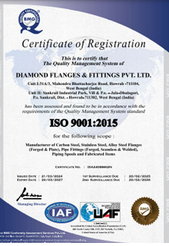
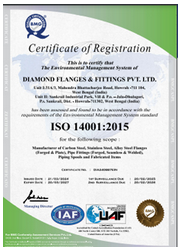
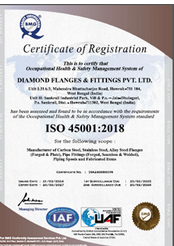
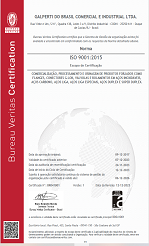
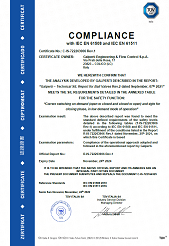
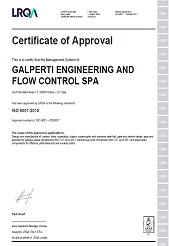
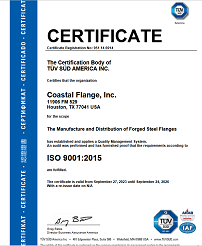
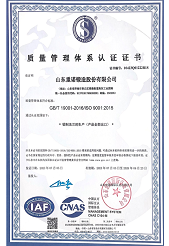
Company ISO Certification
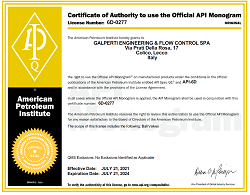
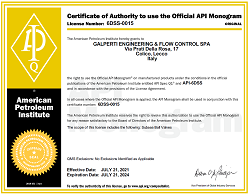
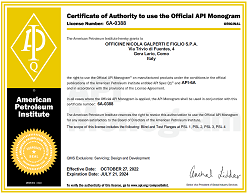
API Certification

+(39) 347 051 5328
Italy - Kazakhstan


09.00am to 18.00pm
About
We offer the best and economical solutions, backed by 27+ years of experience and international standards knowledge, echnological changes, and industrial systems.
Our Services
Marketing Materials


Marketing Materials1


