

















What Makes
us Special?
0
Sucessful Projects
0
Satisfied Clients
0
Awards Won

In physics, we usually need to convert units from one standard to another, such as mile to meter, hour to second, meter to an inch, feet to meter, kilogram to the gram, and so on. You'll need to know how to convert meter to the inch, a kilometer to a mile, and so on, such as 1m = 39.37in or 1km = 0.6214mi.
When the quantity expressed is not in our familiar format, such as when we want to convert units to SI units, unit conversions are required (in physics, we always convert units to SI units). We may not be familiar with the value of a physical quantity when expressed in a different unit format. Instead, you might want to add the values in a calculation that involves another unit. In this article, we have provided different conversion units for measuring different parameters. Let us start by understanding the conversion of units in the coming section.
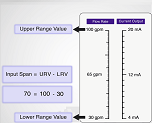
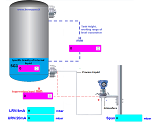
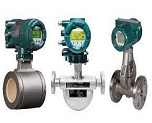
Mechanics and instrumentation heavily rely on calculations for everything from basic measurements (like force, stress, flow) to complex system design, using math (calculus, algebra) and software (MATLAB, ANSYS) to process sensor data, determine physical properties (density, energy flow), ensure accuracy, and design control loops for accurate process management
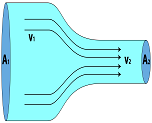
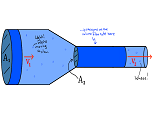
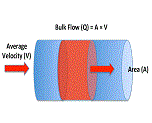
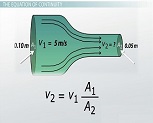
Volume and Flow Calculation determines how much substance (liquid, gas, vehicles) moves over time, using formulas like Volumetric Flow Rate (Q) = Area (A) × Velocity (v) or Q = Volume (V) / Time (t), and is essential in engineering, fluid dynamics, and traffic management to quantify movement, predict capacity, and size equipment. It links the quantity (volume) with the rate (flow), often expressed in units like m³/s or vehicles/hour, showing how speed and pipe size (or road width) affect the total amount moved.
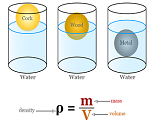
Density calculation formula for solids, liquids, and gas molecules is the measurement of mass per unit volume at a given temperature and pressure. In chemistry or physics, density is expressed by the symbol ρ or D. Mathematically density is expressed by the formula, ρ = m/V, where m = mass of the substance and V = volume.
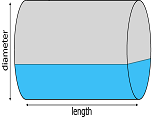
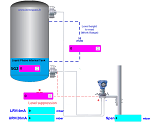
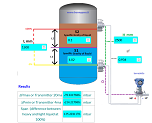
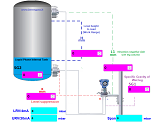
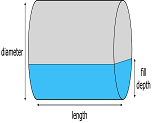
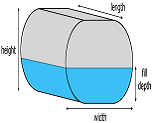
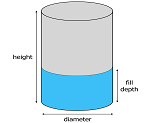
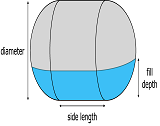
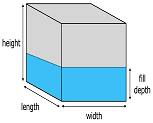
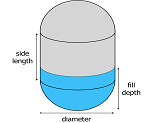
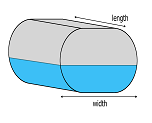
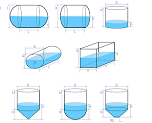
A Volume Tank Calculator is an online tool or app that quickly determines the capacity (total volume) and liquid volume (how much liquid is in it) for various tank shapes (like cylindrical, rectangular, spherical, elliptical) by inputting dimensions (length, width, height, radius, fill level). It uses mathematical formulas to convert measurements (e.g., feet, meters) into volume units (e.g., gallons, cubic meters), essential for construction, fuel storage, water systems, and more.
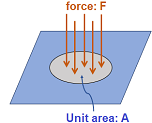
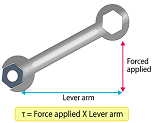
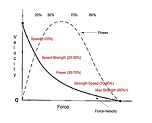
Some of the petrolheads might be scoffing right now probably thinking what’s the point of explaining torque but we all have things we can learn. So torque, it is the rotational force that an engine can produce. That’s pretty much it. The more torque you have the more power in the wheels but the less speed you get. However, it doesn’t mean more torque equals a slow car. The more torque you have the faster acceleration but lower speed overall. Take the case of driving a car uphill. You usually use lower gears because they have more torque and thus more power. They however don’t have high speeds. All this is always generated by pressure, which is proportional to the surface exposed to the fluid
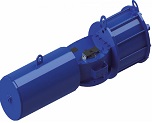
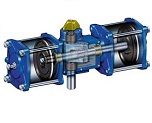
The force calculation in a pneumatic cylinder is an essential part of its design and selection.
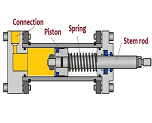
Pneumatic cylinders are one of the most relevant elements of a pneumatic system. They contain a rod, which is the most stressed component as its small diameter supports the force exerted by the whole cylinder. Therefore, calculating the pneumatic cylinder force output is mandatory to avoid mechanical failure.
In this section, we offer you the automatic calculator to find the real force (pressure) which is required to operate a piston inside a cylinder.
People always seem to consider Energy and Power to be the same. They even make the mistake of thinking ‘Energy and Power’ as synonyms. Well, one cannot even be blamed of finding a similarity between Energy and Power as they are interrelated.
It is not that difficult to distinguish between Energy and power. While energy is the ability to do work, Power is its measurement, which calculates the time by which the energy has been used. Well, Energy is what one delivers and Power is the rate at which it is delivered.
Energy is the capability to do something. For example, energy is used for moving the car or heating the home or lighting the night or even flying an aeroplane. The basic unit of Energy is Joule but normally it is termed in watt-hour or kilowatt-hour. Energy appears in many forms and is often expressed in multiple units.
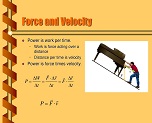
Coming to power, it is rate of Energy per unit of time. Power is the capacity of energy, which is being used. In more simple terms, power is defined as the rate of doing work. Power finds it use in mechanical applications, heat applications, electrical applications and several other areas.
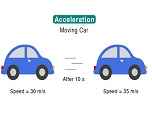
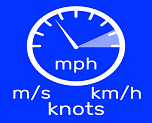
Speed is how fast something moves (distance over time, e.g., 60 mph), a scalar with magnitude only, while acceleration is the rate at which velocity changes (speeding up, slowing down, or changing direction), a vector quantity that includes both magnitude and direction. In short, speed measures how quickly distance is covered, and acceleration measures how quickly that speed (or direction) changes over time.
Length is the measurement of an object's extent (e.g., a ruler's length), while distance is the space or path between two separate points or objects (e.g., how far apart your house and work are), though they are often used interchangeably and measured in the same units like meters or feet. Think of length as an intrinsic property of one thing, and distance as the separation between things.
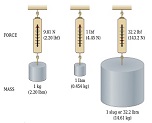
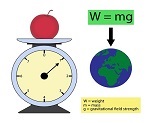
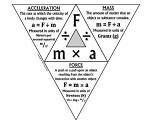
Force calculation primarily uses Newton's Second Law (F=ma), where force (F) equals mass (m) times acceleration (a), measured in Newtons (N). For gravity, F=mg (where 'g' is gravity). When multiple forces act, you find the net force by summing vectorially (e.g., adding/subtracting horizontal/vertical components) to see the overall effect.
Basic Linear Force (F=ma)
For Business: For inquiries, please fill out our feedback form or call number - (+39) 347-051-5328.



We offer the best and economical solutions, backed by 27+ years of experience and international standards knowledge, echnological changes, and industrial systems.


