
|
SS 305
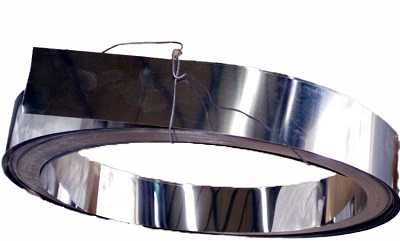
Type 305 is a chromium-nickel austenitic stainless steel with a low rate of work hardening due to the elevated nickel content. This low rate of work hardening makes this grade well suited for multi-stage deep drawing applications without process annealing where 304/304L may suffer from cracking issues. Type 305 is non-magnetic in the annealed and cold worked conditions and has corrosion resistance similar to 304/304L stainless steel. Chemical Composition, %
For more details click the PDF here Data are typical, are provided for informational purposes, and should not be construed as maximum or minimum values for specification or for final design, or for a particular use or application. Applications of Stainless Steel SS 305 The following are the major applications of grade 305 stainless steel:
Physical Properties
For more details click the PDF here with all regulations here Linear Coefficient of Thermal Expansion
Thermal Conductivity 212°F (100°C)
Electrical Resistivity (Annealed Condition)
Specific Heat
Heat Resistance of Stainless Steel SS 305 305 Stainless Steel has excellent heat-resisting properties making it suitable for use in applications that require exposure to extreme temperatures or where there’s a risk of oxidation or scaling at elevated temperatures up to 1500°F (816°C). It does not respond well to hardening by heat treatment but can be hardened by cold working due to its higher levels of carbon compared to other 300 series stainless steels, such as 304 SS, which increases its strength without sacrificing any formability or ductility. Heat-treated 305 stainless steel should be done slowly at temperatures between 1450-1550°F (790-845°C). Hot Working of Stainless Steel SS 305 Hot working of grade 305 stainless steel can be done at 1149 to 1260°C (2100 to 2300°F). This process is followed by rapid cooling to obtain maximum corrosion resistance. Heat Treatment of Stainless Steel SS 305 305 stainless steel is a type of austenitic stainless steel that has excellent corrosion resistance and strength. Heat treatment of 305 stainless steel involves subjecting it to high temperatures for a short period, allowing it to cool rapidly, and then performing a stress relief process at a very high temperature. During heat treatment, the microstructure of 305 stainless steel changes which imparts superior properties like wear resistance, hardness and ductility. By controlling the heat-treatment process, the desired properties can be achieved – making this alloy suitable for various applications such as rocket engine parts, nuclear power plants and aerospace industry components. All in all, heat treatment of 305 stainless steel is essential for ensuring its longevity and performance in extreme conditions.
Mechanical Properties of Stainless Steel SS 305 Minimum mechanical properties for annealed Types 302, 304, 304L, and 305 austenitic stainless steel plate, sheet and strip as required by ASTM specifications A 240 and ASME specification SA-240 are shown below.
For more details click the PDF SS 305 here and with all regulations here Corrosion Resistance of Stainless Steel SS 305 The Types 302, 304, 304L and 305 austenitic stainless steels provide useful resistance to corrosion on a wide range of moderately oxidizing to moderately reducing environments. The alloys are used widely in equipment and utensils for processing and handling of food, beverages and dairy products. Heat exchangers, piping, tanks and other process equipment in contact with fresh water also utilize these alloys. Building facades and other architectural and structural applications exposed to non-marine atmospheres also heavily utilize the 18-8 alloys. In addition, a large variety of applications involve household and industrial chemicals. The 18 to 19 percent of chromium which these alloys contain provides resistance to oxidizing environments such as dilute nitric acid. These alloys are also resistant to moderately aggressive organic acids such as acetic, and reducing acids such as phosphoric. The 9 to 11 percent of nickel contained by these 18-8 alloys assists in providing resistance to moderately reducing environments. The more highly reducing environments such as boiling dilute hydrochloric and sulfuric acids are shown to be too aggressive for these materials. Boiling 50 percent caustic is likewise too aggressive. In some cases, the low carbon Type 304L alloy may show a lower corrosion rate than the higher carbon Type 304 alloy. The data for formic acid, sulfuric acid and sodium hydroxide illustrate this. Otherwise, the Types 302, 304, 304L and 305 alloys may be considered to perform equally in most corrosive environments. A notable exception is in environments sufficiently corrosive to cause intergranular corrosion of welds and heat-affected zones on susceptible alloys. The Type 304L alloy is preferred for use in such media in the welded condition since the lower carbon level enhances resistance to intergranular corrosion. Intergranular Corrosion Exposure of the 18-8 austenitic stainless steels to temperatures in the 800°F to 1500°F (427° to 816°C) range may cause precipitation of chromium carbides in grain boundaries. Such steels are “sensitized” and subject to intergranular corrosion when exposed to aggressive environments. The carbon content of Types 302, 304 and 305 may allow sensitization to occur from thermal conditions experienced by autogenous welds are heat-affected zones of welds. For this reason, the low carbon Type 304L alloy is preferred for applications in which the material is put into service in the as-welded condition. Low carbon content extends the time necessary to precipitate a harmful level of chromium carbides but does not eliminate the precipitation reaction for material held for long times in the precipitation temperature range. Stress Corrosion Cracking The Type 302, 304, 304L and 305 alloys are the most susceptible of the austenitic stainless steels to stress corrosion cracking in halides because of their relatively low nickel content. Conditions which cause stress corrosion cracking are (1) the presence of halide ions (generally chloride), (2) residual tensile stresses, and (3) temperatures in excess of about 120°F (49°C). Stresses may result from cold deformation of the alloy during forming, or by roller expanding tubes into tubesheets, or by welding operations which produce stresses from the thermal cycles used. Stress levels may be reduced by annealing or stress-relieving heat treatments following deformation, thereby reducing sensitivity to halide stress corrosion cracking. The low carbon Type 304L material is the better choice for service in the stress-relieved condition in environments which might cause intergranular corrosion. Machinability Grade 305 stainless steel can be machined through slow speeds and heavy feeds, all this to combat the material's tendency to glaze during machining. Welding of Stainless Steel SS 305
The Austenitic stainless steels are considered to be the most weldable of the high-alloy steels and can be welded by all fusion and resistance welding processes. Types 302, 304, 304L and 305 alloys are typical of the austenitic stainless steels. Two important considerations in producing weld joints in the austenitic stainless steels are: (1) preservation of corrosion resistance, and (2) avoidance of cracking. A temperature gradient is produced in the material being welded which ranges from above the melting temperature in the molten pool to ambient temperature at some distance from the weld. The higher the carbon level of the material being welded, the greater the likelihood that the welding thermal cycle will result in chromium carbide precipitation which is detrimental to corrosion resistance. To provide material at the best level of corrosion resistance, low carbon material (Type 304L) should be used for material put in service in the welded condition. Alternately, full annealing dissolves the chromium carbide and restores a high level of corrosion resistance to the standard carbon content materials. Weld metal with a fully austenitic structure is more susceptible to cracking during the welding operation. For this reason, Types 302, 304, and 304L alloys are designed to resolidify with a small amount of ferrite to minimize cracking susceptibility. Type 305, however, contains virtually no ferrite on solidification and is more sensitive to hot cracking upon welding than the other alloys. |
||||||||||||||||||||||||||||||||||||||||||||||||||||||||||||||||||||||||||||||||||||||||||||||||||

+(39) 347 051 5328
Italy - Kazakhstan


09.00am to 18.00pm
About
We offer the best and economical solutions, backed by 27+ years of experience and international standards knowledge, echnological changes, and industrial systems.
Our Services
Marketing Materials


Marketing Materials1


