
|
SS 316 - SS 316L
Type 316 is an austenitic chromium-nickel stainless steel containing molybdenum. This addition increases general corrosion resistance, improves resistance to pitting from chloride ion solutions, and provides increased strength at elevated temperatures. Properties are similar to those of Type 304 except that this alloy is somewhat stronger at elevated temperatures. Corrosion resistance is improved, particularly against sulfuric, hydrochloric, acetic, formic and tartaric acids; acid sulfates and alkaline chlorides. In addition to excellent corrosion resistance and strength properties, the Types 316, 316L, 317, and 317L Cr-Ni-Mo alloys also provide excellent fabricability and formability which are typical of the austenitic stainless steels. Type 316 Stainless Steel is widely used in applications requiring corrosion resistance superior to Type 304, or good elevated temperature strength. Typical uses include exhaust manifolds, furnace parts, heat exchangers, Jet engine parts, pharmaceutical once photographic equipment, valve and pump trím, chemìcal equipment, digesters, tank, evaporators, pulp, paper and textíle processing equipment, parts exposed to marine atmospheres and tubìng. Type 316L is used extensively for weldments where its immunity to carbide precipitation due to welding assures optimum corrosion resìsiance. Difference between SS316 and SS316L Both AISI 316 vs 316L stainless steel are molybdenum (Mo) containing austenitic stainless steel grades. The main difference between 316 and 316L stainless steel is the level of carbon content, weldability, corrosion resistance and mechanical properties. SS316 has a 0.08% max carbon content while SS316L (UNS S31603) only has a maximum 0.03% carbon content. Since SS 316L has a much lower carbon content than SS316, the welding of 316L stainless steel is better than SS 316. In addition, AISI 316 might lead to stress-corrosion cracking or dimensional instability in service after welding, so post-weld heat treatment is required for stress relief to reduce intergranular corrosion or stress-assisted intergranular corrosion, while SS316L generally does not have these problems. SS316L can be used in applications where annealing cannot be performed after welding and maximum corrosion resistance is required. AISI 316 (UNS S31600) and 316L (UNS S31603) are US steel grades, SUS 316 and SUS 316L are Japanese stainless steel grades. Because of the additional molybdenum in this steel, the overall performance of the steel is better than that of AISI 310 and AISI 304 stainless steel. SS316 also has good resistance to chloride attack and is therefore commonly used in the marine environment. Specification
Chemical Composition, %
For more details click the PDF here Applications of Stainless Steel 316 Series
Physical Properties
For more details click the PDF here with all regulations here Linear Coefficient of Thermal Expansion
Thermal Conductivity 212°F (100°C)
Electrical Resistivity ( Value at 68°F (20°C)
Specific Heat
Heat Resistance Good oxidation resistance in intermittent service to 870 °C and in continuous service to 925 °C. Continuous use of 316 in the 425-860 °C range is not recommended if subsequent aqueous corrosion resistance is important. Grade 316L is more resistant to carbide precipitation and can be used in the above temperature range. Grade 316H has higher strength at elevated temperatures and is sometimes used for structural and pressure-containing applications at temperatures above about 500 °C. Hot and Cold Working 316L stainless steel can be hot worked using the most common hot working techniques. Optimal hot working temperatures should be in the range 1150-1260 °C, and certainly should not be less than 930 °C. Post-work annealing should be carried out to induce maximum corrosion resistance. Most common cold working operations such as shearing, drawing, and stamping can be performed on 316L stainless steel. Post-work annealing should be carried out to remove internal stresses. Heat Treatment Solution Treatment (Annealing) - Heat to 1010-1120 °C and cool rapidly. These grades cannot be hardened by thermal treatment. Fabrication of Stainless Steel 316
Mechanical Properties of Stainless Steel 316
For more details click the PDF SS 316 - SS316L here and with all regulations here Annealed sheet mechanical properties
High-temperature tensile properties
Creep and rupture properties
Sub-zero temperature properties
Prolong High-temperature exposure effect on mechanical properties
Corrosion Resistance of Stainless Steel 316 In different operations, alloy 316/316L has excellent corrosion resistance over steel 304/304L. The process conditions that do not corrode alloy 304/304L do not cause corrosion of this steel type except oxidizing acids like nitric acid however stainless steels comprising of molybdenum are minor resistant. Steel grade 316L offers good performance in the sulfur conditions that occur in pulp and paper commerce. It can be utilized in high contents at temperatures of about 120°F. It offers excellent resistance to pitting corrosion in phosphoric and acetic acid. It can be utilized in the food and medical processing industries to handle hot organic and fatty acids to reduce contamination. Corrosion rate in hydrofluoric acid
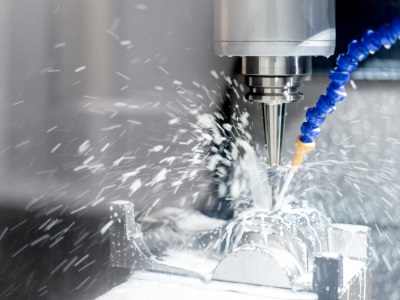
Stainless steel type 316 offers good functionality in fresh water service in fact in the presence of concentrated chlorides. It has superior corrosion resistance in seawater conditions. The high concentration of molybdenum ensures outstanding pitting resistance in chloride conditions. In several cases, the corrosion resistance steel 316 and 316L show similar performance. But to avoid intergranular corrosion attack of welds and heat affected zone, alloy 316L should be utilized that has a lower content of carbon. Steel type 316/316L can be conveniently welded and processed through standard fabrication Machinability 316 improved machinability is slightly more difficult to machine than improved machinability 304 grade. More difficult to machine than 303 free machining grade and most of the 400 series stainless steels. It has a typical machinability rating around 50% - 55% of free machining (S1214) mild steel. Due to the high work hardening rate of this grade, cutting or drilling tools etc. must be kept sharp at all times and not cause unnecessary work hardening of the surface etc. All machining should be carried out as per machine manufacturers recommendations for suitable tool types, feeds and speeds Welding of Stainless Steel 316 316/3161, types have good Welding characteristics and are suited to all standard welding methods. Either matching or slightly over-alloyed filler wires (e.g. ERW 309Mo) should be used For maximum corrosion resistance, regular 316 should be annealed after welding to dissolve any chromium carbides Which may have precipitated. The Weld discoloratìon should be removed by pickling and passivation to restore maximum corrosion resistance. Conclusion In the ideal process for machining 304 and 316 stainless steels, there are several ways to make all 300 series stainless steels easier to machine. Heat treatment can be performed to make the metal easier to process, for example, normalizing heats the steel to a temperature higher than the annealing temperature. Keeping it long enough to produce smaller austenite grains improves the machinability of the steel. These types of steel have low thermal conductivity. Be careful not to overheat the surface, which can also cause distortion that is difficult to repair. Use oil lubrication to reduce tool wear and cool objects. You can use mineral oil or water-soluble emulsified oil, and use cemented carbide tools to work at high speed. |
|||||||||||||||||||||||||||||||||||||||||||||||||||||||||||||||||||||||||||||||||||||||||||||||||||||||||||||||||||||||||||||||||||||||||||||||||||||||||||||||||||||||||||||||||||||||||||||||||||||||||||||||||||||||||||||||||||||||||||||||||||||||||||||||||||||||||||||||||||||||||||||||||||||||||||||||||||||||||||||||||||||||||||||||||||||||||||||||||||||||||||||||||||||||||||||||||||||||||||||||||||||||||||||||||||||||||||||||||||||||||||||||||||||||||||||||||||||||||||||||||||||||||||||||

+(39) 347 051 5328
Italy - Kazakhstan


09.00am to 18.00pm
About
We offer the best and economical solutions, backed by 27+ years of experience and international standards knowledge, echnological changes, and industrial systems.
Our Services
Marketing Materials


Marketing Materials1


