|
SS 410 - 410S
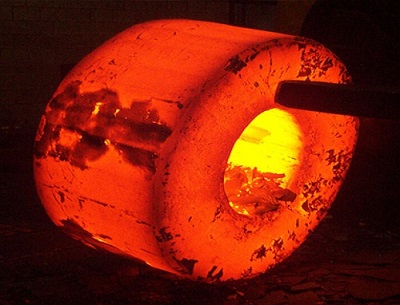
Alloy 410 displays maximum corrosion resistance when it’s been hardened, tempered, and then polished. Unlike austenite such as AISI 304 and AISI 316, martensite such as grade 410 is magnetic and can be hardened by heat treatment like carbon steel and low alloy steel. SS410 has good tensile strength, creep and fatigue strength and other mechanical properties, mainly used in steam turbines, jet engines and gas turbines.
Difference between SS410 and SS410S
- SS 410 is the basic, general-purpose martensitic stainless steel that is used for highly stressed parts and provides good corrosion resistance plus high strength and hardness. Alloy 410 contains a minimum of 11.5% chromium which is just sufficient enough to demonstrate corrosion resistance properties in mild atmospheres, steam, and many mild chemical environments. It is a general-purpose grade that is often supplied in the hardened but still machineable condition for applications where high strength and moderate heat and corrosion resistance are required.
- SS 410S (UNS S41008) is a low carbon, non–hardening modification of Alloy 410 (UNS S41000) the general purpose 12% chromium martensitic stainless steel. The low carbon and a small alloy addition minimize austenite formation at high temperatures which restricts the alloys ability to harden. 410S remains soft and ductile even when rapidly cooled from above the critical temperature. This non-hardening characteristic helps prevent cracking when the alloy is exposed to high temperatures or welded. 410S is completely ferritic in the annealed condition. It exhibits adequate corrosion resistance similar to 410 and good oxidation resistance
Specification
- ASTM A276/A276M: Standard Specification for Stainless Steel Bars and Shapes
- ASTM A240/A240M: Chromium and Chromium-Nickel Stainless Steel Plate, Sheet, and Strip for Pressure Vessels and for General Applications
- ASTM A580/A580M: Stainless Steel Wire
- ASTM A479/A479M: Stainless Steel Bars and Shapes for Use in Boilers and Other Pressure Vessels
- ASTM A959: Standard Guide for Specifying Harmonized Standard Grade Compositions for Wrought Stainless Steels
- ASTM A473: Stainless Steel Forgings
- ASTM A314: Standard Specification for Stainless Steel Billets and Bars for Forging
- SAE J405: Chemical Composition of SAE Wrought Stainless Steels
Chemical Composition, %
AISI / SS 410 is a basic Iron-Chrome martensitic alloy with good mechanical strength & can be hardened/tempered as per application. Alloy 410 exhibit a range of mechanical properties with different types of Heat Treatment.
| % |
410 |
410S |
304H |
C (Carbon)
|
0.080 - 0.150 |
0.08 max. |
0.04 - 0.8 |
Mn (manganese)
|
0.000 - 1.000 |
1.00 max. |
0.0 - 2.00 |
Si (Silicon)
|
0.000 - 1.000 |
1.00 max. |
0.0 - 1.00 |
P (Phosphorous)
|
0.000 - 0.040 |
0.040 max. |
0.0 - 0.04 |
S (Sulfur)
|
0.000 - 0.030 |
0.030 max. |
0.0 - 0.02 |
Cr (Chromium)
|
11.50 - 13.50 |
11.5 - 14.5
|
17.50 - 19.50 |
Ni (Nickel)
|
0.300 - 1.000 |
0.60 max. |
8.00 - 11.00 |
Fe (Iron)
|
Remainder |
belance |
belance |
N (Nitrogen)
|
0.000 - 0.030 |
0.0 - 0.11 |
0.0 - 0.10 |
For more details click the PDF here
Applications of Stainless Steel 410
Type 410 steel is the basic general-purpose steel used for steam valves, tray valves, pump shafts, turbine blades, bolts and miscellaneous parts that require corrosion resistance and moderate strength up to 540°C (1000°F). For more details see the list below
- Steam & Gas turbine parts
- Valve & Pumps body parts
- Mining Equipments
- Machine parts & Cutlery
- Fasteners - Bolts, Screws, Nuts & Springs
- Petrochemical Equipments
- Automotive parts & Bushes
Physical Properties
| SS 410 |
SS 410S |
- Density: 7.75 g/cm3 (0.280 Ibs/in3)
- Melting Point: 1404 – 1440°C (2560 – 2625°F)
- Modulus of Elasticity: 28.5 x 10⁶ psi (196 GPa)
- Electrical Resistivity: 75 Microhm-cm at 24°C (29.5 Microhm-in at 75°)
- Thermal Conductivity: 18.3 W/m-°C (212°F (100°C) 10.6 BTU-in/ft2 – hr-°F
- Thermal Expansion: 9.9 x 10⁻⁶/°C
- Specific Heat: 0.11 BTU/lb-°F @ 70°F 460 J/kg-°C @ 20°C
|
- Density: 7.73 g/cm3 (0.280 Ibs/in3)
- Melting Point: 1480 – 1530°C (2700 – 2790°F)
- Modulus of Elasticity: 29 x 106 psi (200 GPa)
- Electrical Resistivity: 60 Microhm-cm at 20°C (23.7 Microhm-in at 68°)
- Thermal Conductivity: 26.9 W/m-°C (212°F (100°C) 18.7 BTU-in/ft2 – hr-°F
- Thermal Expansion: 9.9 x 10⁻⁶/°C
- Specific Heat: 0.11 BTU/lb-°F (32-212°F) 0.46 KJ/kg-°K (0-100°C)
|
For more details click the PDF here with all regulations here
Linear Coefficient of Thermal Expansion
| SS 410 |
SS 410 S |
| Temperature |
In/in°F |
um/m-°K |
Temperature |
In/in°F |
um/m-°K |
| 68 – 392°F (20– 200°C) |
10.5 x 10⁻⁶ |
5.9 x 10⁻⁶ |
32 – 212°F (0 – 100°C) |
6.0 x 10⁻⁶ |
10.8 |
| 68 – 1112°F (20– 600°C) |
11.6 x 10⁻⁶ |
6.5 x 10⁻⁶ |
32 – 600°F (0 – 315°C) |
6.4 x 10⁻⁶ |
11.5 |
| |
|
|
32 – 1000°F (0 – 538°C) |
6.7 x 10⁻⁶ |
12.2 |
| |
|
|
32 – 1200°F (0 – 649°C) |
7.5 x 10⁻⁶ |
13.5 |
Heat Resistance of Stainless Steel 410
Grade 410 steels have good scaling resistance at temperatures of up to 650 °C. However, the mechanical properties of the material will tend to reduce at temperatures ranging from 400 to 580 °C.
Hot Working of Stainless Steel 410
It is typically done in the 1382 – 2102°F (750 – 1150°C) range followed by air cooling. For smaller plate deformation such as bending, preheating should be done in the 212 – 572°F (100 – 300°C) temperature range. If a plate undergoes substantial deformation it should undergo a re-anneal or stress-relieving treatment at about 1202°F (650°C).
Cold Working of Stainless Steel 410
The alloy can be cold worked with moderate forming in the annealed condition.
Heat Treatment of Stainless Steel 410
- The proper hot work range is 2000 to 2200oF (1093 to 1204oC)
- Do not work this material below 1650oF (899oC)
Fabrication of Stainless Steel 410
410 stainless steel is manufactured by melting-refining in an electric arc furnace with reducing agents that purify the melt. This is followed up with hot working and heat treatment.
Mechanical Properties of Stainless Steel 410 - 410S
| Typical Room Temperature Mechanical Properties, Mill Annealed (SS 410S) |
| 0.2% Offset Yield Strength |
Ultimate Tensile Strength |
Elongation percent in 2" (50mm) |
Reduction percent of area |
Hardness Rockwell B |
| psi |
(MPa) |
psi |
(MPa) |
|
|
|
| 42,000 |
290 |
64,400 |
444 |
33 |
65 |
75 |
| Typical Values at 68°F (20°C) (SS 410) |
| 0.2% Offset Yield Strength |
Ultimate Tensile Strength |
Elongation percent in 2"
|
Hardness
|
------ |
| psi |
(MPa) |
psi |
(MPa) |
% |
Max |
------ |
| 42,000 |
290 |
74,000 |
510 |
34 |
96Rb |
------ |
For more details click the PDF SS 410 here and SS 410S here with all regulations here
Corrosion Resistance of Stainless Steel 410
The corrosion resistance of Sandmeyer Steel 410S stainless steel is similar to type 410. It resists corrosion in atmospheric conditions, fresh water, mild organic and mineral acids, alkalis and some chemicals. It’s exposure to chlorides in everyday activities (e.g., food preparation, sports activities, etc.) is generally satisfactory when proper cleaning is performed after exposure to use.
General Corrosion Behavior Compared With Other Nonaustenitic Stainless Steels*
| 5% Test Solution at 120°F (49°C) |
Corrosion Rate in Mils per Year and Millimeters per Year (mm/a) |
| Alloy 409 |
Alloy 410S |
Alloy 420 |
Alloy 425 Mod |
Alloy 440A |
Alloy 430 |
| Acetic Acid |
0.88
(0.022)
|
0.079
(0.002)
|
1.11
(0.028)
|
4.79
(0.122)
|
2.31
(0.0586)
|
0.025
(0.0006)
|
| Phosphoric Acid |
0.059
(0.002)
|
0.062
(0.002)
|
0.068
(0.002)
|
0.593
(0.015)
|
0.350
(0.009)
|
0.029
(0.001)
|
*Hardened martensitic grades were tested after tempering at 400°F (204°C)
Machinability
- SS 410 steels can be easily machined in highly tempered or annealed conditions. However, it is hard to machine grade 410 steels if they are hardened above 30HRC. Free machining grade 416 is the best alternative.
- SS 410S should be machined in the annealed condition using surface speeds of 60 to 80 feet (18.3 – 24.4 m) per minute.
Welding of Stainless Steel 410
- Due to its martensitic structure, SS 410 has limited weldability because of its hardenability. A post-weld heat treatment should be considered to assure the attainment of the required properties. When weld filler is needed, AWS E/ER 410, 410 NiMo and 309L are the most widely specified.
- 410S is generally considered to be weldable by the common fusion and resistance techniques. Special consideration should be given to avoid brittle weld fractures during fabrication by minimizing discontinuities, maintaining low weld heat input and occasionally warming the part somewhat before forming. 410S is generally considered to have slightly poorer weldability than the most common ferritic stainless steel grade 409. A major difference can be attributed to the alloy addition to control hardening which results in the need for higher heat input to achieve penetration during arc welding. When a weld filler is required, AWS E/ER 309L or 430 filler material is most often specified.
|




