
|
Arc welding with coated electrodes: the complete guide
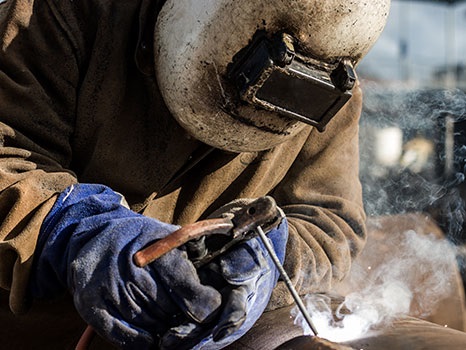
Arc welding with coated electrodes: everything you need to know Introduction Arc welding with coated electrodes is a manual process which the heat source is the electric arc. This striking between the coated electrode (supported by the electrode holder pliers) and the piece to be welded (base material), develops the heat. Overheating causes rapid melting of the base material and the electrode (filler material). As you will have the opportunity to learn more, later you will discover which differences exist between coated electrodes and wire arc welding.
The welding circuit The welding circuit, for the arc welding technique with coated electrodes, is essentially composed of the following elements:
Electricity generator The current generator has the task of powering the electric arc, present between the base material and the electrode, by releasing a quantity of current sufficient to keep it lit. This step is called arc welding with coated electrodes. Electrode welding is based on the principle of constant current: the current supplied by the generator must be constant and never change when the operator moves the electrode relative to the piece. The construction characteristic of the source is to keep the current unchanged during variations length of the arc. These may depend on how the electrode is moving closer or farther away. More constant is the current, and more stable the arc appears, therefore making the operator's work easier. Inside the welder, there is generally a welding current regulation device, which can be mechanical type (magnetic shunt or saturable reactance) or electronic (via SCR systems or inverter systems). It is this distinction that allows us to classify electrode welders into three families based on their construction technology: electromechanical welders, electronic welders (SCR), and inverter welders. The polarity of the generator output current identifies two other categories: AC alternating current generator: The output current of the generator takes the form of a sine wave and, therefore changes its polarity at regular intervals, with a frequency of 50 or 60 Hertz. It is obtained thanks to a transformer, which allows converting the current, with a suitable welding current. It is typical of electromechanical welders. DC (direct current) generator: The current output from the generator has a continuous waveform. The continuous wave is obtained through a device placed downstream of the transformer: the rectifier. This device converts the alternating current to direct current thanks to diode SCR and inverter generators. If the welding circuit consists of a direct current (DC) generator, then a further classification can be introduced, depending on the connection method of the poles from the welding source to the material that should be welded: i) direct polarity connection: The direct polarity connection is verified by connecting the clamp cable (with electrode holder clamp) to the negative (-) pole of the welding source and the mass cable (with mass clamp) to the positive pole (+) of the source. Arc welding with coated electrodes occurs because the electric arc concentrates the heat produced on the piece and promotes its fusion. In this way the core of the electrode deposits as it melts and penetrates the joint to be welded. ii) Reverse Polarity Connection: The reverse polarity connection occurs by connecting the clamp cable (with electrode holder clamp) to the positive (+) pole of the welding source and the mass cable (with mass clamp) to the negative (-) pole of the source. The heat of the electric arc is concentrated more on the end of the electrode. Each type of electrode requires a specific current (AC or DC), and regarding the DC a specific polarity. The choice of electrode is also conditioned by the type of generator used. Incorrect use causes problems in the stability of the arc and consequently quality of the welding.
Electrode holder pliers The electrode holder clamp has the primary function of supporting the electrode, ensuring good electrical contact for the passage of current. Furthermore, it must guarantee sufficient electrical insulation from the welder. Coated electrode The coated electrode is composed of a core and a coating which have different but complementary tasks: the core mainly acts as a current conductor for feeding the arc and as a supply of material for filling the joint, while the coating has the primary function of protecting the melt pool and stabilizing the arc. It is the fundamental element for arc welding with coated electrodes. Earth clamp and cables The ground clamp is a device that ensures, via the ground cable, the closure of the electrical connection between the welding source and the piece to be welded. The clamp cable allows the connection between the electrode holder and the generator. Arc force, Hot Start, Anti stick devices
Characteristics of the coated electrodes
The choice of coating is a part very important and depends on its characteristics, the result of arc welding with coated electrodes. Furthermore, the coating can also contain powdered filler metal, to increase the quantity of the deposited material and therefore the welding speed. In this case, we are talking about high-performance electrodes. Subdivision of electrodes for arc welding There are different types of coated electrodes on the market, and their chemical composition strongly influences the result of arc welding. In fact, the stability of the electric arc, the depth of penetration, the deposition of the material, and the purity of the bath, i.e. their fields of application, depend on the chemical composition of the coated electrodes. Considering the type of coating, the main types of electrodes are: Acid-Coated Electrodes: The coatings of these electrodes are made of iron oxides, manganese ferroalloys and silicon. The choice of these coatings in arc welding with coated electrodes guarantees good arc stability and makes them suitable for both alternating current (AC) and direct current (DC). They have a very fluid bath that does not allow welding in position; furthermore, they do not have great cleaning power on the base material and this can cause cracks. They cannot withstand high drying temperatures, with the consequent risk of residual humidity and therefore hydrogen inclusions in the solder Rutile-Coated Electrodes: The coating of this electrode is essentially composed of a mineral called rutile. They're made up of 95% titanium dioxide, a very stable compound which guarantees excellent stability of the arc and high fluidity of the bath. It also provides an appreciable aesthetic effect on the weld. However, the task of the rutile coating is to guarantee a smooth, easy-to-achieve fusion. This coating facilitates the formation of abundant and viscous slag which allows good smoothness in welding, especially in a flat position. In this case, the cord appears visually beautiful and regular. Unfortunately, even these coatings are not highly effective as cleaners and are therefore recommended where the base material does not contain many impurities. Furthermore, they do not dry well and therefore develop a lot of hydrogen in the welding. In some applications, rutile is combined with another component typical of other coatings, such as cellulose (rutil cellulose electrodes) or fluorite (rutil base electrodes). The aim is usually to obtain an electrode with a stable arc but with higher-performing welding characteristics. The stability of the arc, in arc welding with electrodes, is a prerogative that makes it possible to use this electrode with both alternating current (AC) and direct current (DC) in direct polarity. It is mainly used on reduced thicknesses.
Electrodes with Cellulose Coating The coating of these electrodes consists mainly of cellulose integrated with ferroalloys (magnesium and silicon). The coating gasifies almost completely, thus allowing arc welding with electrodes even in a vertical downward position. This is not allowed with other types of electrodes: the high gasification of cellulose reduces the quantity of slag present in the weld. The high development of hydrogen (deriving from the particular chemical composition of the coating) causes the welding bath to be "hot", with the melting of a considerable quantity of base material. This results in welds that penetrate deeply, with little slag in the bath. The mechanical characteristics of this arc welding are excellent. However, the aesthetic level is quite low due to the total absence of liquid protection offered by the coating prevents the modelling during solidification. The welding current, given the poor stability of the arc, is usually a direct current (DC) with reverse polarity. Basic Coated Electrodes The coating of the basic electrodes is made up of iron oxides, ferroalloys and above all calcium and magnesium carbonates which, by adding calcium fluoride, fluorite is obtained, a mineral suitable for facilitating fusion. They have a high purification capacity of the base material, resulting in quality welds with notable mechanical robustness. Furthermore, these electrodes withstand high drying temperatures, so they do not contaminate the bath with hydrogen. Fluorite makes the arc very unstable: the bath is less fluid, and there are frequent short circuits due to the transfer of the filler material in large drops. The arc must also be kept very short due to the low volatility of the coating itself. All these characteristics require good experience on the part of the welder. They have a hard slag that is difficult to remove and must be completely removed in case of additional passage of welding. These electrodes are suitable for carrying out positional, vertical, overhead welding, etc. Regarding the current to be used, it is advisable to use direct current (DC) generators in reverse polarity. Basic electrodes are known for the very high quantity of material deposited and are suitable for welding thick joints. They are highly hygroscopic, bennypass recommends keeping these electrodes in dry environments and in well-closed boxes. If this is not possible, it is advisable to proceed with drying the electrode again before use. MMA welding of materials If the steel is of an easily recognizable composition, rutile electrodes can be used thanks to their greater ease of welding initiation and the good aesthetics of the seam. Medium and High Carbon Steels Practically, arc welding with coated electrodes of steels with medium and high carbon content (>0.25%) can cause the formation of structural defects. For this reason, the application of the electrode process is recommended, especially for welding joints with medium-large thicknesses and using basic electrodes. In these cases, a high-quality weld is combined with good resistance to breakage. The welding of steel pipes takes place using cellulosic electrodes, where high penetration and good workability of the electrode are required. Chamfering is always recommended, with a chamfer angle sufficient for an almost complete insertion of the electrode into the bevel. Stainless steels, Aluminium and its Alloys, Cast Iron Regarding special materials such as stainless steel, aluminium (and its alloys) and cast iron, electrodes specific to the material treated are used. Stainless steels are welded in direct current (DC) with reverse polarity; Specific electrodes are used, which differ in the metallurgical composition of the material to be welded (presence of chromium (Cr) and nickel (Ni) in variable percentages). Aluminium and light alloys are welded in direct current (DC) with reverse polarity. The machine must be equipped with a rather high trigger dynamic to guarantee the ignition of the electrode. Special electrodes are also used in this case, which differ in the metallurgical composition of the material to be welded (presence of magnesium (Mg) and silicon (Si) in variable percentages). Cast iron is welded in direct current (DC) with reverse polarity; most cast iron structures and mechanical parts are obtained by casting. For this reason, welding is used to correct any casting defects and for repairs. Special electrodes are used and the base material must be adequately heated before use.
|
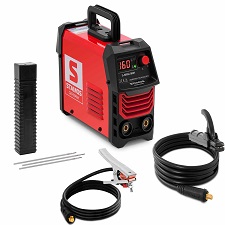
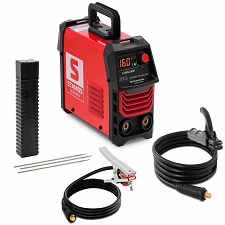 Saldatrice a elettrodo - 160 A - Elettrodi rivestiti in rutile cellulosa Ø 2.5 x 350 mm - 5 kg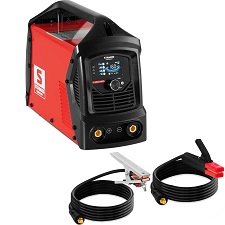
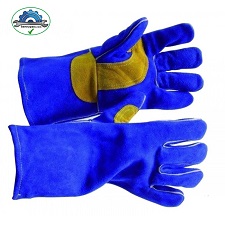
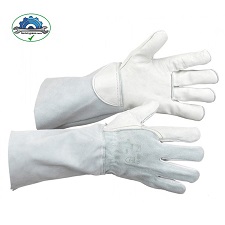 Mix Hi Weld gloves in full grain cowhide leather size 10
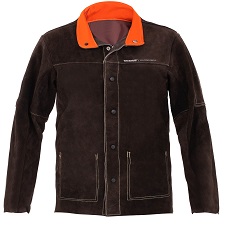
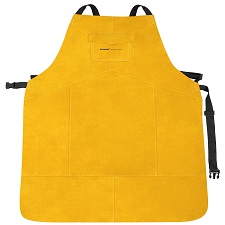 Leather apron for welder
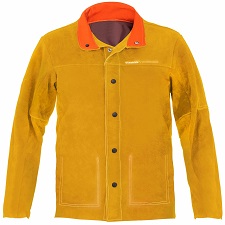


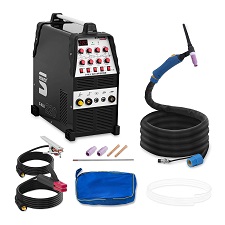
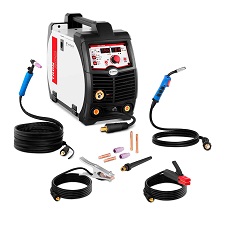
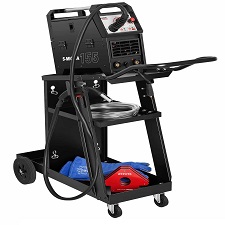 Trolley for welding machine transport - folded - 3 support surfaces - 75 kg
+(39) 347 051 5328
Italy - Kazakhstan


09.00am to 18.00pm
About
We offer the best and economical solutions, backed by 27+ years of experience and international standards knowledge, echnological changes, and industrial systems.
Our Services
Marketing Materials


Marketing Materials1


