|
Aluminum 1000 series
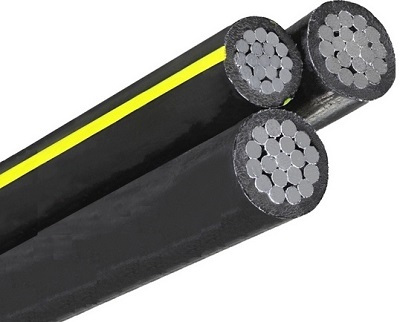
The 1000 series is non-heat treatable and contains at least 99.0% aluminium with no significant alloying elements. Aluminium grades under this series have excellent corrosion resistance and the highest electrical and thermal conductivity. Due to its ductility and relative softness, series 1000 is formable and work hardens slowly. It is suitable for processes requiring severe deformation. Series 1000 is weldable with a narrow melting range that must be considered. A significant drawback to the 1000 series is its very limited yield and tensile strength.
- Aluminum 1100 is the most common grade and highest mechanical strength in the 1000 series and is composed of pure commercial aluminium. It has good electrical and thermal conductivity, making it suitable for heat sinks and heat exchange equipment. Its excellent forming properties make it suitable for cold working processes such as drawing, bending, spinning, stamping, and roll forming.
- The ductility of series 1100 makes it ideal for being annealed in temper conditioning. It can be formed into wires, plates, foils, bars, and strips. The ductility of the 1100 series makes it easy to be cold-worked and formed using extrusion or progressive bending, with hot forming a possibility due to its low melting point.
- Series 1100 can be easily welded using conventional welding methods, including resistance welding. It is not suitable for high-pressure applications. Like most alloys in this series, Aluminum 1100 can only be hardened by cold working, not heat treatment.
- Aluminum 1350 is known for its high electrical conductivity and is used for producing transformers and switchgear. As with all 1000 series alloys, aluminium 1350 has an exceptionally high aluminium content. It has good formability, making it ideal for producing electronics.
Chemical Composition Aluminum 1000 series
|
1000 series UNS# A91050
|
Mn |
Cu |
Mg
|
Ga |
Si
|
B
|
Cr
|
O
|
P
|
0.050 max
|
0.050 max |
0.05 max
|
--
|
0.25 max |
--
|
-- |
--
|
-- |
| Fe |
SI+Fe |
V |
Zn |
Ti |
AI |
Co |
W |
Other |
0.40 max
|
-- |
-- |
0.10 max |
0.03 max |
99.50% min |
--
|
--
|
0.03 max |
|
1000 series UNS# A91050A
|
Mn |
Cu |
Mg
|
Ga |
Si
|
B
|
Cr
|
O
|
P
|
0.050 max
|
0.050 max |
0.050 max |
--
|
0.25 max |
--
|
-- |
--
|
-- |
| Fe |
SI+Fe |
V |
Zn |
Ti |
AI |
Co |
W |
Other |
| 0.40 max |
-- |
--
|
0.07max |
0.050 max |
99.50% min |
--
|
--
|
0.03 max |
|
1000 series UNS# A91060
|
Mn |
Cu |
Mg
|
Ga |
Si
|
B
|
Cr
|
O
|
P
|
0.030 max
|
0.050 max |
0.030 max |
--
|
0.25 max |
--
|
-- |
--
|
-- |
| Fe |
SI+Fe |
V |
Zn |
Ti |
AI |
Co |
W |
Other |
| 0.35 max |
-- |
0.050 max |
0.050 max |
0.030 max |
99.60% min |
--
|
--
|
0.03 max |
|
1000 series UNS# A91100
|
Mn |
Cu |
Mg
|
Ga |
Si
|
B
|
Cr
|
O
|
P
|
0.050 max
|
0.05-0.20 |
-- |
--
|
0.95 max |
--
|
-- |
--
|
-- |
| Fe |
SI+Fe |
V |
Zn |
Ti |
AI |
Co |
W |
Other |
| 0.95 max |
-- |
-- |
0.10 max |
-- |
99.10% min |
--
|
--
|
0.05each max 0.15 |
|
1000 series UNS# A91350
|
Mn |
Cu |
Mg
|
Ga |
Si
|
B
|
Cr
|
O
|
P
|
0.05 max
|
0.05 max
|
-- |
--
|
0.10 max |
-- |
0.01 max |
--
|
-- |
| Fe |
SI+Fe |
V |
Zn |
Ti |
AI |
Co |
W |
Other |
| 0.40 max |
-- |
-- |
0.05 max |
0.03 max |
99.50% min |
--
|
--
|
0.03 max |
- Aluminium 1060 is a pure aluminium alloy with a minimum purity of 99.6%. It is soft and easily worked, making it suitable for applications that require low strength, such as roofing, insulation, and signage. On the other hand, aluminium 6063 is an alloy that contains magnesium and silicon. It has better strength and toughness than 1060, making it ideal for extrusion applications such as window frames, door frames, and building facades.
Corrosion
Corrosion can occur in aluminium conductors due to galvanic action. Galvanic action occurs if dissimilar metals are used in an electrolytic solution. The dissimilar metals are aluminium and copper conductors, and the electrolytic solution can be as simple as humid air. There is a difference in potential (voltage) between the positive anode (aluminium) and the negative cathode (copper). The electrolyte (moisture) allows for the conduction of current. This action damages the aluminium and leaves the copper intact. This corrosion can be avoided by the proper selection of connectors and the use of a connecting compound.
Applications of Aluminum 1000 series
Aluminium 1000 series is used in the following application areas:
- Components for the food
- Chemical and brewing industries
- Nameplates
- Reflectors
- Capacitors
- Solid and stranded conductor wire (Not recommended for precision systems like 4-20mA or for high-frequency probe amplification like Bently Nevada etc.
- Bus Conductors
- Transformer strip
Physical Properties
Physical Properties
|
| Density |
Metric |
English |
Comments |
| 2.7 g/cm3 |
0.098 lb/in3 |
|
| Mechanical Properties |
| Tensile Strength, Ultimate |
45 MPa |
6.5 Ksi |
|
For more details consult the datasheet below
The aluminium content for unalloyed aluminium not made by a refining process is the difference between 100.00 percent and the sum of all other analyzed metallic elements present in amounts of 0.010 percent of more each, expressed to the second decimal before determining the sum. For alloys and unalloyed aluminium not made by a refining process, when the specified maximum limit is 0.XX, an observed value or a calculated value greater than 0.005 but less than 0.010% is rounded off and shown as" less than 0.01%". Composition information is provided by the Aluminum Association and is not for design
Cost
- Aluminium 1060 is cheaper than 6063 due to its lower production cost and simpler manufacturing process. It is also widely available and can be sourced from many suppliers. However, 6063 is still more cost-effective in the long run, as its higher strength and durability can reduce maintenance and replacement costs. It is also more suitable for applications that require a high level of structural strength, such as construction and transportation.
- The cost of aluminium grades depends on the product’s quantity, type, and size. Typically, aluminium 1050 is less expensive than 6082 due to its purity and lower strength. However, deciding which grade to use depends on the specific application and intended use.
Conclusion
- In conclusion, choosing between aluminium 1060 and 6063 depends on your specific application and requirements. If you need a lightweight and easily formable material for decorative or non-structural applications, 1060 is a good choice. However, if you need a stronger and more durable material for structural or extrusion applications, 6063 is the way to go. Whichever you choose, both are excellent options that offer the advantages of aluminium, such as corrosion resistance and sustainability
- Knowing the distinction between aluminium 1050 and 6082 is beneficial when choosing aluminium grades for your project. While 1050 is suitable for general fabrication, 6082 is a stronger alloy for load-bearing applications. Formability, corrosion resistance, and cost are other critical considerations. Sourcing high-quality aluminium products from reputable suppliers is essential to ensure the desired performance in your project. With this information, you’ll be better equipped to select your project, resulting in superior quality and cost-effectiveness.
- Aluminium 1100 Sheet is the most popular grade of aluminium produced, accounting for more than half of all aluminium used today. Aluminium 1100 HR Sheets has excellent formability and weldability, high corrosion resistance, low cost, and is easy to work with. Its high purity allows it to be machined easily, and its light weight makes it an ideal choice for applications requiring minimal weight. 1 MM Aluminium 1100 Sheet also highly reflective, which helps it resist heat build-up in humid climates or other applications where heat is a concern. Aluminum 1100’s strength-to-weight ratio makes it perfect for aerospace and automotive applications such as fuel tanks, storage tanks, lightning fixtures and electrical conductors. Its superior thermal properties make it suitable for cryogenic temperatures, while its ability to withstand extreme temperatures without becoming brittle ensures longevity in industrial settings.
- Aluminium is one of the best conductors with ever-expanding uses. It has a lightweight, low cost, and ready availability worldwide, making it ideal for many electrical uses.
Aluminum is one of the two commercially used conductors besides copper. Despite being slightly less conductive than copper, its lightweight makes it extremely useful in many industries, from automobiles to power grids.
The conductivity of aluminium is so high that a simple aluminium foil can act as an electrical conductor. However, the conductivity of the foil will be much less than that of a wire or pure aluminium.
This is because the surface features of aluminium affect its conductivity. Painting, coating, or anodizing can significantly decrease conductivity. So, you should consider the final application of your aluminium product before considering any surface treatments.
For further details please contact us
Limitation of Liability and Disclaimer of Warranty
In no event will our team, be liable for any damages arising from the use of the information included in this document or that it is suitable for the 'applications' noted. We believe the information and data provided to be accurate to the oest of our knowledge but, all data is considered typical values only. It is intended for reference and general information and not recommended for specification, design or engineering purposes. Our team assumes no implied or express warranty in regard to the creation or accuracy of the data provided in this document.
|