
|
Aluminum 2000 series
2000 series aluminium grades contain 0.7-6.8% copper and small amounts of silicon, manganese, magnesium, and other elements. Copper is the alloying element for these grades; it imparts additional strength and hardness, improving their machinability. The high strength of these grades is maintained at a wide range of temperatures.
Chemical Composition Aluminum 2000 series
For more details consult the datasheet below
Applications of Aluminium 2011 series
Applications of the Aluminium 2017 series
Applications of Aluminium 2024 series
Applications of Aluminium 2048 series
Applications of Aluminium 2219 series
Corrosion Resistance Aluminium 2011 In comparison to other commercial grades of aluminium, grade 2011 has poor corrosion resistance. Parts that are manufactured from grade 2011 alloy are often anodised in order to help protect the surface of the metal. Should the extra strength of grade 2011 not be critical, then grade 6082 which has excellent corrosion resistance should be considered. Corrosion Resistance Aluminium 2017 Aluminium 2017 has excellent corrosion resistance due to its high aluminium content as well as its protective coating created by the zinc component in the alloy’s composition. This makes it perfect for use in corrosive environments such as saltwater or acidic atmospheres where other metals would only succeed quickly with proper maintenance and protection. Corrosion Resistance Aluminium 2024 Aluminium 2014 and 2024 are susceptible to corrosion, but 2024 is less resistant. Therefore, proper surface treatments are crucial with this alloy to provide adequate protection. By contrast, Aluminium 2014 has excellent corrosion resistance and can readily be used outdoors. This makes 2014 an excellent choice for applications that require resistance to harsh or corrosive environments, such as marine or coastal structures. Corrosion Resistance Aluminium 2048 Aluminum 2048 has excellent corrosion resistance when exposed to air or water thanks to its passivation layer formed on the surface by the reaction between oxygen molecules present in the atmosphere and aluminium atoms present on the alloy surface forming protective layers that prevent further oxidation processes even when exposed continuously over long periods. Corrosion Resistance Aluminium 2219 Aluminium 2219 is a great choice for applications that require superior corrosion resistance. This grade of aluminium alloy is heat-treatable, and its properties include high strength and good machinability. Its primary alloying element, copper, provides excellent corrosion resistance in all environments except a few, like hydrochloric acid and sulfuric acid. All of this makes Aluminium 2219 a preferred material for many applications, especially those that involve long-term use or exposure to harsh external elements. Furthermore, its low weight and high strength make it an attractive choice for many industries.
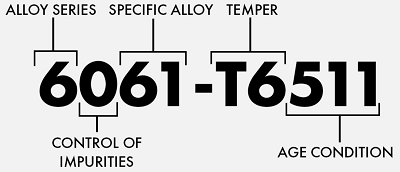
Types of Aluminum Alloys There are 7 main types, or series, of wrought aluminium alloys. Each series can contain hundreds of unique alloys, each of which can be defined by a simple code as per the figure below
Conclusion 2000 series aluminium plate is characterized by high hardness, in which the original content of copper is about 3-5%. 2000 series aluminium rod belongs to aviation aluminium material, which is not often used in conventional industry at present. For an engineer or part designer, series numbers are the most important topic to understand. Temper and age conditions are somewhat set in stone, and engineers typically don’t specify these in the design stage, except in very specific circumstances. For example, if you would like a part to be made from 6061 aluminium, it is likely going to be of the 6061-T6511 designation. Engineers should also understand the shapes and sizes of alloys available. Aluminium is a common metal that combines robust mechanical properties with relatively low weight and low cost. It is almost three times lighter than steel, making it one of the go-to material choices in aerospace, automotive, and other applications requiring low weight. Aluminium alloys are most often extruded, rolled (cold-formed), or cast – each of which can have profound impacts on material behaviour. Other factors such as alloy composition and heat treatment can further modify the performance of an alloy. For further details please contact us
Limitation of Liability and Disclaimer of Warranty In no event will our team, be liable for any damages arising from the use of the information included in this document or that it is suitable for the 'applications' noted. We believe the information and data provided to be accurate to the oest of our knowledge but, all data is considered typical values only. It is intended for reference and general information and not recommended for specification, design or engineering purposes. Our team assumes no implied or express warranty in regard to the creation or accuracy of the data provided in this document.
|

+(39) 347 051 5328
Italy - Kazakhstan


09.00am to 18.00pm
About
We offer the best and economical solutions, backed by 27+ years of experience and international standards knowledge, echnological changes, and industrial systems.
Our Services
Marketing Materials


Marketing Materials1


