
|
Definition of Power Electronics Power electronics is an interdisciplinary domain that integrates principles from electrical, electronic, and control engineering to investigate the conversion, control, and administration of electrical power. The main objective of power electronics is to devise efficient, compact, and economical techniques for transforming and regulating electrical energy between different forms. Given the accelerated expansion of renewable energy sources, electric vehicles, and smart grid technology, the significance of this field has surged. Definition Power electronics deals with the conversion and control of electric power using electric converters based on the switch of semiconductors. The power converter has four major categories:
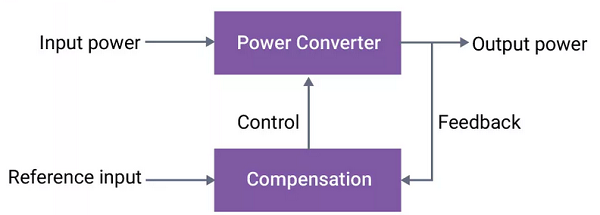
Each converter is composed of fundamental electronic components, including resistors, capacitors, and inductors, as well as semiconductor devices such as diodes, thyristors, and transistors. For more details see Figure 1 below
Figure 1 - Block Diagram of a typical power electronic system
Controllers and Regulators Controllers and regulators are essential for managing the performance of power electronic systems.
In summary, the components of power electronics - semiconductors, converters, controllers, and regulators - have evolved significantly, driven by advancements in materials science, semiconductor technology, and digital control techniques. Their continuous development has expanded the capabilities of power electronic systems, enabling more efficient, reliable, and compact solutions for a wide range of applications. Efficiency and Size Considerations Efficiency in power electronics is not just a desirable attribute; it's a critical factor that significantly impacts energy consumption and system performance. This section delves into why efficiency is paramount in power electronic systems and explores the ongoing challenges and solutions in miniaturising these devices. Importance of Efficiency:
Challenges in Miniaturization Miniaturising power electronic devices while maintaining or improving their efficiency is a significant engineering challenge. Smaller devices are desired for their compactness, which is essential in space-constrained applications like mobile devices and aerospace.
Manufacturing Complexity: Producing smaller power electronic components often involves more complex manufacturing processes, which can increase costs and affect scalability. Case Studies in Efficiency Improvements Renewable Energy Systems: In solar inverters, advancements in power electronics have led to higher conversion efficiencies, enabling more solar energy to be converted into usable electrical power. Modern inverters achieve efficiencies upwards of 98%, significantly improving the viability of solar installations.
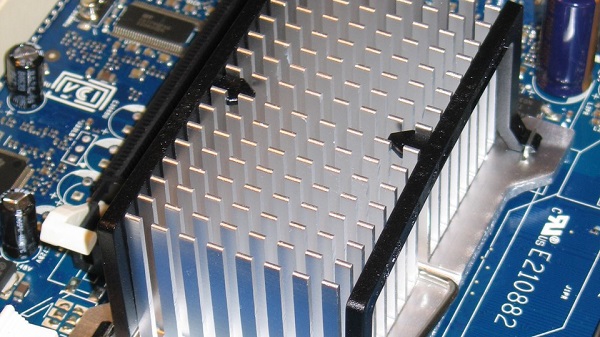
In conclusion, efficiency and size are interdependent considerations in the design and development of power electronic systems. Striking the right balance between these two factors is key to meeting the demands of modern applications, from portable electronics to large-scale industrial systems. The ongoing research and development in materials, design, and manufacturing techniques continue to push the boundaries of what is possible in power electronics, aiming for smaller, more efficient, and more reliable systems. Heat Dissipation and Thermal Management Effective thermal management is a critical aspect of power electronics, especially as devices become more powerful and compact. This section provides a comprehensive overview of thermal management techniques, including recent advancements, and presents case studies demonstrating these techniques in high-power applications. For more details see Figure 2 below
Figure 2 -Close-up view of thermal paste application on an AMD processor.
Thermal Management Techniques
Case Studies in Thermal Management Electric Vehicle Power Electronics: In electric vehicles (EVs), power electronic components like inverters and converters handle high power levels, generating significant heat. Advanced cooling systems, often involving liquid coolants, are used to maintain optimal operating temperatures. For instance, some EV models use integrated cooling plates that are thermally connected to the power electronic components, ensuring efficient heat dissipation.
In summary, thermal management in power electronics is a multifaceted challenge that requires a combination of materials, design, and advanced cooling technologies. As power densities increase and devices become smaller, the importance of efficient heat dissipation becomes even more critical. The ongoing innovations in thermal management techniques are essential for the continued advancement and reliability of power electronic systems in various high-power applications. Applications in Various Systems Power electronics find their applications in a broad spectrum of fields, each presenting unique challenges and innovations. This detailed exploration covers high-power applications, consumer electronics, renewable energy systems, and electric vehicles, highlighting their current state and future trends. High-Power Applications: Grid Management: Power electronics play a crucial role in modern grid management, facilitating efficient transmission and distribution of electricity. They are key in implementing solutions like FACTS (Flexible AC Transmission Systems) and HVDC (High Voltage Direct Current) systems, which enhance grid stability and capacity. The challenge lies in managing the high power levels and ensuring system reliability under diverse grid conditions. Industrial Machinery: In industrial settings, power electronics are essential for operating heavy machinery, including motor drives and automation systems. The primary challenge is to ensure these systems are both energy-efficient and robust enough to withstand harsh industrial environments. Solutions like advanced motor drives and soft starters have been developed to address these needs, offering greater control and reducing mechanical stress on the machinery. Consumer Electronics Smartphones and Laptops: In the realm of consumer electronics, power electronics are integral to the design and function of devices like smartphones and laptops. They manage power delivery and battery charging, balancing the need for fast charging with battery longevity. The challenge is miniaturisation, as these devices require increasingly smaller and more efficient power components. For more details see Figure 3 below
Figure 3 -Cardboard boxes filled with household appliances and electronics on warehouse shelves Renewable Energy Systems Solar Inverters (see also Hybrid Inverter) and Wind Turbine Converters: Power electronics are vital in renewable energy systems, particularly in solar inverters and wind turbine converters. They convert the variable power generated from renewable sources into a stable form that can be fed into the electrical grid or used directly. The ongoing challenge is to improve efficiency and reliability, especially as these systems scale up. Future trends include the integration of smart and adaptive control systems that can respond dynamically to changing environmental conditions and grid demands. See Figure 4 below
Figure 4 -Alternative Energy Electric Vehicles and Battery Management
In summary, power electronics are fundamental across various systems, each with its specific requirements and challenges. From enhancing the efficiency and stability of power grids and industrial machinery to enabling the widespread adoption of renewable energy and electric vehicles, power electronics are at the heart of modern technological advancements. As these fields continue to evolve, power electronics will play an increasingly vital role in driving innovation and addressing the world's growing energy needs. Voltage and Frequency Regulation Voltage and frequency regulation are critical aspects of power electronics, especially in alternating current (AC) systems. This section provides a detailed explanation of these concepts, focusing on techniques and challenges in voltage regulation for small devices.
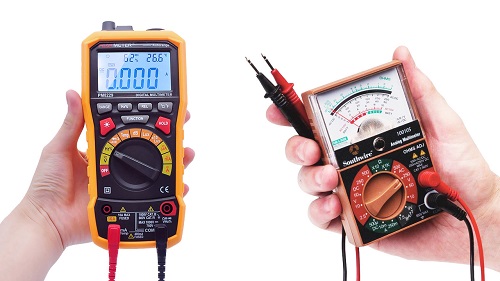
Figure 5 - Multimeter Device Voltage Regulation in AC Systems
Frequency Regulation in AC Systems
Voltage Regulation for Small Devices Techniques: In small devices, voltage regulation is typically achieved using linear regulators or switching regulators. Linear regulators, while simpler and less noisy, are less efficient as they dissipate excess voltage as heat. Switching regulators, on the other hand, offer higher efficiency by rapidly switching the input voltage on and off and controlling the duty cycle to achieve the desired output voltage. Challenges: The main challenge in small devices is miniaturisation while maintaining efficiency and managing heat dissipation. As devices become smaller and more power-dense, effective thermal management becomes crucial. Additionally, maintaining regulation accuracy in the face of varying load conditions and battery voltage levels is a key concern. In conclusion, voltage and frequency regulation are fundamental to the functionality and efficiency of AC systems, from large-scale power grids to small electronic devices. The ongoing development of more sophisticated and efficient regulation techniques is crucial to meet the demands of an increasingly electrified and technologically advanced society. Conversion Techniques Power electronics heavily relies on various conversion techniques to manipulate electrical energy to suit different applications. This section provides an in-depth analysis of key conversion techniques, including rectifiers, inverters, and buck/boost converters, supplemented with case studies and examples of each technique in use.
Figure 6 - Rectifier bridge with heat sink
Rectifiers
Inverters
Buck/Boost Converters Function: Buck converters step down voltage levels, while boost converters step up voltage levels. They are used in applications where the voltage needs to be adjusted to a specific level. Types: These converters can be non-isolated or isolated, with isolated converters providing galvanic isolation between input and output. Case Study: A practical example is in LED lighting systems, where a buck converter is used to regulate the voltage to a level suitable for the LEDs, ensuring consistent brightness and improving Combination Converters
In summary, conversion techniques in power electronics, including rectifiers, inverters, and buck/boost converters, are essential for a wide range of applications. These techniques enable the efficient and effective transformation of electrical energy to the required form, ensuring compatibility with different devices and systems. The ongoing advancements in these technologies continue to enhance their efficiency, reliability, and adaptability, meeting the evolving needs of modern electrical and electronic systems. Protection and Safety Mechanisms In power electronics, ensuring the safety and longevity of both the devices and the users is paramount. This section provides a comprehensive overview of various protection mechanisms employed in power electronics, including overvoltage, undervoltage, overcurrent, short circuit, and thermal protection, along with real-world examples of these mechanisms in action. Overvoltage Protection:
Undervoltage Protection
Overcurrent Protection
Short Circuit Protection
Thermal Protection
In conclusion, protection and safety mechanisms in power electronics are essential for the reliable and safe operation of electronic systems. These mechanisms not only prevent damage to the components but also ensure user safety. The integration of these protective features is a critical aspect of power electronic system design, reflecting the importance of reliability and safety in the field of electronics. Future Trends and Innovations The field of power electronics is continuously evolving, driven by advances in technology and emerging applications. This section explores the future trends and innovations in semiconductor technology, the growing role of power electronics in IoT devices and smart grids, and their contribution to sustainable energy solutions, with a focus on environmental impacts. Advances in Semiconductor Technology Wide-Bandgap Semiconductors: Materials like Silicon Carbide (SiC) and Gallium Nitride (GaN) are at the forefront of semiconductor technology. These wide-bandgap semiconductors offer superior properties, such as higher efficiency, faster switching speeds, and the ability to operate at higher temperatures and voltages. This leads to smaller, more efficient power electronic devices. Potential Future Developments: Research is ongoing into developing even more efficient semiconductor materials, such as Gallium Oxide (Ga2O3) and Diamond. These materials promise further improvements in power density, efficiency, and thermal performance, potentially revolutionising power electronics. Emerging Applications in IoT Devices and Smart Grids IoT Devices: The proliferation of IoT devices has created a demand for efficient, compact power electronic solutions. Future trends include the development of ultra-low-power semiconductor devices that can harvest energy from their environment, reducing or eliminating the need for external power sources. Smart Grids: Power electronics play a crucial role in the development of smart grids, which require sophisticated control and conversion technologies to integrate renewable energy sources, manage load, and ensure grid stability. Advancements in power electronics are enabling more efficient grid management and energy distribution, paving the way for a more resilient and sustainable energy infrastructure. Sustainable Energy Solutions and Environmental Impact Role in Renewable Energy: Power electronics are key to maximising the efficiency of renewable energy systems, such as solar panels and wind turbines. Future innovations in power electronic converters can lead to even higher efficiencies, reducing the cost of renewable energy and accelerating its adoption. Energy Storage Systems: The integration of energy storage systems, like batteries and supercapacitors, with power electronics is vital for balancing energy supply and demand, especially in renewable energy systems. Advancements in power electronics are enhancing the efficiency and lifespan of these storage systems. Environmental Impact: The focus on developing more efficient power electronic devices directly contributes to reducing energy wastage and, consequently, the environmental impact. By improving the efficiency of electrical systems, power electronics play a significant role in reducing greenhouse gas emissions and promoting sustainable energy practices. In summary, the future of power electronics is marked by exciting advancements in semiconductor technologies, expanding applications in IoT and smart grids, and a significant role in fostering sustainable energy solutions. These innovations not only promise enhanced performance and efficiency but also contribute to a more sustainable and environmentally friendly future. |




+(39) 347 051 5328
Italy - Kazakhstan


09.00am to 18.00pm
About
We offer the best and economical solutions, backed by 27+ years of experience and international standards knowledge, echnological changes, and industrial systems.
Our Services
Marketing Materials


Marketing Materials1


