
|
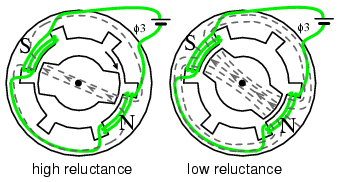
Reluctance Motor We know that any electric motor uses the benefit of basic electrical principles as well as electromagnetism to create mechanical motion. There are different kinds of motors available in the market but determining of these motors is difficult to utilize or which one is apt for your application. Synchronous motor is one kind of motor, apart from this, a motor that works depending on reluctance known as reluctance motor. This motor has two essential parts namely the stator as well as the rotor. This article discusses an overview of the reluctance motor. What is Reluctance Motor? Definition: This is one kind of advanced motor which includes both the stator and the rotor similar to a normal electric motor. These motors work with a precise rotating magnetic field (RPM) by synchronizing the speed of the rotor using the RMF of the stator. The power density delivered by these motors is high at low cost to make them attractive in several applications. The working principle of reluctance motor is, whenever a magnetic material is located within the magnetic field, then it always brings into line in the less reluctance way. For more details see Figure 1 below
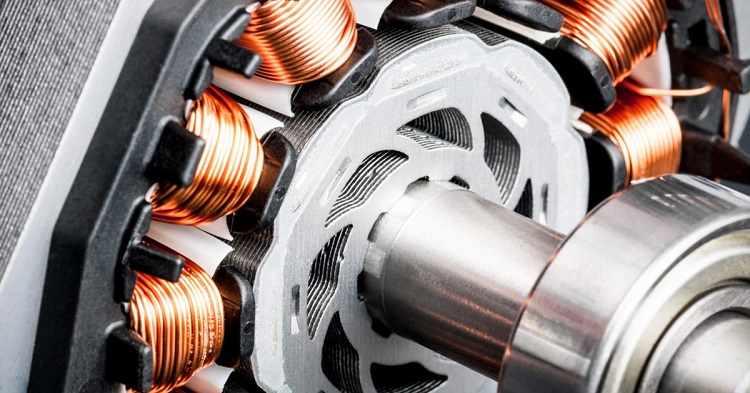
Figure 1 - Reluctance Motor The specifications of reluctance motor are a type of phase, pole ratio of the stator to the rotor, rated power or torque, torque ripple, and constant torque speed range. The power factor of reluctance motor is lagging PF and the machine efficiency can range from 55 to 75%. Construction of Reluctance Motor The construction of this motor is shown below. The designing of this can be done by removing the teeth in four locations to form a four-pole structure.
Figure 2 - Reluctance Motor Construction The torque of this motor can be generated because of the rotor tendency to connect itself in the least reluctance position, once the motor speed is nearer to the synchronous speed. Therefore, the rotor drags in synchronism. The inertia of load must be in the limits for suitable effectiveness. At synchronization, the torque of induction will disappear, except the rotor remains in synchronization because of the torque in synchronous reluctance. Working of Reluctance Motor The essential parts of this motor are the stator and the rotor. These two are stationary parts that are separated through an air gap. Based on the motor type, the motor construction will be changed but the basic working principle will be the same. The stationary part like the stator includes salient pole-pairs which can be formed through flowing current using a wire. The rotor can be formed with ferromagnetic metal and it includes its own poles. Reluctance Motor Torque Equation Reluctance torque can occur once a ferromagnetic object is located within an exterior magnetic field, then the object can be line up through the external magnetic field. This will induce an inner magnetic field within the object because of the generated torque. This torque can be generated among the two fields which twirling the object in the region of the line through the magnetic field. So, torque is used on the object to provide less reluctance for the magnetic flux. This motor torque is also called Saliency torque due to the saliency of the machine. This motor mainly depends on the reluctance torque to operate. So this torque can be calculated by using the following formula. Types of Reluctance Motor Reluctance motors are classified into different types like synchronous and switched. Synchronous Reluctance Motor These motors run precisely at synchronous speed and this can be achieved with the help of a three-phase stator winding as well as a rotor to implement salient rotor poles & inner magnetic flux walls. The rotor frequently executes a modified squirrel cage in the region of salient poles, so that it helps from the effect of induction to turn into self-starting. Once the motor activates, it is moved near to synchronous speeds through induction, after that it locks into synchronization through the reluctance torque which is generated from the barriers of rotor flux. Switched Reluctance Motor Switched reluctance motor is one kind of stepper motor including some poles. The construction of this motor cost is less as compared with an electric motor due to its simple structure. These motors are mainly used where the rotor is kept inactive for long periods in explosive environments like mining because it works without a mechanical commutator. These motor phase windings are isolated electrically with each other and result in higher fault tolerance as compared with AC induction motor driven by an inverter. Advantages The advantages of reluctance motor include the following.
Disadvantages The disadvantages of reluctance motor include the following.
Applications The applications of the reluctance motor include the following.
Thus, this is all about an overview of reluctance motor, construction, working, types, and applications. This is a synchronous electric motor and the torque of this motor can be occurred because of the magnetic conductivities through quadrature & direct axes of the rotor. This motor doesn’t have permanent magnets and field windings. Here is a question for you, what are the limitations of reluctance motor? |

+(39) 347 051 5328
Italy - Kazakhstan


09.00am to 18.00pm
About
We offer the best and economical solutions, backed by 27+ years of experience and international standards knowledge, echnological changes, and industrial systems.
Our Services
Marketing Materials


Marketing Materials1


