
|
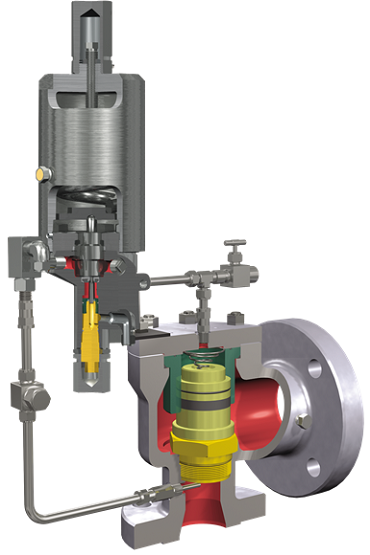
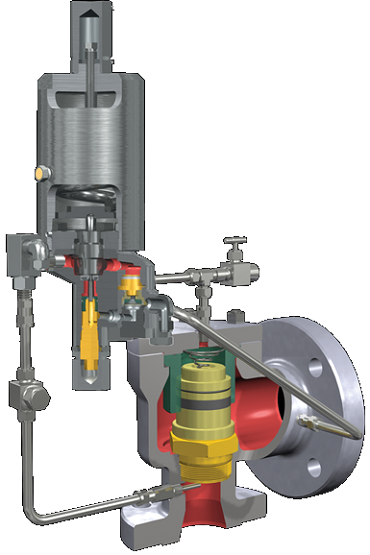
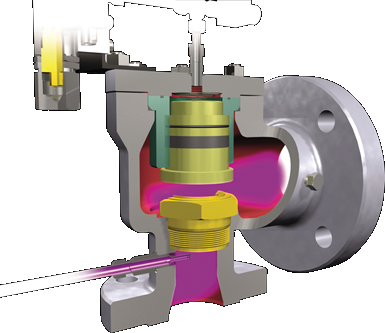
Fundamental Operation of Pilot-Operated Safety Relief Valves A pilot-operated safety relief valve is a pressure relief valve in which the major relieving device (main valve) is combined with and is controlled by a self-actuated auxiliary pressure relief valve called a pilot valve. Pilot-operated safety relief valves can be flowing or non-flowing, and come in two pilot types – pop action and modulating action. See Figures 1 and 2 for illustrations of these pilot types.
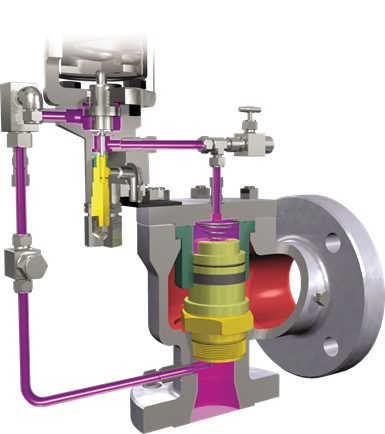
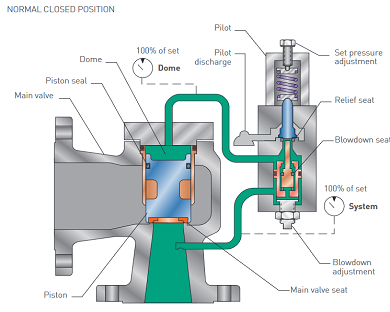
Operational Basics of Pilot-Operated Safety Relief Valves The pilot valve operates by sensing system pressure and using this pressure to control the closing force on the main valve disc. Increasing inlet valve pressure results in increased closing force until the pilot valve opens. Pressure is relieved at a designated set point as process media is allowed to discharge through the main valve. Pop Action POSRV Use of the pop pilot configuration will result in a main valve disc “pop” action from the seated position to 100% open. When the overpressure condition is relieved, the main valve disc will reseat due to the increased media pressure directed through the pilot valve to the top of the valve disc (dome). As shown in Figure 3, system pressure from the main valve inlet is fed to the dome area by the pilot through interconnected tubing. This equalizes the pressure on the top of the disc with inlet pressure on the seating surface (bottom) of the disc. Since the area of the top of the disc is larger than the area of the seating surface, the differential area results in a net downward force keeping the main valve tightly closed.
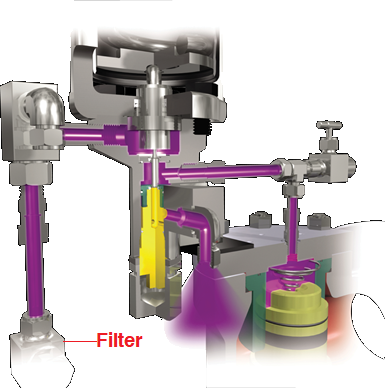
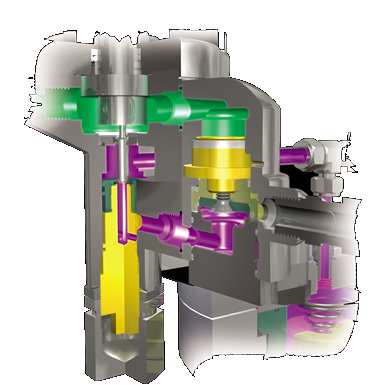
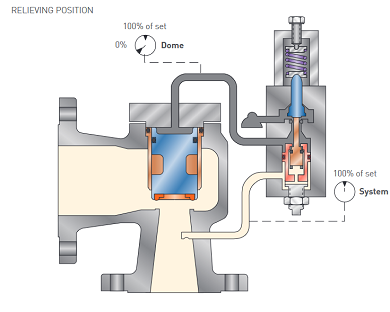
Figure 3- Main valve closed (normal position). Figure 4 and 5 shows that as inlet pressure increases, the pilot piston strokes and seals off the main valve inlet pressure from the dome pressure. The pilot simultaneously opens the vent seal to relieve the dome pressure to atmospheric pressure.
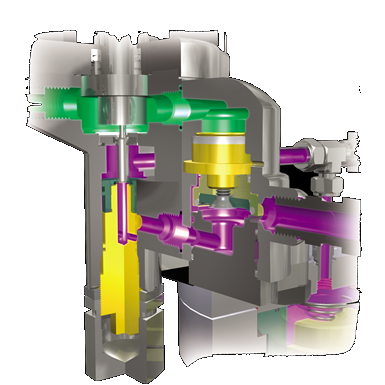
Figure 4 - PV valve open (relieving position).
Figure 5 - Gas Release from the body The main valve disc is allowed to lift off the seat as the fluid force overcomes the now removed pressure load above the main valve disc. The valve discharges to relieve system pressure. When the discharging main valve reduces the inlet pressure to the preset blowdown pressure of the pilot, the pilot piston closes the vent seal. Simultaneously, the inlet seal is reopened in the pilot. The main valve inlet pressure is again allowed to enter the dome above the main valve disc. As the dome pressure equalizes with the inlet pressure, the downward force created by the differential areas of the disc closes the main valve.
Modulating Action POSRV The pilot is designed to open gradually, so that less of the system fluid is lost during each relief event. The piston lifts in proportion to the over-pressure. Blowdown is typically short. The modulating pilot operation is very similar to the pop pilot operation with the added ability to hold a percentage of system pressure above the main valve disc, producing a modulating action. Increasing the system pressure results in reduced closing force due to venting through the pilot valve. Pressure relief begins at a designated set point as process media is discharged through the main valve. However, the actual lift of the main valve disc is based on the specific system overpressure condition instead of “popping” instantaneously to the 100 percent open position. This “modulating” action results in improved operating efficiencies through reduced media loss and lower emissions. Figure 6 illustrates how system pressure from the main valve inlet is fed to the dome area by the pilot through interconnected tubing. This equalizes the pressure on the top of the disc with inlet pressure on the seating surface (bottom) of the disc. Since the area of the top of the disc is larger than the area of the seating surface, the differential area results in a net downward force keeping the main valve tightly closed.
Figure 6 - Main valve closed (normal position). Figure 7 shows that, as inlet pressure increases, the pilot piston strokes and seals off the main valve inlet pressure from the dome pressure. The pilot simultaneously opens the vent seal to relieve the dome pressure to the bottom of the modulator piston. The modulator piston has a differential area with the smaller area being on top. The top of this piston is always subjected to the main valve inlet pressure. When the dome pressure is applied to the bottom of the modulator piston, there is a net upward force. This is due to both pressures being equal (at this point), and the lower area is larger than the upper area.
Figure 7 - Modulating position. The modulator relieves pressure from the dome to the atmosphere until force from the inlet pressure on top of the modulator piston is sufficient to move it to the closed position. A certain amount of pressure remains in the dome. This pressure is controlled by the differential area in the modulator. Since the dome pressure has not been dropped to atmospheric pressure, the main valve only partially opens at the set point. The modulator piston will remain closed until the main valve disc is forced into higher lift by increasing inlet pressure. As this occurs, the modulator piston may relieve further pressure from the dome as necessary to achieve the required main disc lift within 10% overpressure. As the inlet pressure increases further, the net upward force on the main valve increases, allowing the main valve to relieve more pressure. The disc obtains full lift (full capacity) within 10% of set pressure. (See Figure 8.)
Figure 8 - Main valve fully open. When the discharging valve reduces the inlet pressure to the preset blowdown pressure of the pilot, the pilot piston closes the vent seal. Simultaneously, the inlet seal is reopened in the pilot. The main valve inlet pressure is again allowed to enter the dome above the main valve disc. As the dome pressure equalizes with the inlet pressure, the downward force created by the differential areas of the disc closes the main valve. Ajustment Calibration The calibration of these pilot PRV’s is completely different when compared to a traditional PSV. Figures 9 and 10 below shown the PRV during Activation and deactivation
It should be noted that each manufacturer has its own tolerances, so this guide explains approximately how a modulated piloted PRV works. Piloted PSV's are dived in three in 3 pieces:
Body Valve Body Valve is the casing where is located the dome valve which open the port during overpressure activation. The exhaust port of the pilot valve may be piped to the outlet body to avoid any vapor emission to the atmosphere. The body valve representing the pressure rating and its respective connection flanges Dome Valve The dome valve and the mushroom that opens or closes the passage to the exhaust during an overpressure As a power-operated valve, dome valves are high-pressure valves having the unique ability to open and close with a pressure-tight seal. They come with a unique inflatable sealing mechanism which makes them safe & reliable and provides greater control. Also, irrespective of the applications – abrasive, toxic, friable or hazardous – dome valves offer high performance and capability of returning over one million maintenance-free cycles. Pilot Valve The pilot valve is the sensitive part of the entire PRV. The pilot valve drives the Dome valve in Opening if the pressure has exceeded the setting, and in close position if the pressure drop under the set pressure of pilot valve Set pressure Adjustment Normally, this type of PSV starts to open at 90% of set pressure and close at 95% of the set pressure (It always depends on the manufacturer and the operating manual). When the pilot valve is calibrated with a value, the dome valve will open before reaches the set pressure , because base surface of dome valve is too big if compare with internal piston of the pilot valve example: set pressure Pressure is 325bar
This is more less the calculation how can setting an PRV Piloted Note: Always consult the valve manufacturer, each valve has its own characteristics
Advantages of a Pilot-Operated SRV over a Spring-Loaded SRV There are many advantages of a pilot-operated SRV over a spring-loaded SRV. Here are a few worth noting:
Limitations of a Pilot-Operated SRV over a Spring-Loaded SRV
As we've seen, there are some advantages of a pilot-operated SRV over a spring-loaded SRV, but there are also some limitations to consider. Depending on the severity of the dirty service, different types of filters with varying capacities can be installed, and a dome assist option can be installed to isolate the dirty process media from crucial valve components such as the modulator, dome assembly, vent and inlet seals. However, for severe dirty service where clogging of the interconnecting tubing is possible, a pilot-operated SRV might not be the best fit. A pilot-operated SRV operates by allowing time for system pressure from the main valve inlet to fill the dome area through interconnecting tubing. During plant start-up, when the system pressure has an extremely rapid ramp rate, the dome area may not equalize with the same inlet pressure, resulting in insufficient closing force. Consequently, the system pressure from the main valve inlet will push the main valve disc to lift and start to leak. A spring or alternative pressure can be added in the main valve dome area to close the main valve disc while allowing time for system pressure to ramp. If these remedies are not feasible or economical, a spring-loaded SRV will be the better option in excessive pressure ramp rate applications. Common Industries and Applications Pilot-operated SRVs are found in many industries just like spring-loaded SRVs. Common industries using these valves include power generation, refining/petrochemical, chemical, midstream oil and gas, upstream oil and gas and pulp and paper. Some unique applications for pilot-operated SRVs include high-pressure applications, reducing emissions in high operating pressure applications, offshore drilling, and production platforms in deep well applications, and any air/gas, liquid, steam, 2-phase, or multi-case applications.
|

+(39) 347 051 5328
Italy - Kazakhstan


09.00am to 18.00pm
About
We offer the best and economical solutions, backed by 27+ years of experience and international standards knowledge, echnological changes, and industrial systems.
Our Services
Marketing Materials


Marketing Materials1


