Fuji Transmitter

As reliability, the Fuji transmitters are one of the best on the market.

Fuji Electric's FCX series pressure transmitters, particularly the FCX-AII V5, are often considered top contenders in the field, especially for high-pressure and demanding applications like those in the oil and gas industry. Fuji's transmitters are known for their high accuracy, long-term stability, and robust construction, making them reliable for harsh environments

What are the different pressure transmitters technologies?

Among the most common technologies are piezoresistive pressure transmitters, capacitive pressure transmitters, thin-film resistive pressure transmitters and fiber-optic pressure transmitters. Each of these technologies will be described in more detail below.

1

 Piezoresistive pressure sensor

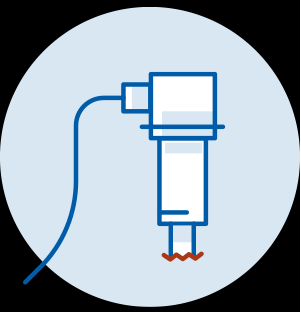
The most common type of pressure transmitter is the piezoresistive pressure transmitter . These pressure transmitters are constructed from a resistive material which changes resistance in response to applied pressure. This change in resistance can be measured and converted into a digital signal, giving the user an overview of the situation.

Piezoresistive pressure transmitters can be found in a wide variety of applications, from automotive to medical devices.


3

Thin-film resistive pressure transmitter 

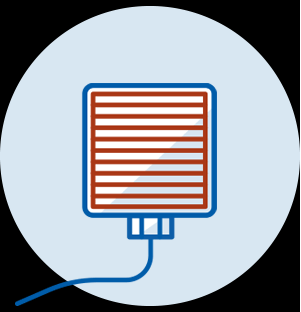
Thin-film resistive pressure transmitters are another type of transmitter. These transmitters use a very thin layer of resistive material to measure the applied pressure. This layer is usually only a few hundred nanometers thick, making it highly sensitive to changes in pressure.

Thin-film resistive transmitters are often used in industrial solutions, where accuracy and precision are essential.


 4

 Optical pressure sensor

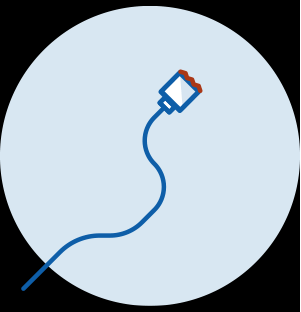
Another type of transmitter is pressure transmitters . These sensors use optical fibers to measure applied pressure. The principle behind these sensors is quite simple: as light passes through a fiber, its properties (such as wavelength) change according to the pressure exerted on the fiber. By measuring the change in wavelength, pressure can be accurately determined.

The fibre optic pressure transmitters are often used in pressure measurement applications such as hydraulic systems and gas pipelines.


5

Hydrostatic pressure transmitter for level measurement 

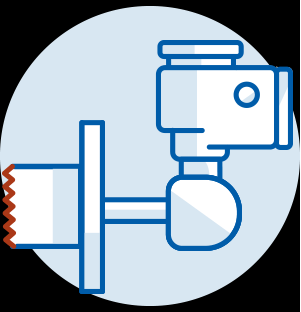
Hydrostatic pressure transmitters operate on the hydrostatic principle to provide a pressure measurement proportional to the applied head.

In a hydrostatic pressure transmitter, the fluid is contained in a sealed chamber. When pressure is applied to the chamber diaphragm, it deforms the chamber walls, resulting in a change in the fluid height measurement. This change can be measured and converted into a digital signal.

The hydrostatic pressure transmitter is often used in process and level measurement solutions on tanks and reservoirs.


 What are the output signals of a pressure transmitter ?

The output signals of a pressure transmitter can vary, but are usually an analog current or voltage, or a digital signal.
The analog current or voltage output signal is generally a continuous signal that varies according to the pressure applied.

 What is special about an industrial pressure transmitter ?

Industrial pressure transmitters are generally more accurate and have a longer service life than pressure transmitters consumer products.
They are also more expensive, but this is often worthwhile for applications where precise measurement is essential.

An industrial pressure transmitter can be used to measure fluid or gas pressure in a variety of environments, including factories, laboratories and other industrial facilities.
For critical pressure applications, annual calibration of pressure transmitters may be required.

What are the most common applications for industrial pressure transmitters?

Common applications for pressure transmitters include the following industrial applications:

  • Pressure measurement and control
  • Monitoring and displaying critical processes
  • Measurement of tank filling levels and level control in tanks
  • Measurement of fluid flow
  • Process safety
  • Pressure leak detection
  • Pump control system

Pressure transmitters are used in a wide variety of applications where accuracy and precision of measurement are essential.

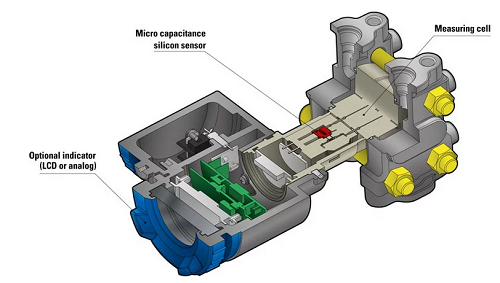
Let's took for example the the FCX-A2 V5 series transmitter, which accurately measures the differential pressure, level of liquid, gauge pressure or flow rate, and transmits a proportional current signal of 4 to 20mA DC.All the adjustment functions are incorporated in the transmission unit for making adjustments easily and exactly.Transmitter settings (such as range and damping time constant, etc.) can be changed from an HHC (Hand Held Communicator). The transmitter utilizes a unique micromachined capacitive silicon sensor with state-of-the-art microprocessor technology to provide exceptional performance and functionnality.The transmitter is compact and light, provide high accuracy and reliability. Local adjustment of zero and span are possible from outside screw on the electronic housing. For more details see Figure 1 below

fuji drawing

Figure 1 - Fuji Transmitter Drawing

Specifications

Accuracy :

  • ± 0.065% of the calibrated span (standard)
  • ± 0.04% of the calibrated span (option)
  • Long term stability : ± 0.1% max.span /10 years
  • Differential pressure transmitters for static pressure : up to 1035 bar (15 000 PSI)
  • Various materials available for wetted parts : Tantalum, Monel, Hastelloy C, ou PVDF
  • Applications : chemicals, petrochemicals, energy, steel-making, paper, food & beverage or water treatment

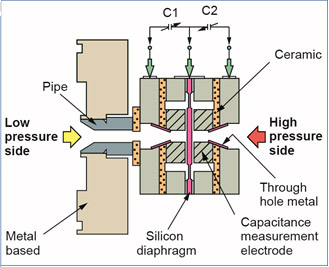
Cells sensitive element : Silicon chip Micro capacitance based technology

Advantages :

  • Decrease of hysteresis and mechanical fatigue problems on the sensitive element


fuji drawing1

 Figure 2 - Micro capacitance element

Measurement principle :

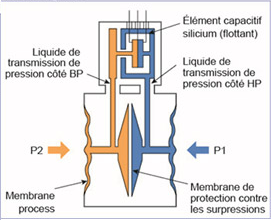
  • The sensitive element receives the differential pressure, which causes the two capacity values to vary. It is mounted “floating” in the neck of the measurement cell to improve the static pressure and temperature characteristics.

fuji drawing2

Figure 3 - Measuring cell 

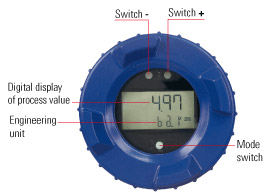
fuji drawing3

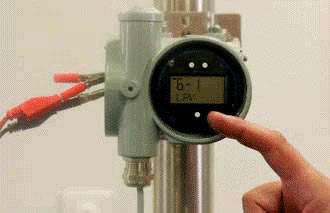
Figure 4 - Digital Indicator

The FCX-All V5 transmitter may be equipped with an analog or digital indicator. The digital indicator is based on LCD technology and shows the information on 2 lines each of 6 digits and also includes 3 push buttons. The indicator enables the measurement in physical units and the local configuration of the transmitter.

Main settings

  • Zero/Span calibration without reference pressure service
  • Linear or square root signal
  • Damping
  • Digital indicator configuration
  • Zero/Span calibration
  • Self-diagnosis
  • Output circuit calibration
  • Direction and value of burnout

fuji drawing4

Figure 5 - Digital Indicator

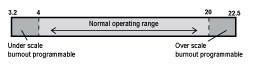
In conformance with the recommendations of NAMUR NE 43, the output of the transmitter can be driven to a specific value should the transmitter experience an internal failure. The standard output signal limits are 3.2 to 22.5 mA.
In case of a transmitter failure, the burnout direction can be down scaled (3.2 to 4 mA) or up scaled (20 to 22.5 mA), being programmable.

fuji drawing5

Figure 6 - Maintenance functions

The calibration parameters are saved in the transmitter. At any time, it is possible to come back to the factory calibration of the transmitter.
Min and max temperatures are stored in the transmitter memory.
It is always possible to visualize the values in a specific menu on the screen of the hand held communicator. All the adjustment functions of the transmitter can be locked by a password (the external adjusting screw is also locked).

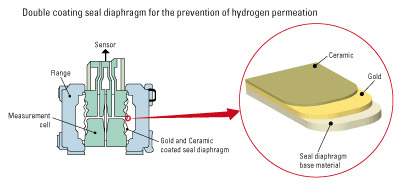
Transmitter measurement diaphragm materials coating for prevention of hydrogen diffusion in the measurement cell (hydrogen sulphide) : Gold and Ceramic

fuji drawing6

Figure 7 - Double coating seal diaphragm for the prevention of hydrogen permeationn

For certain configurations, the process fluids generate hydrogen atoms that may be diffused through the metal diaphragm. The contamination of the oil associated with this diffusion degrades the transmitter’s measurement accuracy and life time. Thanks to our gold and ceramic double-coating diaphragm, the hydrogen’s permeation is stopped.

In this configuration, the transmitters may be used in Sulphur reduction installations, hydrogen production units, oil refineries and putrefaction mud treatment works.

Different materials and coatings are available for the pressure transmitter diaphragms to guarantee the longevity and reliability of your measurements. For more details, please fill the form on the main page

  Transmitter measurement diaphragm materials and their applications
 Gold & ceramic coating Sulphur reduction installations, hydrogen production units, oil refineries and putrefaction mud treatment works, ionised gas (hydrogen sulphide) 
 Tantalum Hydrochloric acid, sulphuric acid, nitric acid, aqua regia 
 Titanium Sodium chloride, sulphate compound 
 Hastelloy-C Organic acid, inorganic acid, alkaline typex 
 Monel  Alkaline type, fluorinated acid
 Zirconium  Hydrochloric acid, caustic soda, whitening agent


favicon bacd

+(39) 347 051 5328

Italy - Kazakhstan

09.00am to 18.00pm

About

We offer the best and economical solutions, backed by 27+ years of experience and international standards knowledge, echnological changes, and industrial systems.

Marketing Materials

Spring Renovation
Industry
US Gas Company
Construct
Plus Project
Vam Drilling Service
X Project
X Project
Cabrrus Training

Marketing Materials1

Spring Renovation
Industry
US Gas Company
Construct
Plus Project
Vam Drilling Service
ultrasonic sensor
ultrasonic sensor
Cabrrus Training