|
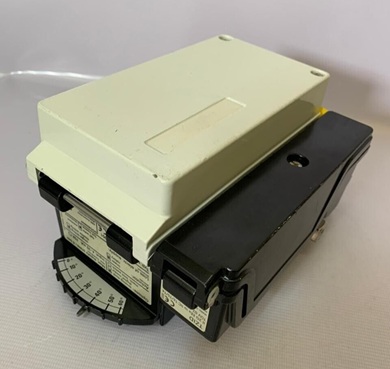
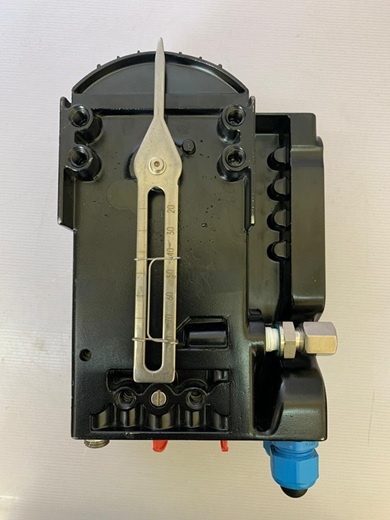
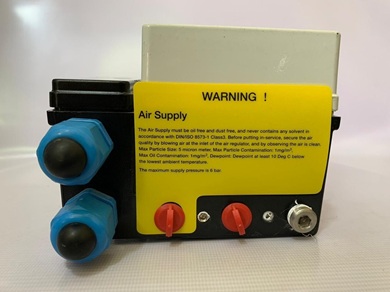
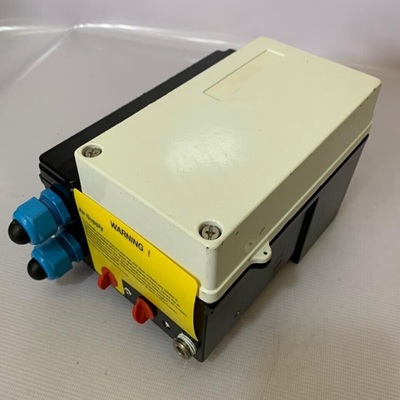
ABB Positioner TZID Series - 18341-A1212202/001 (Obsolete)
The ABB Positioner TZID uses a digital electronic controller to precisely manage a pneumatic actuator. It receives an input signal, measures the actual valve position, and uses a PD control algorithm to calculate the required output. This output is converted to a pneumatic signal that controls an I/P (current-to-pneumatic) module, which continuously modulates the air flow to a 3/3-way valve to achieve the desired position.
Detailed working principle
- Input and position feedback:An input signal (set point) and the actual valve position are sent to the positioner's CPU via an analog-to-digital (A/D) converter.
- Control calculation: The CPU's processor compares the set point to the actual position and computes a control output based on a PD control algorithm to determine the control deviation.
- Signal conversion: The calculated output is converted from a digital signal to an analog electrical signal by a digital-to-analog (D/A) converter.
- Pneumatic output: This analog electrical signal modulates an I/P module, which converts the electrical signal into a proportional pneumatic signal.
- Actuator control: The pneumatic signal from the I/P module controls a 3/3-way valve to continuously adjust the air pressure to a pneumatic actuator.
- Continuous modulation: The air supply to the actuator is adjusted proportionally, ensuring precise and rapid control to move the valve to the commanded position.
- Set point reached: Once the set point is reached, the valve closes in its center position, minimizing air consumption.
Key components and principles
- Input signal (setpoint): The TZID receives a 4–20 mA DC electrical signal from a control system, such as a Distributed Control System (DCS) or PLC. This electrical current represents the desired position of the valve, where 4 mA corresponds to the minimum position and 20 mA to the maximum.
- Position sensor (feedback): A non-contact, inductive position sensor is the only moving part within the TZID and is connected to the actuator's shaft. It provides continuous feedback by converting the actuator's physical position into an electrical signal. This design minimizes wear and tear.
- Microprocessor (CPU): The central processing unit is the "brain" of the positioner. It:
- Receives the electrical input signal (setpoint).
- Reads the electrical signal from the position sensor (feedback).
- Calculates the difference between the setpoint and the actual position, creating an "error signal".
- Determines the appropriate action based on a PID (proportional-integral-derivative) control algorithm to correct the error and move the actuator.
- I/P module and 3/3-way valve: The microprocessor's command is sent to a proven, well-regarded I/P (current-to-pneumatic) module. This module then controls a fast-acting 3/3-way solenoid valve.
- The 3/3-way valve precisely adjusts the airflow into or out of the pneumatic actuator.
- To maintain a position, the valve closes in the center to minimize air consumption.
- Pneumatic actuator: This is the piston or diaphragm-based device that the TZID controls. The air pressure from the positioner moves the actuator, which in turn manipulates the control valve.
- Closed-loop control: The entire process is a continuous loop.
- The controller sends a signal (4–20 mA).
- The TZID's microprocessor compares this to the actuator's actual position.
- It sends a pneumatic command to the actuator to correct any difference.
- The position sensor detects the new position and provides updated feedback.
- This rapid cycle continues until the actuator's position precisely matches the control signal, ensuring high-accuracy control.
Operating features
The TZID also incorporates advanced features for easy setup and operation:
- Automatic commissioning: The positioner has an "Autoadjust" function that automatically adapts its parameters for optimal performance simply by pressing a button.
- Adaptive control: It can automatically adjust control parameters during operation to provide optimal behavior in response to changing process conditions.
- HART communication: Many models support the HART communication protocol, allowing for remote configuration, monitoring, and diagnostics.
- Modular design: The unit can be fitted with optional plug-in modules for additional functionality, such as analog or digital position feedback.
 Full Datasheet Full Datasheet
Positioner Transmitter Feature
- Manufacturer: TZID
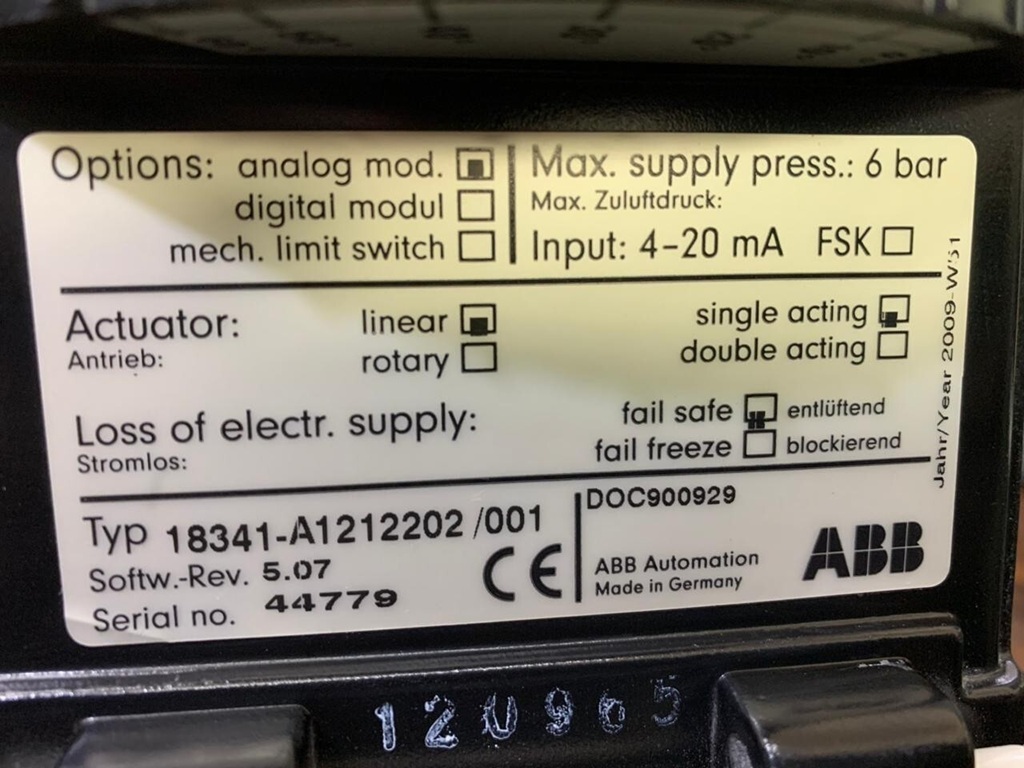
- Product No. : 18341-A1212202/001
- 18341 -TZID intelligent, configurable with display and operating panel signal input 4 ... 20 mA, two-wire
- Case material: A - aluminium, varnished, protection IP 65s
- Communication port / attachment: 1 - attachment to linear actuators to DIN/IEC 534 / NAMUR attachment to rotary actuators 90° to VDI/VDE 3845
- Explosion protection:2 - ATEX EEx ia IIC, for inflammable gas for aluminium case
- Controller output / safe position: 1 - air is evacuated from actuator in case of electrical power failure
- Connections: 2 - Cable: Thread 1/2-14 NPT - Air pipe: Thread 1/4-18 NPT
- Option module: 2 - intrinsically safe ATEX and FM / CSA
- Mechanical kit for digital feedback of the min. / max. position: 0 - without
- Labeling (language): 2 - English
- Special number: 001
There are several Model of positioner, for more details read the PDF below
Basic Ordering Information
|