|
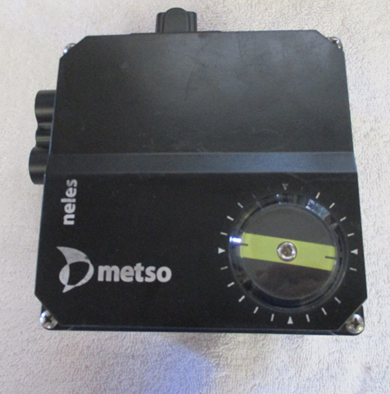
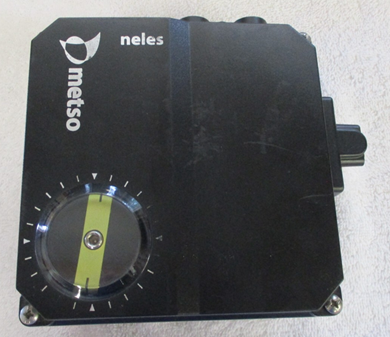
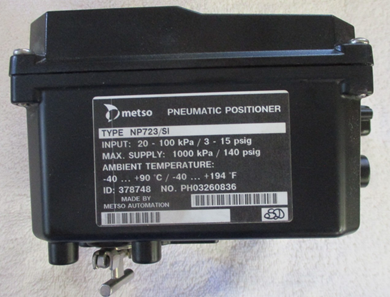
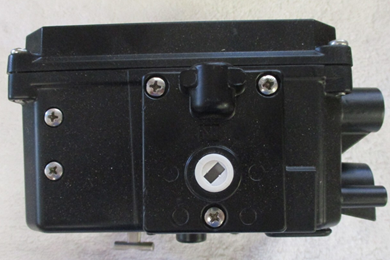
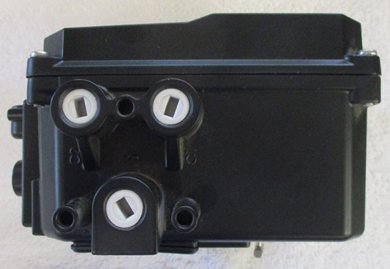
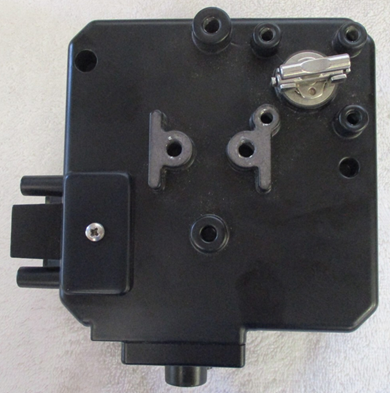
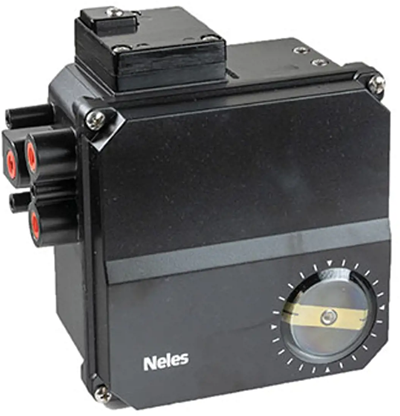
METSO - ELECTRO-PNEUMATIC POSITIONER- NE700 Series - NP723S1
The Metso NE700 series is an electro-pneumatic positioner that works on the principle of a torque balance mechanism to move a control valve to a precise position. It uses an electrical input signal, which is converted into a magnetic force to actuate a balance beam. A feedback spring, driven by the actuator's position, creates a counter-torque. The positioner then uses a pilot valve to supply air to the actuator to move it until the beam is in equilibrium, matching the actuator's position to the input signal.
Working principle
- Input signal and force generation: The positioner receives a standard electrical signal (e.g., a 4-20 mA current) from a controller. This current energizes a force coil, creating a torque proportional to the input signal on a balance beam
- Torque balance: A feedback spring provides a counter-torque on the beam that is proportional to the actuator's current position. This feedback is linked through the actuator shaft, a coupling, a feedback shaft, a cam plate, and a lever
- Nozzle and pilot valve: The beam's equilibrium position is sensed by a nozzle.
- If the input signal increases, the beam moves closer to the nozzle, increasing the nozzle pressure.
- This higher pressure moves a diaphragm piston, which in turn activates the spool of a pilot valve.
- Actuator movement: The pilot valve then directs compressed air to one side of the actuator's piston, while simultaneously releasing air from the other side to the exhaust. This pressure difference causes the actuator to move.
- Positioning: The actuator continues to move until the feedback spring's counter-torque balances the force-coil's torque, and the beam returns to its balanced equilibrium position. At this point, the actuator is in the exact position required by the input signal.
The Metso NE700 series is an electro-pneumatic valve positioner that operates on a force or torque balance principle to accurately position a control valve actuator. It converts a standard electrical input signal (typically 4-20 mA DC) into a proportional pneumatic output pressure to move the actuator.
Working Principle
The operation is based on balancing an electrical input signal's torque against the mechanical feedback torque from the actuator's actual position.
- Input Signal Conversion: An input current signal from a controller is sent to a force coil located within a permanent magnet's field. This current generates a magnetic torque on a balance beam that is directly proportional to the control signal.
- Position Feedback: The position of the control valve's actuator shaft is mechanically linked via a coupling and feedback shaft to a cam plate and lever system. This system applies a counter-torque, proportional to the actuator's actual position, to the same balance beam through a feedback spring.
- Nozzle/Flapper Mechanism: A nozzle senses the balance point of the beam.
- If the input signal increases, the electrical torque on the beam increases, causing the beam to move closer to the nozzle. The pressure in the nozzle circuit rises.
- If the input signal decreases, the electrical torque lessens, the feedback spring pulls the beam away from the nozzle, and the pressure drops.
- Pilot Valve Amplification: The change in nozzle pressure is amplified by a diaphragm piston and pilot valve (spool valve) system. The pilot valve distributes the main supply air to one side of the actuator piston/diaphragm while exhausting air from the other side, creating a pressure difference.
- Actuator Movement: The pressure difference causes the actuator piston or diaphragm to move the valve stem/shaft.
- Equilibrium: The actuator continues to move until the feedback mechanism changes the counter-torque on the balance beam sufficiently to match the input signal's torque. At this point, the beam is in equilibrium, the pilot valve stops air flow/exhaust, and the actuator holds its new position.
This continuous feedback loop ensures that the actuator's position precisely matches the desired setpoint from the input signal, providing excellent repeatability and accuracy for throttling control applications.
For detailed technical specifications, refer to the product documentation available from the manufacturer, such as the Valmet (Neles) NE/NP700 positioner manual.
 Full Datasheet Full Datasheet
Positioner Transmitter Feature
- Manufacturer: Metso - NE700 Series
- Product No. : NP723S1
- PRODUCT GROUP - NP - Pneumatic positioner.
- Series Code: 7
- INPUT SIGNAL RANGE: 2 - 20-100 kPag, 0.2-1.0 barg/3-15 psig.
- PILOT VALVE / CONNECTIONS (S, C1, C2) : 3 - Ø 4 mm / 1/4 NPT
- OPTIONS: S1 - Positioner attachment face according to standard(see datasheet)
There are several Model of positioner, for more details read the PDF below
Basic Ordering Information
|