|
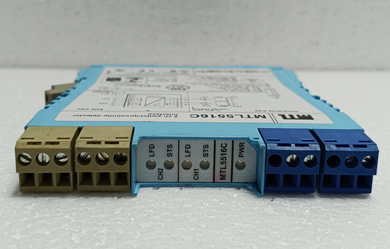
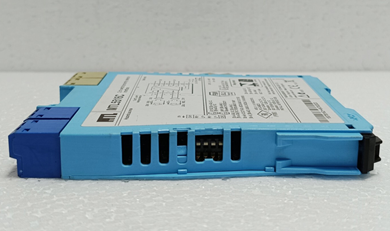
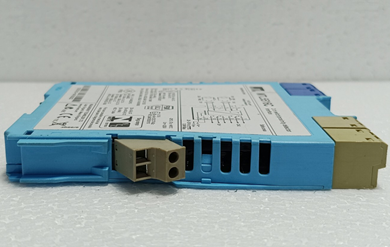
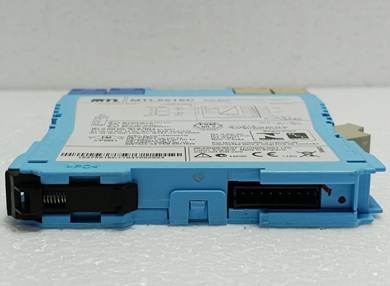
MTL Barries - MTL5516C - SWITCH/ PROXIMITY DETECTOR INTERFACEs (two-channel, with line fault detection)
The MTL5516C works as a two-channel intrinsically safe (IS) barrier that uses relays to control two safe-area loads based on signals from a switch or proximity detector in a hazardous area. It isolates the hazardous and safe circuits and provides the output via changeover relay contacts. When the hazardous-area input exceeds a certain current (>2.1mA), the safe-area output relay closes; it opens when the input drops below a different threshold (<1.2mA). An optional line-fault detection (LFD) facility can also be configured to detect open or short circuits in the field wiring and activate an alarm
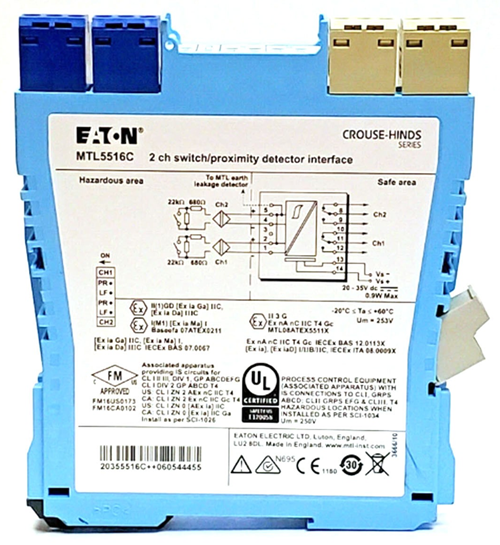
Difference betwwen MTL5516 and MTL5516C
The main difference is that the MTL5516 is a general switch/proximity detector interface, while the MTL5516C is a specific model of that interface with line-fault detection and two changeover relays for controlling loads in a safe area based on a switch or proximity detector in a hazardous area. The "C" in MTL5516C denotes this enhanced feature set, specifically the line-fault detection (LFD) capability.
| Feature |
MTL5516 |
MTL5516C |
| Function |
Switch/proximity detector interface |
Switch/proximity detector interface |
| Replay Configuration |
Not specified for standard model |
Two changeover relays |
| Line-Fault Detection |
Not mentioned |
Yes, detects line faults |
| Application |
Enables two safe-area loads to be controlled by switches or proximity detectors in a hazardous area |
Enables two safe-area loads to be controlled by switches or proximity detectors in a hazardous area |
Key components and functions:
- IS Barrier: The unit isolates the hazardous area from the safe area, preventing sparks from reaching the hazardous zone.
Two-channel operation: It has two independent channels, each with a relay to control a separate load.
- Relay Output: Each channel has a changeover relay that closes to energize the safe-area load when the input signal is active.
- Switch/Proximity Detector Input: The input is designed to be activated by a switch or a NAMUR-style proximity sensor.
- Line-Fault Detection (LFD): An optional feature that detects open or short circuits in the field wiring and indicates a fault.
- Phase reversal: A switch on the module allows for phase reversal for each channel.
Operational logic:
- Normal Operation: The output relay closes when the input current is above 2.1mA and opens when it is below 1.2mA.
- Line-Fault Detection:
- Open Circuit: An alarm is triggered if the input current falls below 50A.
- Short Circuit: An alarm is triggered if the input resistance drops below 100Ω
- (Note: Specific resistors must be fitted in the circuit when using the LFD feature with a contact input)
The MTL5516C is a two-channel switch/proximity detector interface (intrinsically safe barrier) that provides galvanic isolation between a hazardous area and a safe area. Its primary working principle is to safely transmit signals from a device in a hazardous location to a control system in a non-hazardous area using changeover relays, while limiting the energy that can enter the hazardous area.
Working Principle
- Signal Transmission: A switch or a NAMUR proximity detector in the hazardous area is connected to the MTL5516C's input terminals. The module applies a low-power 7-9V DC signal to the sensor.
- Input Detection:
- When the input current from the sensor exceeds 2.1mA (input resistance < 2kΩ), the input is considered "closed" or "on".
- When the input current drops below 1.2mA (input resistance > 10kΩ), the input is considered "open" or "off".
- Galvanic Isolation: The module uses transformers (galvanic isolation) to transmit the input status to the output side without a direct electrical connection, which prevents dangerous voltages or currents from the safe area power supply from reaching the hazardous area.
- Output Control: Based on the input status, the module's internal changeover relay contacts in the safe area open or close, controlling a connected safe-area load (e.g., a PLC input, an alarm, or a control circuit).
- Phase Reversal: A switch on the side of the module allows the user to reverse the output phase for each channel, providing flexibility in how the input signal controls the output.
- Line Fault Detection (LFD): When the LFD feature is selected, the module continuously monitors the field wiring for open or short circuit conditions. If a fault is detected (e.g., input current < 50µA for open circuit or input resistance < 100Ω for short circuit), the corresponding channel's relay de-energizes, and a red LED indicator illuminates on top of the module.
Summary of Function
The MTL5516C acts as a safety barrier, allowing monitoring of field devices in explosive environments while ensuring that the energy in the hazardous area remains intrinsically safe (low voltage and current) to prevent ignition.
 Full Datasheet Full Datasheet
|