|
MTL Barries - MTL7760ac - Active dc & ac sensors Thermocouples
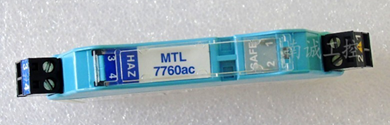
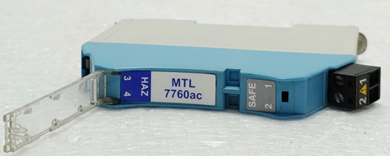
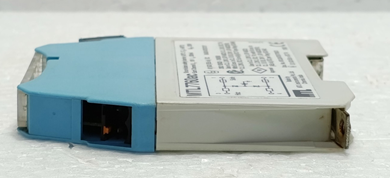
The MTL7760AC is a zener barrier that uses intrinsic safety principles to limit the energy transferred between hazardous and safe areas, preventing sparks or overheating that could cause an explosion. It works by using a network of diodes, resistors, and fuses to clamp voltage and limit current. In the event of a fault, the zener diodes conduct to clamp the voltage, while a fuse or electronic fuse melts to limit the current, ensuring the barrier can't supply enough energy to ignite a flammable atmosphere.
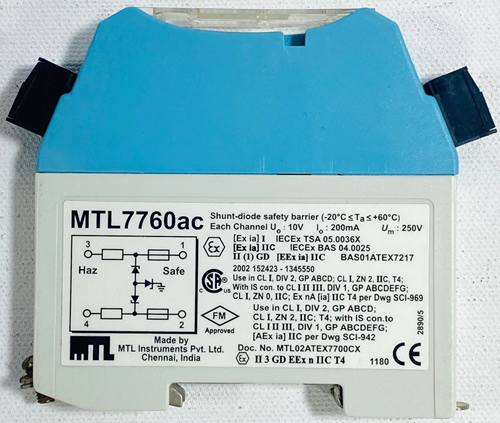
How the MTL7760AC works
- Energy limitation: The barrier contains a zener diode network that is designed to clamp the voltage at a safe level. This prevents the voltage from rising to a level that could cause an ignition.
- Current limiting: It also limits the current in the circuit. If there is a fault that causes excessive current, a fuse or an electronic fuse will open the circuit, stopping the current flow.
- Hazardous area protection: By limiting both voltage and current, the barrier ensures that the electrical energy transferred to the hazardous area is below the level needed to ignite flammable gases or dusts.
- Loop disconnect: The MTL7760AC features removable terminals. This allows for a loop disconnect by simply unplugging the terminals, making installation, maintenance, and repair easier.
- Two-channel design: As a dual-channel barrier, it is designed to handle two separate circuits and is often used for applications like switch inputs or 2-wire transmitters.
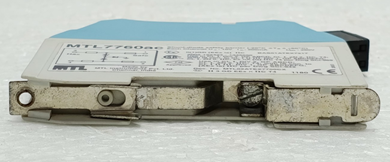
- DIN-rail mounting: It is designed to be mounted on a standard DIN rail, and its clamping action simultaneously makes a secure ground connection for intrinsic safety.
The MTL7760AC is a 2-channel zener barrier whose working principle is to use passive components (zener diodes, resistors, and a fuse) to safely limit the transfer of electrical and thermal energy from a "safe area" to a "hazardous area". This prevents the energy from reaching levels that could ignite flammable gases or dust, thus ensuring intrinsic safety.
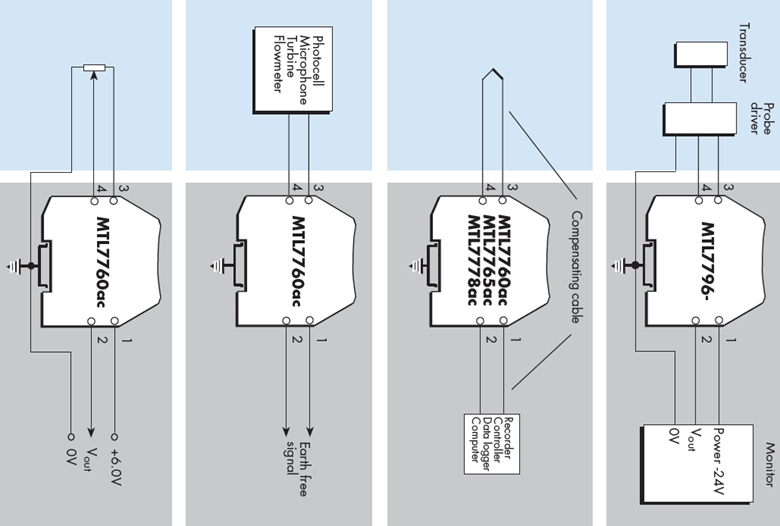
| Thermocouples sensors connection |
 |
Working Principle
The barrier operates on a simple, fail-safe principle using a circuit designed around three main components per channel:
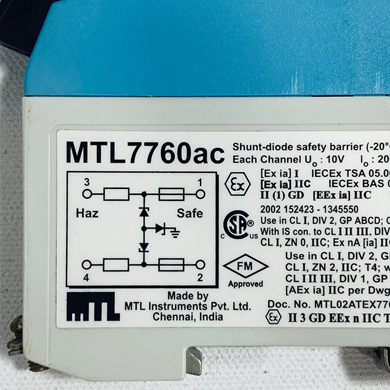
- Zener Diodes: These are connected in shunt (parallel) to the signal lines. In the event of an electrical fault or over-voltage in the safe area, the diodes conduct, diverting the excess voltage to a high-integrity earth connection. The diodes are pulse-tested and installed in two stages to ensure continued safety if one stage fails.
- Series Resistor: An "infallible" resistor is connected in series with the signal lines. Its purpose is to limit the current that can flow into the hazardous area, even if a high voltage is applied in the safe area.
- Fuse: A fuse protects the zener diodes from damage due to prolonged over-current, ensuring the safety components remain functional.
Function and Application
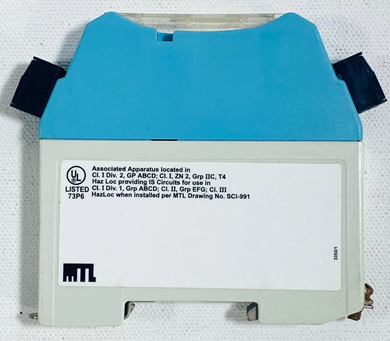
- Intrinsic Safety (IS): The MTL7760AC is a certified intrinsic safety device, meaning it is designed so that the maximum voltage and current that can enter the hazardous area are always below the ignition point of the potentially explosive atmosphere.
- Application: It is typically used with equipment such as switch inputs, proximity detectors, RTDs, and thermocouples in hazardous industrial environments.
- Installation: The device is DIN-rail mountable, and this mounting method simultaneously makes a reliable intrinsic safety earth connection, which is crucial for its operation.
By shunting excess energy to the ground, the MTL7760AC mitigates the risk of sparking or overheating that could cause explosions in the presence of flammable materials. For more technical specifications, consult the official MTL7700 range datasheet.
 Full Datasheet Full Datasheet
|