|
Parallel and load sharing between two or more Generators
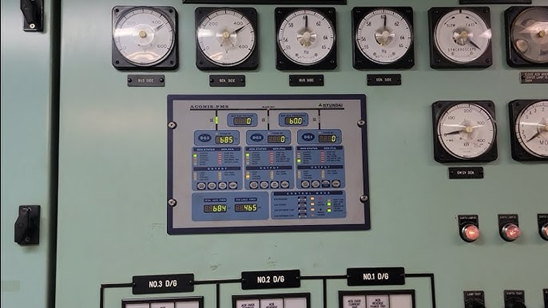
Parallel and load sharing between two generators allows them to operate as a single unit to increase capacity, efficiency, and reliability, typically managed by automatic controllers or droop governors. The system works by synchronizing voltage, frequency, and phase angle, then balancing the Active Power (kW) and Reactive Power (kVAR) to distribute the load based on their ratings
Key Principles of Generator Parallel Operation
- Synchronization Requirements: Before paralleling, both generators must match in Voltage (same level), Frequency (same Hz), and Phase Angle (synchronized waveforms).
- Synchronization Methods: This is achieved using a parallel kit/cable for smaller units or a synchroscope/automatic synchronizer for larger systems. The "Three Dark Lamps Method" can be used for manual synchronization.
- Load Sharing Mechanism:
- Active Power (kW) Sharing: Managed by the engine speed governor. As the load increases, the governor controls fuel to the engine, allowing the generator to handle more load without changing frequency.
- Reactive Power (kVAR) Sharing: Managed by the Automatic Voltage Regulator (AVR), which adjusts the excitation of the alternator.
- Automatic Load Sharing: Controllers monitor real-time output and, if one generator reaches a specific load percentage (e.g., 55%), the second unit is automatically started and synchronized to take on 50% of the load.
- Droop Characteristics: When operating in parallel, engines often use a speed droop characteristic (a decrease in speed/frequency as load increases) to allow them to share the load proportionately, particularly if they are not the same size.
Common Configurations
- Inverter Generators: Use a dedicated parallel cable or "paralleling kit" to connect outputs directly.
- Industrial Generators: Use paralleling switchgear and load-sharing modules that communicate to adjust fuel (for kW) and excitation (for kVAR).
Benefits
- Increased Capacity: Total power equals the sum of both generators.
- Reliability: If one generator fails, the other can continue to run (if sized correctly).
- Efficiency: Running one unit at high load is more efficient than running two at very low loads.
Operating two generators in parallel for load sharing is a two-stage process: first, the units must be precisely synchronized to connect safely to a common busbar, and second, they must use active control mechanisms to distribute the electrical demand proportionally.
1. Synchronization (The Initial Connection)
Before two generators can be connected, their electrical outputs must match exactly to prevent high circulating currents that could cause catastrophic damage. The four required parameters for synchronization are:
- Voltage Magnitude: Both units must produce the same voltage level, typically within a ±5% tolerance.
- Frequency: Both must operate at the same cycles per second (e.g., 60 Hz).
- Phase Angle: Their electrical waveforms must peak and cross zero at the same time (ideally within ±10°).
- Phase Sequence: The order of the phases (e.g., ABC) must be identical.
Modern systems typically use automatic synchronizers within digital controllers to manage these adjustments.
2. Load Sharing Mechanisms
Once connected, the generators must divide the total power demand. Load sharing is divided into two distinct categories:
| Parameter |
Control Mechanism |
How It Works |
| Real Power (kW) |
Engine Governor |
Controls the fuel supply. Increasing fuel to one generator increases the proportion of kW it delivers without changing its speed. |
| Reactive Power (kVAR) |
Automatic Voltage Regulator (AVR) |
Controls alternator field excitation. Increasing excitation increases the kVAR shared by that unit without changing system voltage. |
3. Load Sharing Methods
Facilities typically use one of two primary methods to manage this distribution:
- Droop Control: As the load increases, the engine speed (frequency) or alternator voltage is allowed to decline by a small, predetermined percentage (typically 3–5%). This naturally encourages other generators to pick up the slack without sophisticated communication between them.
- Isochronous Load Sharing: Advanced digital controllers (like DSE or Woodward) communicate via a CANbus to maintain a constant frequency and voltage regardless of load. They exchange data every 50–100 ms to ensure each unit carries a load proportional to its rated capacity.
4. Key Components
- Paralleling Switchgear: Equipment that manages the physical connection of generators to the common electrical bus.
- Digital Controllers: Act as the "brain," performing continuous monitoring and micro-adjustments to fuel and excitation to maintain balance.
- Sync-Check Relays: Safety devices that prevent the circuit breaker from closing if the generators are not perfectly in sync.
|