|
Step-by-step sequence to activate parallel operation between two generators
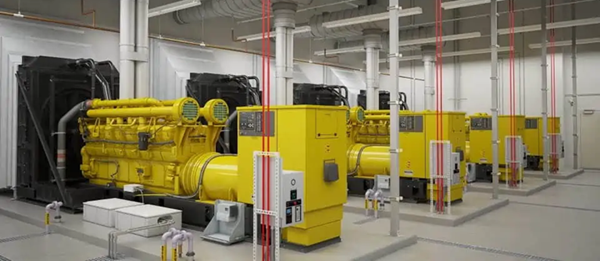
Paralleling two generators requires matching voltage, frequency, and phase angle to ensure stable operation. The process involves starting the incoming generator, adjusting its speed and excitation to match the bus, synchronizing using a synchroscope (closing at 11 o'clock), and finally balancing the load between both units.
Step-by-Step Procedure
- Start the Incoming Generator: Start the prime mover of the incoming generator (Generator 2) and bring it to its rated speed.
- Match Voltage (Excitation): Adjust the voltage of the incoming generator using its automatic voltage regulator (AVR) to match the voltage of the running bus.
- Check Phase Sequence: Ensure the phase sequence of the incoming generator matches the bus bar (pre-set or verified via lamps/sequence meter).
- Check Frequency and Phase Angle (Synchroscope): Turn on the synchroscope. Use the governor control to adjust the frequency so the synchroscope rotates slowly in the clockwise (fast) direction.
- Close the Breaker: Close the generator circuit breaker (GCB) at the 11 o'clock position (just before the 12 o'clock/0-degree point).
- Load Sharing: Immediately after closing, balance the load by adjusting the governor (kW/load) and AVR (kVAR/power factor) of both generators.
- Switch Off Synchronizing Gear: Switch off the synchroscope to prevent damage.
Key Conditions for Paralleling
- Voltage: Equal to the running bus.
- Frequency: Slightly higher than the bus (to ensure it takes load immediately).
- Phase Angle/Sequence: Must be identical.
To activate parallel operation between two generators (synchronization), follow this step-by-step sequence to ensure they match in voltage, frequency, phase sequence, and phase angle
1. Preparation and Initial Start
- Verify Compatibility: Ensure both generators are designed for parallel operation and have the same number of phases.
- Start Primary Generator: Power on the first generator and allow it to stabilize on the bus.
- Start Incoming Generator: Start the second (incoming) generator and bring it up to its rated speed.
2. Match Terminal Voltage
- Monitor Voltage: Check the voltage of the incoming generator against the running bus voltage using a voltmeter.
- Adjust Excitation: Use the voltage regulator or field rheostat to adjust the incoming generator's voltage until it matches the bus voltage exactly.
3. Match Frequency
- Monitor Frequency: Use a frequency meter to compare both units.
- Adjust Speed: Adjust the incoming generator's governor (engine speed) until its frequency is identical to, or slightly higher (by about 0.1 Hz) than, the bus frequency. A slightly higher speed ensures the incoming generator takes a small load immediately upon connection rather than becoming a motor.
4. Verify Phase Sequence
- Check Rotation: Ensure the phase sequence (e.g., RYB) of the incoming generator matches the bus.
- Verification Method: This is typically checked once during initial installation using a phase rotation meter or the "three-lamp method" (if all lamps flicker simultaneously, the sequence is correct).
5. Match Phase Angle (Synchronization)
- Engage Synchroscope: Turn on the synchroscope to visualize the phase relationship.
- Observe Rotation:
- Clockwise rotation: The incoming generator is too fast.
- Counter-clockwise rotation: The incoming generator is too slow.
- Fine-tune Speed: Adjust the governor until the synchroscope pointer rotates very slowly in the clockwise (fast) direction.
6. Close the Breaker
- Timed Closing: Close the incoming generator’s circuit breaker just before the synchroscope reaches the 12 o'clock (vertical) position (usually at the 11 o'clock position to account for mechanical lag).
- Verification: The generators are now in parallel. Turn off the synchroscope to prevent damage.
7. Post-Parallel Load Balancing
- Share Real Power (kW): Adjust the governors of both generators to distribute the active load proportionally to their ratings.
- Share Reactive Power (kVAR): Adjust the field excitation (voltage regulators) until both units share the reactive load evenly, indicated by identical power factor readings.
|