|
Load Sharing between two generators
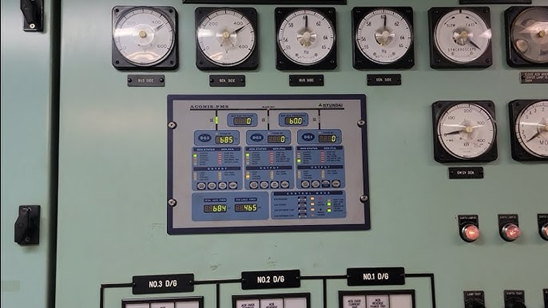
Load sharing between two generators in parallel distributes electrical demand (kW and kVAR) proportionally based on capacity, preventing overload and ensuring system stability. It is achieved by paralleling units to a common bus, using engine governors for speed/active power and AVRs for voltage/reactive power, commonly through droop control or active load-sharing controllers
Key Principles and Methods
- Proportional Distribution: Generators share the load based on their ratings. A larger generator takes a proportionately higher share of the load to prevent any single unit from overloading.
- Active Power (kW) Sharing: Governed by the engine speed. If one generator takes more load, its frequency drops, causing the governor to increase fuel to pick up the load.
- Reactive Power (kVAR) Sharing: Controlled by the alternator's field excitation (AVR). Adjusting excitation changes the reactive power output without affecting frequency.
- Paralleling Requirements: Before sharing, generators must be synchronized in terms of voltage, frequency, phase angle, and phase sequence.
Methods of Load Sharing
- Droop Control: An economical, non-communicating method where speed/voltage decreases as load increases. It allows for natural load sharing but may lead to frequency/voltage drops.
- Isochronous Control: Maintains constant speed (frequency) regardless of load. Only one generator can be in isochronous mode, while others must be in droop, or a specialized electronic load-sharing manager must be used.
- Active/Automatic Load Sharing: Utilizes electronic controllers or CAN bus communication to actively monitor and adjust, ensuring precise, proportional load distribution even with varying demands.
Operational Sequence
- Start/Parallel: One generator runs, and the second starts, synchronizes, and closes its breaker once the load hits a certain threshold (e.g., >55%).
- Sharing: Both units share the total load.
- Unloading: As load drops below a threshold (e.g., <30%), the second generator reduces its load, and eventually opens its breaker to run on one generator for efficiency.
Components Needed
- Synchronizer and Load Sharing Module.
- Circuit Breakers for each generator.
- Voltage Regulators (AVRs) and Engine Governors.
- Current Transformers (CTs) for monitoring.
Load sharing between two generators is the proportional distribution of electrical demand (load) between units operating in parallel. For successful load sharing, generators must first be synchronized matching their voltage, frequency, phase angle, and phase sequence.
Key Mechanisms of Load Sharing
Load sharing involves managing two distinct types of power:
- Active Power (kW): Controlled by the engine's governor, which adjusts fuel flow. Increasing fuel to one generator increases its share of the kW load without necessarily increasing its speed when in parallel.
- Reactive Power (kVAR): Controlled by the Automatic Voltage Regulator (AVR), which adjusts field excitation. Higher excitation causes a generator to carry a larger portion of the reactive load.
Common Methods
- Droop Control: Allows the engine speed (frequency) or alternator voltage to slightly decline as the load increases. This allows multiple generators to "settle" into a shared load level without a central communication system.
- Isochronous Load Sharing: Uses digital controllers to exchange data (e.g., via CANbus) and maintain a constant system frequency regardless of load changes. This ensures that all units operate at the exact same percentage of their capacity.
- Cross-Current Compensation: A method where voltage regulators communicate to balance reactive power without intentional voltage droop.
Benefits of Load Sharing
- Reliability (N+1 Redundancy): If one generator fails, the other can continue to support critical loads.
- Efficiency: Multiple smaller generators can be run at their optimal load range (typically 75–100%) rather than running one large generator inefficiently at low loads.
- Scalability: Allows for future expansion by adding more units to an existing bus bar.
- Continuity of Service: One unit can be taken offline for maintenance while the other maintains power to the facility.
|