|
Reactive Power (kVAR) Sharing
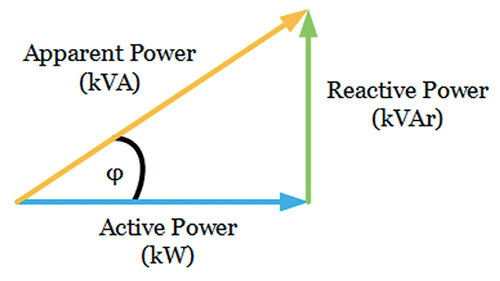
Reactive power (kVAR) sharing in parallel generators is controlled by adjusting the alternator field excitation (Automatic Voltage Regulator - AVR) to balance reactive load and maintain system voltage. Increasing excitation (over-excitation) makes a generator take more load, while decreasing it (under-excitation) makes it take less, without significantly affecting real power (kW)
Key Principles of kVAR Sharing
- Method: The alternator excitation system dictates the proportion of the total system kVAR load each generator carries.
- Regulation: Proper sharing prevents one generator from becoming overloaded (over-excited) while another is under-utilized, and avoids excessive circulating currents.
- Voltage vs. kVAR: While AVRs maintain system voltage, the relative excitation level between paralleled machines dictates kVAR distribution.
- Droop Control: A common technique where the voltage setpoint decreases slightly as reactive load increases, aiding in stable sharing.
- Proportionality: Units should share the total kVAR based on their kVA ratings.
How to Adjust kVAR Sharing
- Increase Load: Increase the field excitation (increase voltage setpoint) on a generator.
- Decrease Load: Decrease the field excitation (decrease voltage setpoint) on a generator.
- Note: If generators are not sharing properly, ensure voltage regulators are in droop mode and that all droop settings are identical.
In modern systems, digital controllers often handle this automatically via CANbus, balancing the kVAR Load based on real-time data.
Reactive power (kVAR) sharing is the proportional division of reactive load between multiple generators or inverters operating in parallel. While active power (kW) is managed by engine fuel input, kVAR sharing is primarily controlled by the alternator field excitation system via an Automatic Voltage Regulator (AVR).
Core Mechanisms of kVAR Sharing
- Field Excitation Control: Adjusting the excitation level changes a generator's kVAR output without significantly altering the system voltage.
- Over-excitation: Increases the kVAR delivered by that unit and decreases its power factor.
- Under-excitation: Decreases the kVAR delivered and increases its power factor.
- Reactive Droop Compensation: A method where the alternator's output voltage is allowed to "droop" (decrease) slightly as the reactive load increases. This prevents units from fighting each other for control, ensuring they share the total reactive load in proportion to their individual ratings.
- Cross-Current Compensation: A method used to balance reactive load without intentional voltage droop. It uses interconnected current transformers between the AVRs of paralleled units to sense and eliminate "circulating" reactive currents between machines.
Why Effective Sharing is Critical
- Preventing Overloads: Poor kVAR sharing can cause one generator to carry excessive current even if the kW load is balanced, leading to tripped breakers or alternator overheating.
- System Stability: Unmatched excitation levels lead to undesirable circulating currents (cross currents) between alternators, which reduces efficiency and can damage equipment.
- Voltage Regulation: Proper sharing ensures that the overall system voltage remains stable under varying inductive loads (like motors and transformers).
Modern Control Systems
In 2026, most multi-generator systems use digital paralleling controllers (e.g., Woodward, ComAp, or DEIF). These systems exchange data via high-speed communication lines (like CANbus) every 50–100 ms to automatically adjust excitation and fuel levels, maintaining error margins within 2%.
|