|
Isochronous Control Sharing
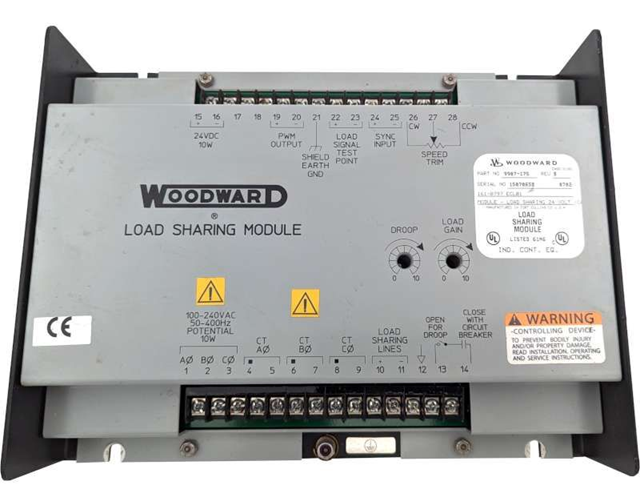
Isochronous control sharing enables multiple generators in an islanded, parallel system to maintain constant, stable frequency (e.g., 50/60 Hz) regardless of load changes, preventing system shutdowns. By using communicating electronic governors, units share load proportionally, avoiding the instability of uncontrolled, independent isochronous operation.
Key Aspects of Isochronous Load Sharing
- Function: Unlike droop control, which allows frequency to drop as load increases, isochronous control maintains a strict speed and frequency setpoint.
- Load Sharing Mechanism: To avoid "fighting" (where machines compete to take the entire load), units are connected via a communication line or a master controller (e.g., RTAC) that balances the active power (kW) across all units.
- Applications: Primarily used in islanded, isolated power plants, or industrial microgrids where high-quality, stable power is required.
- Benefits:
- Eliminates Frequency Drift: Maintains constant frequency under fluctuating load.
- Improved Reliability: Reduces the need for, or eliminates, generator load-shedding schemes.
- Proportional Load Distribution: Ensures all generators share the load according to their capacity.
While one machine can operate in simple isochronous mode, parallel operation requires coordinated, electronic load sharing to maintain stability.
Isochronous load sharing is a control method used in power generation to allow multiple generators to operate in parallel while maintaining a constant system frequency (typically 50 or 60 Hz), regardless of the total load.
Key Characteristics
- Constant Frequency: Unlike droop control, where frequency decreases as load increases, isochronous control forces the system to return to its nominal speed immediately after a load change.
- Proportional Sharing: All participating generators communicate via a "load sharing line" (analog or digital, such as CAN-bus) to ensure each unit carries a proportional share of the total load based on its capacity.
- Islanded Operation: This mode is primarily used in islanded systems (e.g., ships, remote microgrids, or isolated industrial sites) where no connection to a massive utility grid exists to dictate frequency.
How It Works
- Communication: Each generator's electronic governor is linked to a common communication backbone. In modern systems, this is often handled by a Real Time Automation Controller (RTAC) or integrated engine control modules like Wärtsilä’s UNIC.
- Coordination: Without communication, multiple isochronous units would "fight" each other, leading to instability as they each try to independently correct the frequency. The sharing line provides a common reference signal.
- Active Trimming: The control system dynamically calculates the required output for each unit. If the load increases, all units ramp up simultaneously to maintain the target frequency.
Comparison with Droop Control
| Feature |
Isochronous Sharing |
Droop Control |
| Frequency |
Stays constant at the setpoint |
Decreases as load increases |
| Communication |
Required between units |
Not strictly required |
| Stability |
Highly precise but complex to tune |
Inherently stable; common for grid-tie |
| Main Use |
Sensitive islanded loads |
Large utility grids |
System Risks
Single Point of Failure: Because it relies on constant communication, a break in the load-sharing line can cause units to drift or become unstable. Many systems are designed to automatically revert to droop mode if a communication fault is detected.
|




