|
UPS Inverter working pinciple
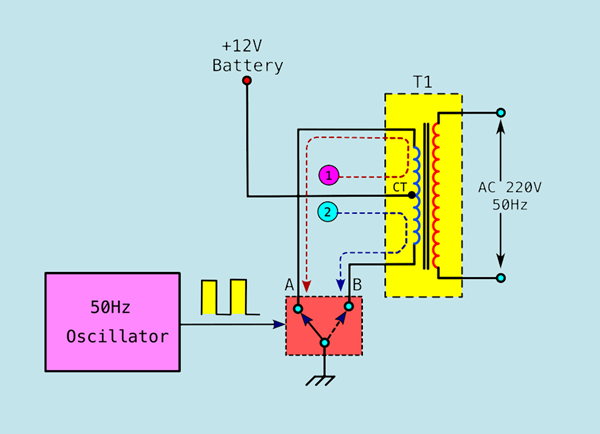
A UPS (Uninterruptible Power Supply) inverter converts stored DC battery power into stable AC power to provide seamless, temporary power during outages. It works by continuously charging a battery via a rectifier when grid power is active, then, upon failure, an inverter instantly converts the battery's DC voltage into 230V/120V AC for connected devices.
Key Components & Their Functions
- Rectifier/Charger: Converts AC input from the grid into DC to charge the battery and power the inverter.
- Battery: Stores electrical energy in DC form.
- Inverter: Converts DC from the battery into clean AC power for the connected load.
- Static Switch/Transfer Switch: Automatically switches from grid power to battery power within milliseconds during an outage
Working Principles
- Normal Operation (Mains Available)
- The AC power enters the UPS and passes through the rectifier, converting it to DC.
- This DC power serves two purposes: charging the batteries and feeding the inverter.
- The inverter converts this DC back into clean, stabilized AC, which powers the connected equipment, protecting it from surges or sags.
- Power Failure (Battery Operation)
- The system detects a power interruption, and the rectifier stops operating.
- The inverter draws energy from the battery bank, converting the stored DC to AC to ensure an uninterrupted supply to the load.
- This switch happens almost instantly (often in 0-4 milliseconds depending on the type of UPS).
- Power Restoration
- When the grid power returns, the rectifier begins to operate again, powering the load and recharging the batteries simultaneously
Types of UPS Inverter Systems
- Standby/Offline UPS: The load is directly on the mains, and the inverter only activates during a power failure.
- Line-Interactive UPS: Similar to standby but includes a transformer to regulate minor voltage fluctuations without switching to battery.
- Online/Double-Conversion UPS: The inverter constantly runs, providing the highest level of power conditioning and zero transfer time, though with higher energy losses.
An Uninterruptible Power Supply (UPS) inverter functions by converting stored energy into a stable electrical current for your devices when the main power fails.
its working principle can be broken down into three primary stages:
- Rectification (AC to DC)
When the main grid power is available, the UPS uses a rectifier to convert incoming Alternating Current (AC) into Direct Current (DC). This DC power serves two purposes:
- Charging: It keeps the internal battery bank fully charged.
- Supply: In high-end "Online" systems, it continuously feeds the inverter to ensure a clean output.
- Energy Storage
- The battery acts as the reservoir. It stores energy in DC form, ready to be utilized the instant a power drop or outage is detected.
- Inversion (DC to AC)
The inverter is the core component that performs the "second half" of the process.
- Switching: It uses high-speed semiconductor switches (like MOSFETs or IGBTs) to turn the DC from the battery back into a pulsating waveform.
- Waveform Shaping: Through Pulse Width Modulation (PWM), it shapes these pulses into a sine wave that mimics grid electricity.
- Filtering: The output is then passed through an LC filter to remove high-frequency noise, delivering "clean" AC power to sensitive electronics.
Summary of Working Modes
| Mode |
Condition |
Inverter Status |
| Normal Mode |
Grid power is healthy. |
Charges battery; in Online UPS, it provides filtered AC. |
| Battery Mode |
Grid power fails/drops. |
Instantly converts battery DC to AC for the load. |
| Bypass Mode |
UPS fault or overload. |
A static switch bypasses the inverter to connect the load directly to the grid. |
Would you like to know more about the specific differences between Square Wave and Pure Sine Wave inverters for your equipment?
|