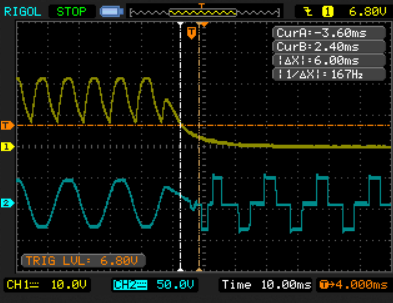
Transfer Time UPS working principle

trasfer time

Transfer time in a UPS is the brief, critical duration (typically 0–12 ms) taken to switch from utility power to battery backup during a failure, ensuring continuous operation for connected equipment. It involves sensing a power loss and activating the inverter, with faster times preventing equipment reboots or data loss.

Key Aspects of Transfer Time Working Principle

  • Detection & Switching: When mains AC power fails or dips below a certain voltage, the internal electronics detect the failure and trigger an automatic transfer switch (ATS) to move the load from the main grid to the inverter/battery source.
  • Duration Breakdown:
  • Significance of Duration: The transfer time must be shorter than the hold-up time of the connected IT equipment (often around 20 ms) to prevent it from turning off.
  • Reversal: The process is reversed when the utility power returns, transitioning from battery power back to the main grid.
  • Impact: A shorter transfer time ensures seamless, continuous operation of sensitive devices like computers, servers, and medical equipment.
  1. Offline (Standby) UPS
  • Working Principle: During normal operation, the load runs directly on raw utility power.
  • Transfer Mechanism: When the power fails, a mechanical relay or static switch must physically move to connect the inverter to the load.
  • Time: Typically 8–10 milliseconds. While fast, it’s not instant.
  1. Line-Interactive UPS
  • Working Principle: Similar to offline, but includes a transformer that regulates voltage without switching to battery.
  • Transfer Mechanism: The inverter is always connected to the output, but in a "reverse" charging mode. When power drops, it flips to discharge mode almost immediately.
  • Time: Usually 2–6 milliseconds.
  1. Online (Double-Conversion) UPS
  • Working Principle: Incoming AC is converted to DC to charge batteries and then immediately back to AC to power the load.
  • Transfer Mechanism: Because the load is always powered by the inverter, there is no switch-over when the mains fail—the battery simply takes over the DC bus.
  • Time: 0 milliseconds (Zero transfer time).

Why It Matters: The "Hold-Up Time"

Every electronic device has a hold-up time—the amount of energy stored in its own internal capacitors to keep it running during a tiny power dip.

If Transfer Time > Hold-Up Time, your device will reboot or crash.
For sensitive servers or medical gear, a Double-Conversion UPS is recommended to ensure no interruption occurs.

favicon bacd

+(39) 347 051 5328

Italy - Kazakhstan

09.00am to 18.00pm

About

We offer the best and economical solutions, backed by 27+ years of experience and international standards knowledge, echnological changes, and industrial systems.

Marketing Materials

Spring Renovation
Industry
US Gas Company
Construct
Plus Project
Vam Drilling Service
X Project
X Project
Cabrrus Training

Marketing Materials1

Spring Renovation
Industry
US Gas Company
Construct
Plus Project
Vam Drilling Service
ultrasonic sensor
ultrasonic sensor
Cabrrus Training