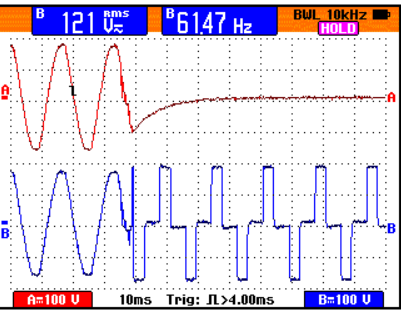
Output Waveform UPS - Working Principle

Output Waveform UPS

 An Output Waveform UPS (Uninterruptible Power Supply) works by
converting incoming AC utility power into DC to charge batteries and power an inverter, which then converts the DC back into clean, regulated AC power for connected equipment. It uses pulse-width modulation (PWM) to generate either a pure sine wave (smooth, high-quality) or a simulated sine wave (stepped approximation) to ensure stable power during outages.

Key Working Principles

  • AC-DC Conversion (Rectifier): The UPS receives AC power from the mains, converting it to DC to charge the battery bank and supply the inverter.
  • DC-AC Inversion (Inverter): The inverter uses high-frequency switching to convert DC from the batteries back into AC power.
  • Pure Sine Wave (Online UPS): Provides a continuous, smooth sine wave, similar to utility power. It is ideal for sensitive electronics (servers, medical devices).
  • Simulated/Modified Sine Wave (Offline/Backup UPS): Produces a stepped, approximated sine wave using pulse-width modulation. This is a cost-effective solution for non-sensitive loads.
  • Switching Mechanism: If input power fails, the inverter immediately draws power from the battery, with online types providing zero transfer time, while standby types may have a small delay (4-10ms).

Output Waveform Types

  • Pure Sine Wave: Smooth, high-quality, continuous, and ideal for delicate equipment.
  • Modified/Simulated Sine Wave: Stepped waveform; cost-effective but less ideal for motor-based devices.
  1. Common Output Waveforms
  • Pure Sine Wave: The highest quality output, identical to the smooth, oscillating power provided by the utility grid. It is essential for sensitive electronics, medical devices, and equipment with Active PFC power supplies to prevent overheating or malfunction.
  • Simulated (Modified) Sine Wave: An approximation of a sine wave that uses Pulse Width Modulation (PWM) to create a "stepped" or square-like waveform. While cost-effective and suitable for most basic home/office electronics like desktop PCs, it may cause humming or reduced efficiency in inductive loads like motors.
  1. Working Principles by UPS Type

The method of generating these waveforms varies by UPS topology:

UPS Type Normal Mode Operation Battery Mode Waveform Generation
Standby (Offline) Utility power passes directly to the load. Detects power loss and switches to an internal inverter that typically generates a simulated sine wave.
Line-Interactive Uses a transformer to regulate minor voltage fluctuations without using the battery. Inverts battery power to AC, often producing a pure or simulated sine wave depending on the model.
Double-Conversion (Online) Continuously converts AC to DC, then back to AC, isolating the load from grid noise. The inverter is always running, providing a consistent pure sine wave with zero transfer time during an outage.


  1. Core Components
  • Rectifier/Charger: Converts incoming AC utility power into DC power to charge the battery and (in online systems) feed the inverter.
    Battery: Stores energy to be used when the primary power source fails.
  • Inverter: The "brain" for waveform creation; it switches DC back into AC. Advanced inverters use high-frequency Pulse Width Modulation (PWM) to filter and shape the final output into a smooth sine wave.
  • Static Bypass: A safety switch that automatically connects the load to utility power if the UPS fails internally.


favicon bacd

+(39) 347 051 5328

Italy - Kazakhstan

09.00am to 18.00pm

About

We offer the best and economical solutions, backed by 27+ years of experience and international standards knowledge, echnological changes, and industrial systems.

Marketing Materials

Spring Renovation
Industry
US Gas Company
Construct
Plus Project
Vam Drilling Service
X Project
X Project
Cabrrus Training

Marketing Materials1

Spring Renovation
Industry
US Gas Company
Construct
Plus Project
Vam Drilling Service
ultrasonic sensor
ultrasonic sensor
Cabrrus Training