|
UPS Static Bypass Mode - Working Principle
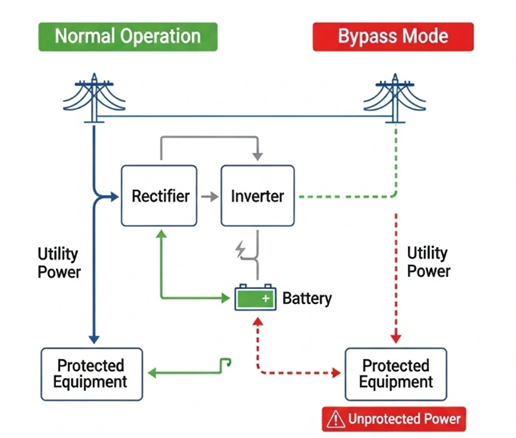
Static Bypass Mode is a safety feature in online UPS systems that automatically transfers the load to the raw utility mains (bypassing the inverter/rectifier) within 2-6 milliseconds if an internal failure, overload, or component overheat occurs. Using solid-state thyristors, it ensures continuous power supply, acting as a "safe failure to mains" mechanism to protect the system and the connected equipment. Key Aspects of Static Bypass Mode Working Principle
Important Distinction The static bypass is an automatic electronic switch, while a maintenance bypass switch is a manual, physical switch used by technicians to completely isolate the UPS for repairs without cutting power to the load. In an uninterruptible power supply (UPS), the Static Bypass Mode serves as a high-speed "fail-safe" mechanism that ensures your critical equipment stays powered even if the UPS encounters a problem. Working Principle Under normal conditions, an online UPS converts incoming AC power to DC to charge batteries and then back to "clean" AC via an inverter to power the load. When Static Bypass is triggered, the UPS uses a solid-state static switch (typically made of SCRs or thyristors) to instantly route raw utility power directly to the load, bypassing the internal rectifier, batteries, and inverter.
Key Triggers for Activation
The system automatically switches to bypass in the following scenarios:
Critical Characteristics Speed: The transfer happens in less than 4 milliseconds (about 1/4 of an electrical cycle), which is fast enough that most sensitive IT equipment remains operational. No Protection: While in bypass, the load is receiving raw utility power. This means there is no battery backup and no protection against surges or frequency fluctuations. Static vs. Maintenance Bypass While Static Bypass is an automatic electronic switch for emergencies, a Maintenance Bypass is a manual mechanical switch. The latter is used by technicians to completely isolate the UPS for physical repairs while keeping the power flowing to the equipment. |
+(39) 347 051 5328
Italy - Kazakhstan


09.00am to 18.00pm
About
We offer the best and economical solutions, backed by 27+ years of experience and international standards knowledge, echnological changes, and industrial systems.
Our Services
Marketing Materials


Marketing Materials1


