|
UPS Boost/Fast Charging - Working Principle
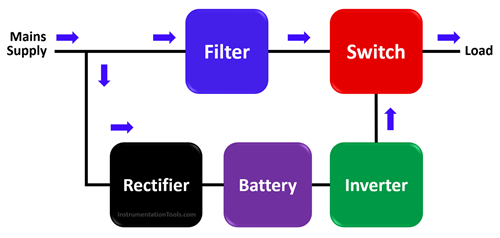
Boost/Fast Charging UPS systems utilize a high-voltage, constant-current, or intelligent multi-stage charging process to rapidly replenish battery capacity after power outages. Unlike standard float charging, this method, often used to activate battery chemicals, temporarily raises the voltage to quickly restore energy levels, ensuring the battery is prepared for subsequent outages, often in 1-2 hours instead of 8-10 hours.
Core Working Principles of Boost/Fast Charging UPS
- Elevated Charging Voltage: The charger increases the voltage above the normal "float" level to force more current into the battery, speeding up the chemical conversion process.
- Constant Current Phase: Initially, the system applies a constant high current to quickly charge the battery (e.g., up to 80-90% capacity).
- Intelligent Switching: Once the battery voltage reaches a set maximum limit during the boost phase, the charging circuit automatically switches to a lower voltage "float" mode to prevent overcharging.
- Fast Recovery: This method is designed to rapidly replenish energy after a deep discharge, allowing the UPS to return to a full-backup state in a shorter amount of time.
Key Stages of Operation
- Boost Mode (Active Charging): Triggered immediately after a discharge cycle. The rectifier provides high voltage/current to the batteries.
- Float Mode (Maintenance): Activated once the battery is almost fully charged. This keeps the battery at the optimal voltage without damaging it.
- Battery Activation: The higher voltage in boost mode helps break down sulphation on battery plates, rejuvenating performance.
Key Advantages
- Reduced Down Time: Drastically reduces the time needed for a full recharge.
- Improved Availability: Ensures the UPS is ready for subsequent power failures much faster.
- Battery Health: Proper, controlled boost charging can extend battery life by balancing cell voltage.
In an Uninterruptible Power Supply (UPS), Boost Charging (often referred to as Fast Charging) is a specific high-voltage operational mode designed to rapidly restore battery capacity after a discharge event.
- The Core Working Principle
The fundamental principle of boost charging is to temporarily increase the charging voltage above the standard maintenance (float) level. Because battery internal resistance naturally limits current flow, raising the voltage creates a larger potential difference, which forces more current into the battery for a faster recharge.
- Constant Current Stage: The charger delivers a steady, high current to the battery until it reaches a specific voltage threshold.
- Time-Limited Operation: Unlike float charging, boost charging is strictly timed or monitored by a microprocessor to prevent overheating and gassing.
- Transition: Once the battery reaches roughly 80–90% capacity, the system automatically switches back to Float Charging (lower voltage) to safely top off the remaining capacity without damaging the cells.
- Why UPS Systems Use It
- Rapid Recovery: It shortens the window during which the UPS is vulnerable if a second power outage occurs shortly after the first.
- Cell Equalization: It helps eliminate voltage deviations between individual cells in a battery string, ensuring the entire bank remains balanced.
- Chemical Activation: Periodic boost charging can "activate" the battery’s chemical properties, preventing issues like sulfation in lead-acid batteries.
- Comparison of Charging Modes
| Feature |
Boost / Fast Charging |
Float Charging |
| Voltage Level |
Higher than nominal (e.g., 2.4V per cell) |
Maintenance level (e.g., 2.25V per cell) |
| Current |
High, constant current |
Very low (trickle) |
| Duration |
Short-term (until nearly full) |
Continuous / Long-term |
| Goal |
Rapid energy replenishment |
Maintain full state & compensate self-discharge |
Technical Considerations & Safety
Modern UPS units, such as those from Schneider Electric or specialized manufacturers like Su-vastika, use intelligent microprocessors to manage this process.
- Intermittent Charging: Some advanced systems use "intermittent" fast charging—pulsing the high current—to prevent the battery plates from hardening and to reduce water loss.
- Temperature Compensation: Because higher voltages generate more heat, chargers must adjust output based on ambient temperature to avoid "thermal runaway," which can cause batteries to swell or explode.
|