|
UPS Pulse Width Modulation (PWM) - Working Principle
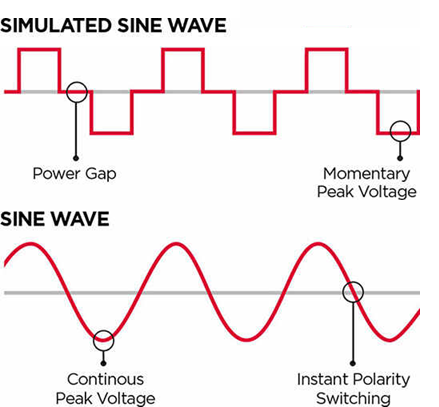
A Pulse Width Modulation (PWM) UPS uses high-frequency switching to control the DC-to-AC inverter stage, adjusting the pulse width (duty cycle) of the waveform to regulate the output voltage, improve efficiency, and minimize harmonic distortion. By rapidly switching on/off, PWM produces a high-quality sine wave suitable for sensitive electronics.
Core Working Principle Components
Rectifier: Converts incoming AC power from the grid into Direct Current (DC) to charge the batteries and supply the inverter.
Battery: Stores electrical energy in DC form, ready to provide power when the main supply fails or fluctuates.
Inverter: Converts DC power from the rectifier or battery back into clean AC power for the connected load.
Transfer Switch: Allows the system to switch to a backup source (like a generator) or bypass the UPS for maintenance.
Key Characteristics of PWM UPS Systems
- Efficient Power Conversion: Uses semiconductor switches (like IGBTs) to regulate voltage, reducing power loss and heat compared to older methods.
- Improved Output Waveform: Modulates pulse widths to closely approximate a pure sine wave, reducing Total Harmonic Distortion (THD).
- Tight Voltage Regulation: Maintains a stable output voltage by adjusting the duty cycle based on the load.
- High Frequency Operation: Operates in the kHz range, which allows for smaller, more efficient filtering components.
Advantages
- High Efficiency & Lower Heat: Reduced switching losses lead to better energy efficiency.
- Better Power Quality: Ideal for critical loads requiring a clean sine wave.
- Fast Response Time: Rapidly compensates for input voltage fluctuations
Common Applications
- Data Centers & IT Equipment: Protecting servers and computers requiring high-quality power.
- Industrial Automation: Powering variable frequency drives (VFDs) and AC motors.
- Renewable Energy Systems: Inverters for solar and wind applications.
A Pulse Width Modulation (PWM) UPS is an uninterruptible power supply that uses pulse width modulation technology in its inverter to produce an AC output waveform that is a stepped or modified sine wave. This design is a cost-effective and efficient method for basic power backup needs.
How It Works
The core of a PWM UPS system is its inverter, which converts DC battery power into AC power for connected devices during a power outage.
- Modulation Process: PWM works by rapidly switching the DC input power on and off at a high frequency. A control unit adjusts the duration of these "on" pulses (the duty cycle) in real-time to mimic the shape of a sinusoidal AC waveform.
- Waveform Generation: Unlike a pure sine wave UPS which generates a smooth, continuous wave, a PWM UPS produces a "stepped" or "modified" sine wave output.
- Filtering: This stepped waveform is then passed through a basic output filter to smooth the rapid transitions and reduce harmonic distortion, though some harmonics and electrical noise will remain.
Key Characteristics
| Feature |
PWM (Modified Sine Wave) UPS |
Pure Sine Wave UPS |
| Output Waveform |
Stepped approximation of a sine wave. |
Smooth, consistent waveform matching utility power. |
| Efficiency |
Generally 75-85% efficient. |
Typically 90-95% efficient. |
| Cost |
More affordable due to simpler design. |
More expensive due to complex circuitry. |
| Compatibility |
Best for basic devices like fans, lights, and some universal power supplies. |
Compatible with virtually all AC devices, including sensitive electronics with active power factor correction (PFC), motors, and medical equipment. |
| Performance with Sensitive Devices |
Can cause buzzing, generate heat, reduce device efficiency, and potentially damage sensitive electronics. |
Ensures devices run cooler, quieter, and with a longer operational life. |
Applications
PWM technology is widely used in power electronics. Specific applications for PWM UPS systems include:
- Office Power Backup: Suitable for general office equipment and PCs that do not have active PFC power supplies.
- Emergency Lighting and Security Systems: Provides a reliable and fast-transfer power source for critical, less-sensitive systems.
- Industrial Settings: Used in demanding industrial applications where robust and dependable power backup is needed, such as in the oil & gas or power generation industries, often for process control systems.
|