|
High-Capacity Conduction Busbar System - Working Principle
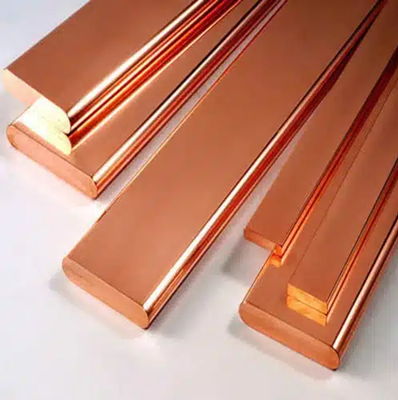
A High-Capacity Conduction Busbar System works as a central, low-resistance, and rigid conductor—typically copper or aluminum—that collects high-amperage electricity from sources and distributes it to multiple circuits. It operates on the principle of passive, efficient current conduction via a large cross-sectional area, reducing voltage drops and allowing superior heat dissipation compared to cables, making it ideal for substations, industrial plants, and EV battery systems
Key Working Principles and Design Aspects
- Centralized Distribution: Functions as a common node (highway) for electricity, enabling multiple outgoing feeders to be connected to a single, high-capacity source.
- High Conductivity Material: Usually, copper (58MS/m) or aluminum (37MS/m) is used due to low internal resistance, minimizing energy loss and managing high amperage.
- Thermal Management: The flat, wide shape of the conductor increases its surface area, promoting faster heat dissipation (convection) and preventing overheating.
- Physical Structure: Often constructed as rigid bars or tubes, supported by insulators, allowing for high short-circuit current capacity without deformation.Capacity
- Enhancement: To handle extremely high currents, multiple conductors can be used in parallel per phase, with spacing maintained to optimize heat dissipation.
- Insulation and Protection: Busways or busbar trunking systems are frequently enclosed in protective, grounded metal housing to prevent accidental contact, reduce EMI, and provide safety.Voltage
- Drop Minimization: The solid, thick cross-section ensures minimal voltage drop over long distances compared to traditional cabling, maintaining stable voltage at the load end.
In industrial applications, this system replaces traditional cable-based distribution, providing a more scalable, reliable, and efficient solution for power distribution, as highlighted in the Delta Wye Electric article
Core Working Principle
The system operates as a central node (passive conductor) where power from a main source, such as a transformer or generator, is received and then distributed to multiple outgoing circuits or loads.
- Current Collection: Power enters the system via a main incoming feeder, energizing the entire length of the busbar.
- Low-Impedance Path: The large cross-sectional area of the solid metal bars provides a low-resistance path, minimizing energy losses (Ohmic losses) and voltage drops even under extreme loads.
- Distribution: Current is tapped from the main bars through tap-off units or bolted connections to supply secondary devices like circuit breakers or machinery.
Key Components
- Conductors: Solid copper or aluminum strips. Copper is preferred for maximum capacity in tight spaces due to higher electrical conductivity.
- Insulation System: Non-conductive supports (epoxy, thermoplastic, or air gaps) keep phases separate and prevent arc flash events.
- Protective Housing: A metal enclosure (busway) that shields against dust, moisture, and accidental contact while supporting heat dissipation.
Thermal Management (Heat Dissipation)
Unlike round cables that trap heat inside insulation, busbars utilize their shape for cooling:
- Surface-to-Volume Ratio: The flat, broad profile of busbars maximizes the surface area exposed to air, facilitating passive cooling through convection and radiation.
- Skin Effect Management: The rectangular shape uses material more efficiently for alternating current (AC), which tends to flow near the surface.
Arrangement Schemes
To ensure reliability, systems are configured in specific layouts:
- Single Bus: Simplest and most cost-effective but lacks redundancy.
- Double Bus: Uses two parallel bars (main and auxiliary) to allow maintenance without shutting down the system.
- Ring Bus: A closed-loop configuration that provides redundant power paths to any circuit.
|