|
Heat Dissipation Busbar System - Working Principle
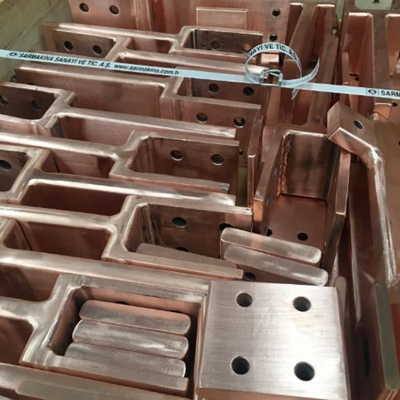
A Heat Dissipation Busbar System works by maximizing surface area (typically using flat, rectangular, or hollow conductors) to efficiently transfer heat generated by high electrical current (via I2R) losses) to the surrounding environment. It relies on passive convection, thermal conduction through supports, and radiation to maintain safe operational temperatures, preventing insulation degradation
Key Working Principles
- Heat Generation & Mitigation: Electrical current passing through the busbar causes heat due to resistance. The design uses highly conductive materials, like copper or aluminum, to minimize these losses.
- Surface Area Maximization: Busbars are generally flat, providing a larger surface area compared to circular rods, which facilitates better heat dissipation to the surrounding air.
- Natural Convection: The design of the busbar arrangement (e.g., parallel placement) encourages airflow channels, allowing cooler air to flow around the bars and lift away the heat through natural convection.
- Conduction & Radiation: Heat is conducted from the busbar to the mounting supports (insulators) and radiated away to the enclosure walls.
- Hollow or Parallel Designs: For extremely high currents, hollow tubes or multiple parallel busbars are used to increase the surface-area-to-volume ratio, significantly boosting cooling efficiency.
Key Factors Influencing Performance
- Skin Effect: High current tends to flow on the outer surface, so optimizing the shape reduces heat concentration.
- Thermal Limits: Systems must follow standards (e.g., IEC 61439-1) to ensure operating temperatures do not exceed safe limits, which can be up to 140°C
Core Working Principles
- Resistive Heating (I²R Losses): As electrical current flows through the busbar (typically copper or aluminum), it encounters resistance, which converts some electrical energy into heat.
- Surface Area Optimization: Most busbars are flat and wide. This geometry increases the "wetted" surface area exposed to the surrounding environment, allowing heat to escape more efficiently than through a round cable of the same cross-section.
- Passive Cooling Mechanisms:
- Natural Convection: Warm air rises from the busbar's surface, creating a continuous flow of cooler air around the conductor.
- Radiation: Heat is emitted from the surface as infrared energy. In some high-performance systems, busbars are painted or coated with high-emissivity materials to increase radiation efficiency by up to 40%.
- Active Cooling (Forced): In ultra-high current applications, systems may use forced air (fans) or liquid cooling (hollow busbars with circulating water) to handle power densities beyond the capacity of natural air.
Thermal Design Strategies
| Feature |
Impact on Heat Dissipation |
| Material Choice |
Copper and Aluminum are used for their high thermal conductivity, which spreads heat evenly to avoid localized "hotspots". |
| Spacing/Alignment |
Parallel bars are spaced (typically the width of one bar apart) to prevent heat trapping and allow airflow between phases. |
| Insulator Design |
Clamp insulators are designed to provide mechanical support without blocking air circulation or creating thermal barriers. |
| Lamination |
Laminated busbars use thin, stacked layers that reduce electrical noise and can be engineered for superior thermal performance in tight spaces. |
|




