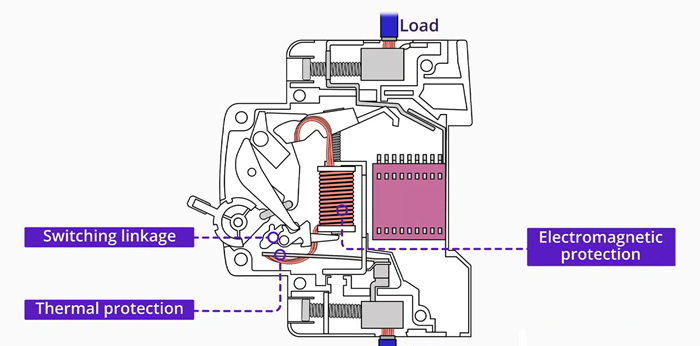
Magnetic Protection Circuit breaker - Working Principle

magnetic circuit

A magnetic circuit breaker (often part of a thermal-magnetic MCB/MCCB) provides instantaneous protection against short circuits by using an electromagnetic coil to detect massive current surges. When a short circuit occurs, the high current creates a strong magnetic field in the coil, which immediately pulls a plunger to trip the mechanism and break the circuit within milliseconds.

Key Aspects of the Magnetic Protection Mechanism

  • Components: It consists of an electromagnetic coil (solenoid) and a movable plunger or core.
  • Operation: Under normal operating current, the magnetic field is too weak to move the plunger. During a short circuit, the current spikes dramatically, creating a powerful magnetic field.
  • Action: This magnetic force overcomes the tension of a spring, drawing the plunger into the coil, which triggers the trip bar to open the contacts instantly.
  • Short Circuit Focus: Unlike thermal protection (which handles overloads over time), magnetic protection is designed for near-instantaneous disconnection.
  • Hydraulic Variant: Some breakers use a hydraulic-magnetic mechanism where the coil pushes a core through fluid, offering a delay for inrush currents while still providing instant tripping for high-fault currents.

Differences from Thermal Protection

  • Thermal: Uses a bimetallic strip for gradual overload protection.
  • Magnetic: Uses an electromagnetic coil for instant short-circuit protection.

A magnetic protection circuit breaker (often referred to as a thermal-magnetic circuit breaker in standard residential and commercial use) utilizes two distinct electromechanical mechanisms to protect electrical systems from damage.

Core Working Principles

The device monitors the current flowing through a circuit and intervenes in two specific fault scenarios:

Mechanism Fault Type Action Principle Response Time
Magnetic (Solenoid) Short Circuit Uses an electromagnet that generates a powerful magnetic field during a sudden current surge. This field instantly pulls a metal plunger or armature to trip the mechanism. Instantaneous (Milliseconds).
Thermal (Bimetallic) Overload Uses a bimetallic strip made of two different metals. Excessive current causes the strip to heat up and bend due to unequal expansion rates, eventually triggering the trip bar. Delayed (Seconds to minutes, depending on the severity).


Why Both Are Needed

  • Immediate Action: The magnetic part is essential for sudden, high-intensity faults (like a bare wire touching ground) that could cause immediate fires or explosions.
  • Controlled Delay: The thermal part is crucial for handling "soft" overloads (like plugging in too many appliances). The delay is intentional; it allows for normal, brief "inrush" currents that occur when devices like motors or air conditioners first start up.

Summary of Internal Components

  • Electromagnetic Coil (Solenoid): Detects short circuits via magnetic force.
  • Bimetallic Strip: Detects overloads via heat-induced bending.
  • Arc Chutes: Safely extinguish the electrical arc formed when the contacts separate under load.
  • Latching Mechanism: Holds the contacts together until either the thermal or magnetic element triggers it to release.

favicon bacd

+(39) 347 051 5328

Italy - Kazakhstan

09.00am to 18.00pm

About

We offer the best and economical solutions, backed by 27+ years of experience and international standards knowledge, echnological changes, and industrial systems.

Marketing Materials

Spring Renovation
Industry
US Gas Company
Construct
Plus Project
Vam Drilling Service
X Project
X Project
Cabrrus Training

Marketing Materials1

Spring Renovation
Industry
US Gas Company
Construct
Plus Project
Vam Drilling Service
ultrasonic sensor
ultrasonic sensor
Cabrrus Training