|
Working Principle of a Circuit Breaker Contact Pressure System
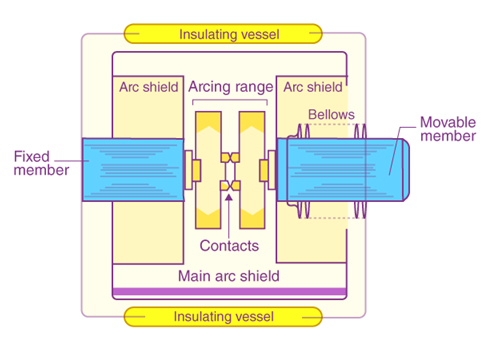
The contact pressure system in a circuit breaker ensures reliable electrical connection between fixed and moving contacts during normal operation by applying mechanical pressure (via springs or pressurized mechanisms) to keep them closed. It prevents overheating, minimizes resistance, and allows rapid separation to extinguish arcs when a fault occurs.
Key Components and Working Principle
- Components: Consists of main contacts (current-carrying), arc contacts (breaking the arc), and a spring-loaded or toggle mechanism that exerts pressure.
- Normal Condition (Closed): The operating mechanism, driven by potential energy (springs, compressed air), applies high pressure to hold the moving contact against the fixed contact.
- Tripping Condition (Open): When a fault (overload/short circuit) occurs, the tripping mechanism overcomes the spring pressure, causing the operating mechanism to trigger a swift separation of the contacts.
- Sequential Operation: Upon closing, arc contacts close first, then main contacts. Upon breaking, main contacts open first to prevent arcing on them, followed by the arc contacts.
- Arc Management: The high contact pressure ensures that when separation occurs, the resulting arc is rapidly extinguished, preventing damage and maintaining the electrical circuit's integrity.
Working Principle
The system operates by converting stored mechanical energy into a continuous clamping force. Its function can be broken down into three phases:
| Phase |
Action |
Mechanism |
| Closing |
As the breaker closes, the Operating Mechanism (driven by a motor or handle) compresses the Contact Pressure Springs. |
Stored energy is transferred from a larger "closing spring" to smaller contact springs. |
| Steady State |
Once fully closed, the moving contact is held against the fixed contact under high pressure. |
This pressure minimizes Contact Resistance, preventing excessive heat buildup (I²R losses) that could melt the contacts. |
| Opening/Trip |
When a fault is detected, a latch is released, allowing the Opening Springs to pull the contacts apart. |
The initial contact pressure helps "kick-start" the separation to ensure the arc is drawn quickly into the Arc Extinguisher. |
Why Contact Pressure is Critical
- Heat Reduction: High pressure ensures the actual contact area is maximized at the microscopic level, lowering resistance and preventing the contacts from welding together under normal load.
- Vibration Resistance: It prevents "contact bounce" during the closing operation, which would otherwise cause micro-arcs that erode the contact material.
- Fault Integrity: During a short circuit, massive electromagnetic forces (blow-off forces) try to push the contacts apart; the pressure system must be strong enough to keep them closed until the trip mechanism intentionally separates them.
Common Components:
- Contact Springs: The primary source of pressure.
- Operating Levers/Linkages: Transmit the spring force to the moving contact arm.
- Insulating Rod: Delivers the mechanical force to the live contacts while keeping the mechanism electrically isolated.
|




