|
Electric Energy Storage Mechanism of a circuit breaker - Working Principle
The electric energy storage mechanism in a circuit breaker uses a motor or manual handle to compress springs, or build up pneumatic/hydraulic pressure, storing potential energy to rapidly separate contacts during a fault. When a fault is detected, the latch holding this energy is released, allowing the stored energy to instantly open or close the circuit breaker, ensuring quick arc extinction.
Core Operating Principle & Mechanism
- Energy Storage Method: The mechanism primarily stores mechanical energy using a spring system (closing/opening springs), which is charged by a motor (automatic) or a manual handle.
- Ready State: Once the spring is charged (or pneumatic pressure built up), the operating mechanism is in a "ready" state, holding the energy with a closing latch until needed.
- Operation (Trip/Close): When a fault occurs, the mechanism receives a signal to trip. The latch releases the stored energy, which causes the moving contacts to separate immediately.
- Rapid Action: This high-speed movement is crucial for interrupting high-fault currents, as it minimizes arc time, reducing damage.
- Automatic Recharging: Many modern breakers automatically recharge the closing spring immediately after the operation, ensuring the mechanism is ready for the next operation.
Types of Energy Storage Mechanisms
- Spring-operated: Most common, using a motor to compress a spring.
- Hydraulic/Pneumatic: Uses pressurized gas or oil to store energy, often for very high-voltage applications.
- Magnetic Actuators: Uses a capacitor and permanent magnets, offering fewer moving parts.
This mechanism ensures the circuit breaker can operate independently of the available control power during the actual instant of interruption.
The electric energy storage mechanism in a circuit breaker is an electro-mechanical system that stores the physical energy required to open or close the breaker’s contacts rapidly. It typically uses an electric motor to compress a heavy-duty spring, transforming electrical energy into elastic potential energy.
Working Principle
The mechanism operates in a cyclical "charge-and-release" process to ensure the breaker can operate even if external power is lost.
| Phase |
Action |
Description |
| 1. Energy Storage (Charging) |
Motor Activation |
When the breaker is "Open" or after a closing operation, an internal electric motor (AC or DC) activates automatically. |
|
Spring Compression |
The motor drives a gear train and cam assembly to compress the closing spring. |
|
Latching |
Once fully compressed, a mechanical latch holds the spring in place. A limit switch then cuts power to the motor. |
| 2. Closing Operation |
Release |
Upon receiving a "Close" command, the closing latch is released (electrically via a solenoid or manually). |
|
Contact Movement |
The stored energy in the closing spring forces the moving contacts to slam shut against the fixed contacts. |
|
Contact Movement |
As the breaker closes, the force of the closing spring also compresses the opening (trip) spring, preparing it for an immediate shutdown if a fault is detected. |
| 3. Tripping (Opening) |
Rapid Interruption |
When a fault occurs, the trip latch is released. The opening spring instantly pulls the contacts apart to break the circuit and extinguish the arc. |
Key Components
Charging Motor: An Electric Motor that provides the torque needed to compress high-tension springs.Closing & Opening Springs: Store the potential energy 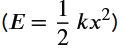 required for high-speed contact movement.Gear Train & Cam: Multiplies motor torque and converts rotary motion into linear spring compression.Limit Switches: Sensors that detect when the spring is fully charged and disconnect the motor to prevent overcharging.Latch/Trigger Mechanism: Holds the energy in "standby" until a signal is received from Protective Relays. required for high-speed contact movement.Gear Train & Cam: Multiplies motor torque and converts rotary motion into linear spring compression.Limit Switches: Sensors that detect when the spring is fully charged and disconnect the motor to prevent overcharging.Latch/Trigger Mechanism: Holds the energy in "standby" until a signal is received from Protective Relays.
Provide the specific voltage rating (e.g., 12kV, 220kV) of your circuit breaker to receive a more detailed component list.
Key Advantages
- Speed & Safety: Contacts move at high speeds (often under 100ms) to minimize electrical arcing, which prevents contact damage and fires.
- Independence: The breaker can still trip (open) or close once even if the main control power is lost, as the energy is already physically stored in the springs.
- Remote Operation: Using motors and solenoids allows operators to trigger the mechanism from a safe distance.
|