|
Intelligent Controller of a circuit breaker - working principle in english
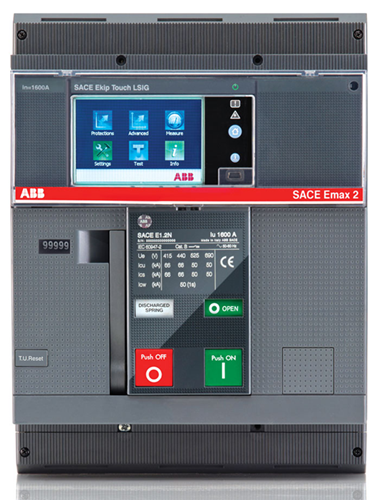
An intelligent controller (smart breaker) functions by integrating sensors with a microprocessor to continuously monitor electrical parameters like current, voltage, and temperature. Upon detecting faults (overload/short-circuit) or receiving remote commands, the microprocessor immediately triggers the operating mechanism to open the circuit. It provides real-time data, remote control, and predictive maintenance capabilities via IoT protocols.
Key Components & Working Principle
- Sensors (Monitoring): Sensors continuously monitor the circuit's current and voltage. They act as "vigilant guards" to detect abnormal, high-current spikes or overloads instantly.
- Microprocessor (Brain): The microcontroller processes sensor data, comparing it in real-time against predefined safety thresholds. It identifies fault severity and decides whether to trigger a trip.
- Intelligent Identification Module (Analysis): When a fault occurs, this module judges the circuit breaker's current condition and adjusts the operating mechanism's parameters for optimal, rapid interruption.
- Actuator (Action): Upon receiving a trip signal from the microprocessor, the actuator (often a motorized relay or solenoid) breaks the connection.
- Communication Module (Networking): This component enables IoT connectivity (Wi-Fi, Zigbee, Bluetooth) to send alerts and allow remote monitoring/operation via smartphone apps.
Key Benefits
- Remote Operation: Users can monitor energy usage, set schedules, and switch circuits on/off from anywhere via a mobile app or web portal.
- Preventive Maintenance: Using machine learning or data analysis, the system can predict component failure and send alarms before faults occur.
- Enhanced Safety: Intelligent systems can detect arc faults (preventing fires) and provide faster, more precise responses compared to mechanical-only breakers.
The intelligent controller (often called an intelligent trip unit) serves as the "brain" of a modern circuit breaker. Unlike traditional mechanical breakers that rely solely on physical heat or magnetic force to trip, an intelligent controller uses microprocessors and sensors to monitor, analyze, and control the electrical circuit with high precision.
Core Working Principle
The operation follows a continuous loop of four key stages:
| Stage |
Action |
Tripping |
| 1. Data Acquisition |
Sensing |
Sensors (Current Transformers, Voltage Sensors) continuously measure real-time parameters like current, voltage, temperature, and frequency. |
| 2. Processing |
Analysis |
The microprocessor compares these live readings against predefined safety thresholds and protection curves. |
| 3. Decision |
Identification |
If an anomaly is detected (e.g., overload, short circuit, or arc fault), the controller calculates the severity and determines the exact millisecond to trip. |
| 4. Execution |
Tripping |
The controller sends an electronic signal to an actuator (magnetic trip coil) that mechanically unlatches the breaker contacts to cut the power. |
Key Intelligent Functions
- Remote Management: Users can monitor status or manually reset/trip the breaker from anywhere via smartphone apps or web portals using Wi-Fi, Bluetooth, or 4G/5G.
- Energy Monitoring: Detailed tracking of energy consumption (kWh) and power quality is recorded and transmitted for analysis.
- Predictive Maintenance: Advanced algorithms analyze usage patterns to predict potential electrical failures before they occur, sending alerts to prevent downtime.
- Programmable Protection: Unlike fixed mechanical settings, intelligent controllers allow users to customize current thresholds and time delays for specific equipment needs.
- Advanced Fault Detection: Specialized sensors can identify complex issues like arc faults (which cause fires) or ground leakage that traditional breakers might miss.
Summary Table: Traditional vs. Intelligent Controller
| Feature |
Traditional Controller |
Intelligent Controller |
| Core Tech |
Thermal-Magnetic (Mechanical) |
Microprocessor-based (Electronic) |
| Monitoring |
None |
Real-time data on V, I, P, & Temp |
| Trip Setting |
Fixed or manually adjusted dials |
Digitally programmable/customizable |
| Connectivity |
Local operation only |
Wi-Fi, Zigbee, Modbus, 4G/5G |
| Maintenance |
Reactive (after a trip) |
Proactive (alerts before failure) |
|