|
Performance Validation of Lithium-ion battery
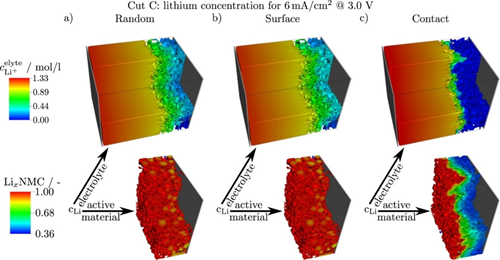
Performance validation of lithium-ion (Li-ion) batteries is a critical process to ensure safety, reliability, and efficiency across their lifecycle. It involves assessing key metrics such as capacity, energy density, resistance, and life span under various electrical, thermal, and environmental conditions.
Here is a comprehensive breakdown of the methods, tests, and metrics involved in Li-ion battery performance validation:
- Key Performance Metrics
- Capacity (Ah/mAh): The total charge a battery can store, validated through discharge tests to a cutoff voltage.
- State of Health (SOH): Measures the battery's degradation, typically defined as the percentage of remaining capacity compared to its original capacity.
- Internal Resistance (mΩ): Indicates power capability and heat generation; monitored using Electrochemical Impedance Spectroscopy (EIS).
- Energy Density (Wh/kg or Wh/L): Measures energy stored relative to weight or volume.
- C-Rate Performance: Measures the battery's ability to handle high-current charge/discharge rates without significant capacity loss.
- Primary Validation Testing Techniques
- Capacity and Rate Capability Tests: Determines usable energy by discharging the battery at different rates (e.g., 0.2C vs 1C) to observe voltage sag.
- Cycle Life and Aging Tests: Evaluates performance degradation over time (e.g., 100+ cycles) to predict maintenance and replacement needs.
- Self-Discharge Testing: Measures energy loss while the battery is not in use.
- Environmental & Thermal Testing: Verifies consistency across temperatures (e.g., -40°C to +85°C) and simulates low-pressure conditions for aerospace applications.
- Mechanical & Safety Tests: Includes, but not limited to, UN 38.3 certifications involving vibration, shock, and crash testing to ensure structural integrity.
- Advanced Modeling and Simulation Methods
- Digital Twin & AI Modelling: Utilizing data-driven methods like Long Short-Term Memory (LSTM) algorithms or Deep Residual Convolutional Neural Networks (Res-CNN) to predict battery capacity and SOH without needing full physical tests.
- Electrochemical-Thermal Coupled Models: Simulating battery behavior to predict heat generation (often <5% error) and voltage profiles.
- Equivalent Circuit Models (ECM): Using first- or second-order circuits to represent the dynamic behavior of the battery.
- Validation Standards
To ensure consistency, testing often adheres to specific standards:
- IEC 62660-1: Performance evaluation of Li-ion cells for electric vehicles.
- UN 38.3: Safety requirements for transportation.
- UL 1642 / UL 2054: Safety standards for lithium batteries.
- Rapid Evaluation Techniques
To reduce testing time and cost, modern methods include:
- Rapid Health Assessment: Using only a small portion of the charging curve (e.g., first 30%) with AI to predict total degradation.
- Hybrid Approaches: Combining physics-based models with minimal experimental data to accelerate, yet validate, performance predictions.
Critical Safety & Compliance Standards
For commercial and industrial use, validation must align with international standards:
UN 38.3: Mandatory for international shipping; covers mechanical abuse, altitude simulation, and thermal stability.
IEC 62133: Safety requirements for portable sealed secondary cells used in consumer electronics.
UL 1642 / UL 2054: Standards for safety in lithium batteries for general and household applications.
Advanced Modeling & Simulation
Engineers often use Digital Twins or Equivalent Circuit Models (ECM) to simulate performance under complex workloads without needing months of physical testing. Tools like MATLAB/Simulink or COMSOL are frequently used to validate thermal and electrochemical behavior against experimental data.
Are you looking for validation protocols for a specific application (e.g., electric vehicles, grid storage, or consumer electronics), or do you need details on particular testing equipment?
|




