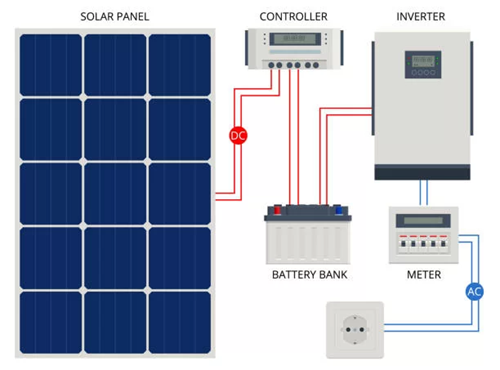
Inverter-to-battery communication

inverter battery comunication

Inverter-to-battery communication enables real-time data exchange (voltage, current, State of Charge - SoC) via protocols like CAN bus or RS485 for safe, efficient charging. It establishes a closed-loop system, allowing the Battery Management System (BMS) to control the inverter, which protects lithium batteries from overcharging/discharging.

Key Aspects of Inverter-Battery Communication
  • Closed-Loop Communication (Active): The battery BMS directly tells the inverter maximum charge/discharge current, voltage limits, and SoC.
  • Open-Loop Communication (Passive): The inverter estimates battery status based on voltage, which is less accurate for lithium batteries.
  • Physical Connections: Usually RJ45 cables (CAN/RS485) connecting the battery's BMS to the inverter's BMS/COM port.
  • Data Exchanged:
    • State of Charge (SoC): Accurate percentage of battery capacity remaining.
    • Voltage/Current Limits: Prevents overvoltage and overload.
    • Battery Temperature: Adjusts charging based on temperature.
  • Required Configuration: The inverter must be set to the correct protocol (e.g., Pylontech, BYD) matching the battery to ensure communication.
  • Benefits: Increased safety, improved battery lifespan, and optimized charging.

Common Communication Protocols & Ports

  • CAN bus: Standard for many lithium batteries (e.g., SMA Solar).
  • RS485: Common for smaller or specific hybrid systems (e.g., FelicityESS).


Key Functions of Communication
  • State of Charge (SOC): Allows the inverter to show an accurate percentage rather than just guessing based on voltage.
  • Safety Limits: The battery tells the inverter exactly how much current it can safely accept (charging) or provide (discharging) based on its current temperature and health.Automated Control: Enables features like automatic generator starting when the battery is low or stopping the discharge before reaching a critical level.
Common Communication Protocols
Systems typically use specific cables and protocols to "talk":
  • CAN (Controller Area Network): A high-speed, robust protocol common in modern lithium systems.
  • RS485: Often used for older or more basic communication setups.
  • Closed-Loop vs. Open-Loop:
    • Closed-Loop: The inverter actively adjusts its behavior based on direct data from the battery.
    • Open-Loop (or No Communication): The inverter operates based on its own preset voltage settings without direct feedback from the battery.

Setup Requirements

  1. Compatible Cable: Often a standard Ethernet cable (CAT5/6), though pin configurations must match the specific manufacturer's requirements.
  2. Protocol Matching: Both the battery and inverter must be set to the same protocol (e.g., selecting "Pylontech" or "Deye" protocol in the inverter menu).

favicon bacd

+(39) 347 051 5328

Italy - Kazakhstan

09.00am to 18.00pm

About

We offer the best and economical solutions, backed by 27+ years of experience and international standards knowledge, echnological changes, and industrial systems.

Marketing Materials

Spring Renovation
Industry
US Gas Company
Construct
Plus Project
Vam Drilling Service
X Project
X Project
Cabrrus Training

Marketing Materials1

Spring Renovation
Industry
US Gas Company
Construct
Plus Project
Vam Drilling Service
ultrasonic sensor
ultrasonic sensor
Cabrrus Training