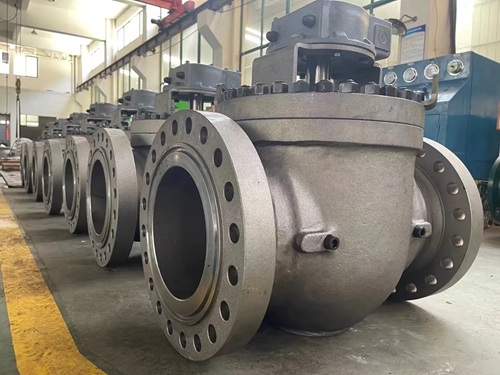
A top entry ball valve features a one-piece body with a top-mounted bonnet, allowing for in-line maintenance to replace internal components (ball, seats) without removing the valve from the pipeline. Designed for high-pressure, high-temperature, and severe service applications, these valves reduce leakage paths and downtime in industries like oil & gas, petrochemicals, and power generation.
This video explains the design and maintenance of a top entry ball valve:
Key Characteristics and Benefits
Inline Maintenance: The primary advantage is accessing internal parts through the top cover, saving time and labor compared to side-entry valves.
Design & Structure: Usually constructed from forged or cast one-piece bodies, offering high mechanical strength.
Trunnion-Mounted: Most top-entry valves use a trunnion design, providing support for the ball at both ends to reduce operating torque in large-diameter or high-pressure applications.
Sealing: Available in soft-seated (for tight sealing) or metal-to-metal (for high temperature/abrasive services) configurations.
Safety Features: Often include fire-safe design, anti-static, and emergency sealant injection systems.
Sizes/Ratings: Commonly available from 2" to 64" (API 6D) and pressure classes from 150# to 2500#.
Key Differences from Side-Entry
While side-entry valves often require removal from the line, top-entry valves allow maintenance while the body remains welded or bolted in place, making them better suited for critical, high-frequency, or permanent installations.
Key Features
In-line Maintenance: The defining advantage is that the valve can be serviced, inspected, or repaired without removing it from the pipeline.
Body Design: It typically features a robust, one-piece body.
Applications: Commonly used in high-pressure and high-temperature environments, such as oil and gas pipelines, petrochemical plants, and cryogenic services where minimizing downtime is critical.
Comparison with Side Entry
Feature
Top Entry Ball Valve
Side Entry Ball Valve
Access Point
Top (through the bonnet)
Side (body is often split)
Maintenance
Can be repaired in-line
Often requires removal from the line
Body Style
One-piece body
Two-piece or three-piece (split body)
Best Use
Large pipelines, limited space, critical service
Smaller valves, standard industrial use
Common Applications
Oil & Gas, Offshore, and Petrochemical plants.
Subsea installations (remote maintenance).
High-pressure mining and water applications.
High-integrity pressure protection systems (HIPPS).
Common Technical Specifications
Standards: Often manufactured to API 6D specifications.
Pressure Ratings: Available in classes from ANSI 150 to 2500.
Materials: Usually made from forged or cast steel, including carbon steel, stainless steel, and duplex alloys.
Have a Questions?
+(39) 347 051 5328
Visit Our Company
Italy - Kazakhstan
Working Hours
09.00am to 18.00pm
About
We offer the best and economical solutions, backed by 27+ years of experience and international standards knowledge, echnological changes, and industrial systems.