|
Heat exchangers in LNG systems
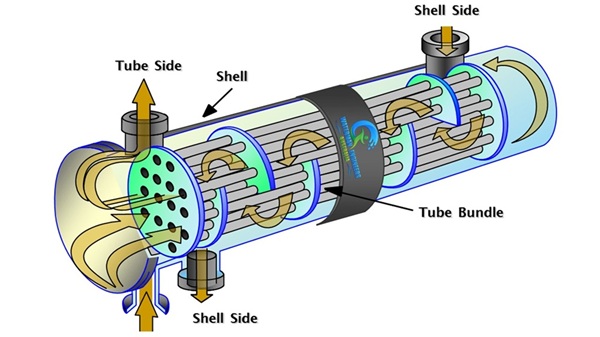
Heat exchangers in LNG systems enable the cooling/liquefaction of natural gas to -162°C(using refrigerants like propane/methane) or vaporize LNG back to gas (using seawater/air). They work via heat transfer across barriers—such as in Plate-Fin or Coil-Wound units—to manage high pressure and cryogenic temperatures, maximizing thermal efficiency during production or regasification.
Key Working Principles & Types
- Liquefaction (Cryogenic Heat Exchangers): In the liquefaction process, the main cryogenic heat exchanger (MCHE), typically a large coil-wound unit, reduces the temperature of pre-cooled natural gas to approximately -146°C (-231°C), turning it into a liquid. This is often achieved through a closed-loop system using mixed refrigerants.
- Regasification (Vaporizers): These exchangers convert LNG back into gaseous form for pipelines.
- Reliquefaction: On LNG carriers, heat exchangers (often plate-fin) are used to re-cool boil-off gas (BOG) for storage.
- Key Components: The process uses sophisticated equipment to withstand extreme cryogenic temperatures and high pressures. The primary heat exchanger types in LNG processing are:
Operational Principles: Heat transfer typically uses counter-current flow, where the LNG and the heating/cooling medium travel in opposite directions to achieve maximum temperature difference, according to Slideshare.
How the Heat Transfer Happens
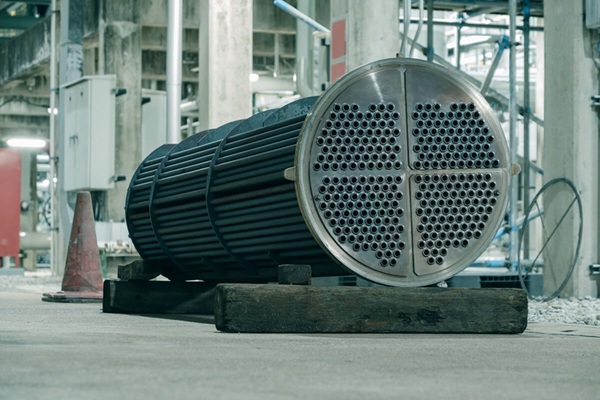
LNG systems typically use two main types of exchangers:
- Spiral Wound Heat Exchangers (SWHE): Imagine thousands of tiny aluminum tubes wrapped around a central core. The natural gas flows inside the tubes, while a refrigerant (like a mix of nitrogen, methane, and ethane) flows over the outside of the tubes. The refrigerant absorbs the heat from the gas, causing the gas to liquefy.
- Printed Circuit Heat Exchangers (PCHE): These are compact blocks with chemically etched channels. They are used when space is tight (like on a ship) because they can handle extremely high pressures and provide massive surface area in a small footprint.
The Process Flow
- Pre-cooling: The "warm" natural gas enters the exchanger.
- Thermal Exchange: A cold medium (refrigerant or seawater) flows adjacent to the gas. Because of the temperature difference, heat naturally moves from the warmer gas to the colder medium.
- Condensation: As the gas loses energy, its molecules slow down and bond together, turning the gas into a liquid (LNG). This reduces its volume by about 600 times, making it easy to transport.
Regasification (The Reverse)
When the LNG reaches its destination, the process is flipped. The LNG is passed through a heat exchanger where it meets a "warm" source—usually seawater or ambient air. The LNG absorbs the heat, boils, and turns back into natural gas.
|