
|
Principle of DP Level Transmitters Using two pressure measurement values and a little math, differential pressure can calculate level, flow, interface, and even density. Process engineers know and trust differential pressure because it’s a tried and true method for controlling industrial processes. Its versatility and variety of outputs only make it that much more valuable across industries.
How differential pressure works The traditional differential pressure measurement consists of a dual-sided diaphragm that senses pressure from the bottom of the vessel on one side and from the top of the vessel on the other. These opposing pressure measurements push on opposite sides of the dual-sided diaphragm, and the resultant measurement is the pressure difference between the two, or differential pressure. Traditional differential pressure covers a wide application spectrum with the ability to detect differential pressures of only a few millibars.
The traditional differential pressure measurement consists of a dual-sided diaphragm that senses pressure from the bottom of the vessel on one side and from the top of the vessel on the other. These opposing pressure measurements push on opposite sides of the dual-sided diaphragm, and the resultant measurement is the pressure difference between the two, or differential pressure. Traditional differential pressure covers a wide application spectrum with the ability to detect differential pressures of only a few millibars.
Limitations of differential pressure Differential pressure is a proven level measurement method, but it does have its drawbacks. For starters, installation requires stopping the process and draining the vessel where the measurement is made. This can be a costly or time-consuming process, especially if there are multiple vessels requiring this type of measurement. Additionally, the impulse lines and capillary lines used in differential pressure measurements are susceptible to outside influences. If these lines are in high-traffic areas, they’re at risk of being crushed, and if outside of a climate-controlled area, lines can heat up or chill, causing a change in material density and a level of measurement error. Fortunately, there is a workaround for these common issues.
Typical configuration of DP level transmitter Below are all types of connections (choose the option):
|
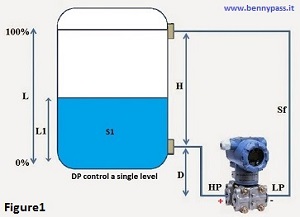
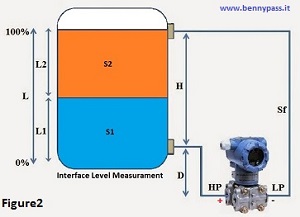
.png)
1.png)
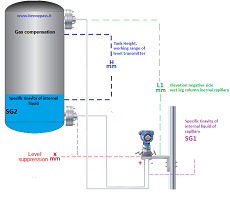
.png)
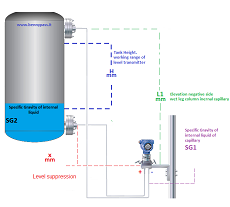

+(39) 347 051 5328
Italy - Kazakhstan


09.00am to 18.00pm
About
We offer the best and economical solutions, backed by 27+ years of experience and international standards knowledge, echnological changes, and industrial systems.
Our Services
Marketing Materials


Marketing Materials1


