
Pressure Relief Valve – Learn about Safety Valve and Vacuum Relief Valve
A pressure relief valve is a safety device designed to protect pressurized equipment or system during an overpressure event or in the event of a vacuum. An overpressure event is a condition, in which pressure inside the equipment or piping system increased beyond the specified design pressure or maximum allowable working pressure (MAWP). If not relieved this can damage the system, property and personal. Similarly, an unwanted vacuum is also dangerous for the system. A pressure Relief Valve's primary purpose is to protect life and property by venting fluid from an over-pressurized system. A vacuum relief valve ensures that a vacuum situation does not occur in the system. There are three types of pressure relief devices:
Reclosing Type Pressure Relief ValveA reclosing-type pressure relief Valve is designed to close automatically after the relief operation. Relief valves, Safety valves, and Safety relief valves are reclosing type Pressure Relief Devices.
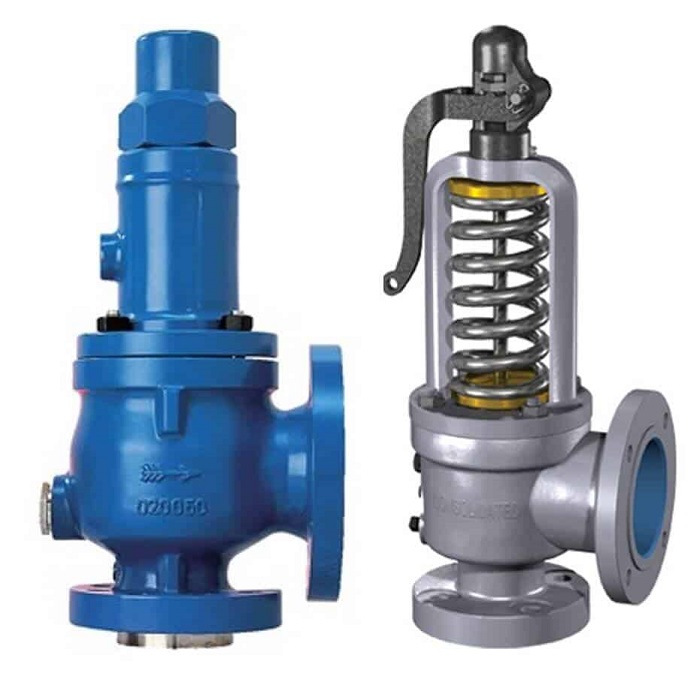
Relief valvesA relief valve is a gradual lift pressure actuated by static inlet pressure. An opening is proportional to the increase in inlet pressure over the opening pressure of the valve. It may be provided with an open or enclosed spring housing known as a bonnet. In figures 2 and 3, you can see the open spring-type bonnet. The valve can adjust the opening pressure by changing the load on the spring. Here in the image, you can see the enclosed spring-type Relief valves for closed discharged applications. Relief valves are commonly used with non-compressible liquid systems in chemical, petrochemical, and oil & gas industries.
Safety valvesA safety valve is a rapid opening or pop-up action pressure relief valve actuated by inlet static pressure. Safety valves are used primarily with compressible gasses. Particularly for steam and air services. Safety valves are classified according to the lift of the disk and bore of the valve. Types of safety valves are low lift, full-lift, and full-bore safety valves.
Safety Relief Valves
Pressure Relief ValveThe conventional pressure relief valve is characterized by a rapid pop action or by opening proportionally to the increase in pressure with respect to the opening pressure of the valve. The main parts of the Conventional pressure relief valve are a body, bonnet, disk, disk holder, seat, and spring. Based on the seating material, conventional pressure relief valves are classified as metal seated valves and soft seated valves. See the image for clarity.
During normal operating conditions, the pressure at the inlet is below the set pressure, and the disk remains seated on the nozzle, preventing flow through the nozzle. The working principle of a conventional spring-loaded pressure relief valve is based on the balance of force. That means the spring load will keep the disk on the seat till the system pressure is less than spring force. This pressure is known as set pressure. The disk remains seated on the seat in the closed position till the inlet pressure exceeds set pressure and overcome the spring force. When the inlet pressure is reduced to a level below the set pressure spring force close the valve. Conventional pressure relief valves are used for applications where an excessive variable or built-up back pressure is not present. Back-pressure will directly affect the valve performance. A pressure built-up on the outlet side of PSV is known as backpressure. You will learn more about back pressure in the lecture on bellows-type PSV.
Advantages Conventional PRV
Disadvantages of Conventional PRV
Vacuum Relief ValveA simple vent can Provide protection against vacuum. Our home water storage tanks are fitted with this kind of simple vent. But in the industrial tank which stores various chemicals and hydrocarbon, this simple vent may release vapour of these products in an atmosphere, which can be odorous, toxic, potentially hazardous. To avoid such release, special vacuum relief valves are used.
Pressure Vacuum Relief Valve -PVRVThe pressure vacuum relief valve or pressure-vacuum vent, are designed to maintain a tight seal until system pressure or vacuum exceeds the set pressure of the valve. When overpressure occurs, the pressure lifts the disk just like a safety valve, allowing vapours to pass. When a vacuum occurs, the vacuum lifts the disk and let the air inside break the vacuum. It is like breathing of tank. This PVRV arrangement prevents continued vapour loss to the atmosphere as it opens only when the set pressure is reached. You can see the image for better understanding.
|




+(39) 347 051 5328
Italy - Kazakhstan


09.00am to 18.00pm
About
We offer the best and economical solutions, backed by 27+ years of experience and international standards knowledge, echnological changes, and industrial systems.
Our Services
Marketing Materials


Marketing Materials1


