
Threads Identification Introduction The hydraulic systems alone use countless different types of fittings and adapters with different sealing methods and thread forms. While the sealing method can often be distinguished by appearance, thread forms all seem to look the same, making it difficult and time consuming to identify them when equipment modifications or repairs are needed. Knowing the correct thread is critical for selecting the right replacement parts for maintenance and repair. Selecting the wrong part can result in damage to the thread during installation, which compromises the pressure holding capacity and seal reliability of the fitting or adapter. Quickly and properly identifying threads can help maintain safe.
There are 11 types of threads commonly used on hydraulic tube fittings, below the details:
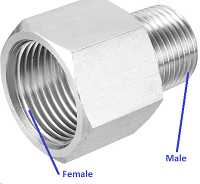
Identifying Threads First, you’ll need to identify whether the thread type is male or female. Take a look at where the threads are located. If they’re on the outside of the thread, it’s a male thread. If they're on the inside of the thread, it's a female thread.
Tapered or Parallel Threads
Next, determine if the thread is tapered or parallel. Tapered threads become narrower as they extend outward while parallel threads remain the same diameter. Sometimes this characteristic can be determined through visual inspection, but if not a caliper can come in handy. Use the caliper to measure the first, fourth, and final full thread. If the measurements are all the same, then it’s parallel. If the measurements decrease in size, then it’s tapered. NPT/NPTF, BSPT, and Metric Tapered are examples of tapered threads. These threads create a seal through metal-to-metal wedging or slight deformation of the threads. Parallel threads will often require an o-ring or thread tape to ensure a tight seal.
Pitch Size
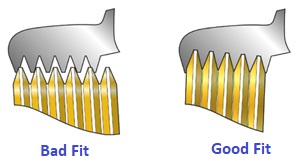
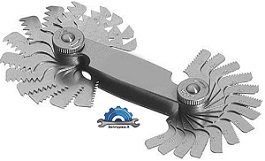
The next step in identifying your thread type is to determine the pitch size. A thread’s pitch size is the number of threads per inch or the distance between threads on metric thread types. While a ruler could be used to calculate the pitch size, a pitch gauge is highly recommended as pitch sizes can be very similar. Test a couple different sizes with a pitch gauge to find the best match. Note:
Thread Diameter
After you’ve figured out the pitch size, you’ll need to determine the thread diameter. Using the caliper again, measure the outside diameter on a male thread and inside diameter on a female thread. If you find that your measurements don’t exactly line up with the measurements in the thread size charts, this is okay. There will inevitably be small variations due to different manufacturers. The final step is for identifying your thread type, including the identification of thread type standard. Below the details of the major threads used
Recommendations Be careful not to get confused when talking about gas threads with the internal diameter of the flexible pipes defined with the measurement in gas. Example: The 1/4 "gas external thread measured with the gauge corresponds to 13.1 mm The measurement of the internal Ø of a 1/4 "flexible hose corresponds to 6.35 mm one more example: The 1” gas external thread measured with the gauge corresponds to 33.2 mm The measurement of the internal Ø of a 1 ”flexible pipe corresponds to 25.4 mm
Thread Size Charts NPT/NPTF Thread Type – National Pipe Tapered Fuel This thread type is most commonly used in North America. You’ll recognize it by its tapered outer and inner diameter which is self-sealing. When torqued the flanks of the threads compress against each other forming a leak-tight seal. However, it is still recommended to use PTFE tape or another sealant compound to guarantee a completely leak-tight seal A semi-compatible variant of NPT is NPTF (National Pipe Taper Fuel). It ensures an even more leak-free seal. But it is important to note that using these variants together diminishes their leak-free characteristics. NPT threads should be burr-free and lubricated using lubricating paste or tape. Doing so limits corrosion on the threads which otherwise can make future disassembly nearly impossible.
BSP Thread Type - British Standard Pipe This is a standard thread type that has been adopted internationally for interconnecting and sealing pipe ends. You’ll find it used all throughout Europe. There are two types of BSP threads, BSPP and BSPT. BSPP refers to parallel or straight threads. Meanwhile, BSPT refers to tapered threads. Sometimes BSPP threads are referred to as G threads and BSPT threads as R threads. Note: JIS tapered pipe thread (PT thread) is interchangeable with BSPT thread.
JIS Tapered Pipe Thread Type – PT PT thread type is identical and interchangeable with BSPT thread type. However, since the male PT thread does not have a 30-degree flare, it will not mate with the BSPP female swivel with conical seat. Also, we recommended using thread sealant with PT threads to ensure a leak-free seal.
SAE Thread Type – Straight Thread O-Ring Boss SAE straight threads are able to seal because of the 90-durometer Buna-N “O” Ring. This is a highly reliable and reusable thread type. While some thread types require the threads of the male and female end to crush together to form a seal, the O-Ring on this thread type prevents that.
Metric Tapered/Parallel Thread Type Metric thread type is most common in Europe. It has a cylindrical inner and outer diameter precise in millimeters. The fine taper of metric tapered thread allows for the best possible force transmission. In writing, you can identify metric threads by a capital “M” plus an indication of their nominal outside diameter (ex. M22 x 1.5). Lastly, when measuring pitch size make sure you’re using a metric pitch gauge.
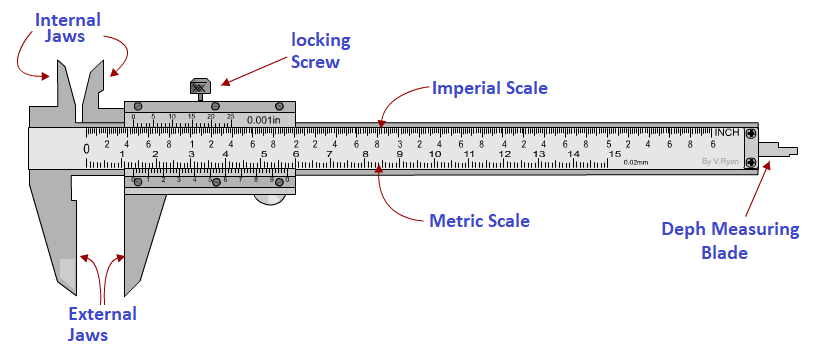
below the foto with istruction how can use the caliper
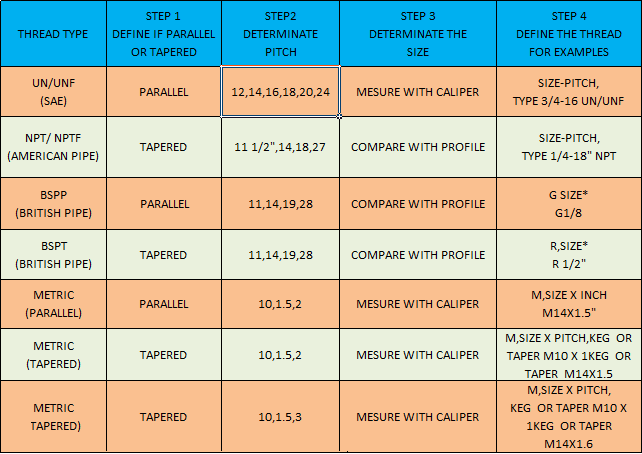
Quick identification
Conclusion
In order to differentiate between the various thread types, all that is needed is this reference chart (like table 1 below), a caliper and a thread gage. The most important tool is the thread gage (or pitch gage). This tool, which has a “saw tooth” appearance, helps determine the thread pitch. It has a specified number of serrations within a certain distance and is (usually) marked accordingly. For metric threads, the pitch is considered as the distance, in millimeters, between each thread. For all other threads, the pitch is considered as the number of threads per inch.
note: For JIS (Japanese Industrial Standards), the thread can be identified similar to BSPP and BSPT but defined with PF and PT, respectively. For example, PF 1/8 and PT 1/2.
www.bennypass.it |

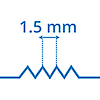 After identifying if the threads are parallel or tapered, measure the thread pitch in millimeters over the top of the thread crests.
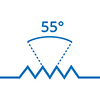 BSP threads come in two versions: parallel (BSPP), and tapered (BSPT). The thread flank angle for both tapered and parallel British threads is 55°. It is a fairly common mistake to identify a BSPT (tapered) as an NPT. Remember that NPT threads have a 60° thread flank angle, and BSPT has a 55° angle. This can be verified with a thread gauge. Although BSP is a foreign thread, it isn’t actually metric. This is why it comes in Imperial sizes: 1/8, 1/4, 1/2, 3/4, and so on.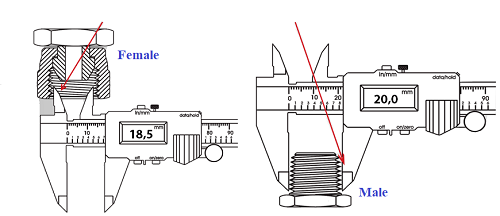

+(39) 347 051 5328
Italy - Kazakhstan


09.00am to 18.00pm
About
We offer the best and economical solutions, backed by 27+ years of experience and international standards knowledge, echnological changes, and industrial systems.
Our Services
Marketing Materials


Marketing Materials1


