
|
Thread identification and measure NPT Fittings
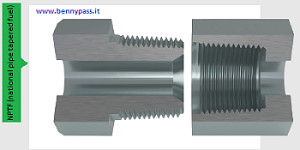
Indroduction NPT stands for National Pipe Tapered threads, also known as ANSI/ASME B1.20.1 pipe threads. It is a U.S. standard for measuring tapered threads on threaded pipes and fittings. Threaded pipes can give an effective seal for pipes using hydraulic fluids. Sometimes referred to as MPT (male pipe threads), NPT threads are not interchangeable with NPS (National Pipe Straight) threads even for the BSP (British standard pipe) fittings. Unlike straight threads found on a bolt, a taper thread will pull tight, making a closer seal. A sealant compound or PTFE (Polytetrafluoroethylene) tape must be used to ensure a leak-free seal. NPT Threads Dimensions NPT
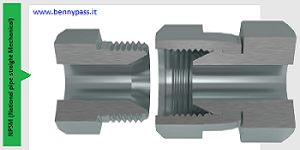
NPSM
NPT (National Pipe Tapered) and NPTF (National Pipe Tapered Fuel) They are both the same in many ways,
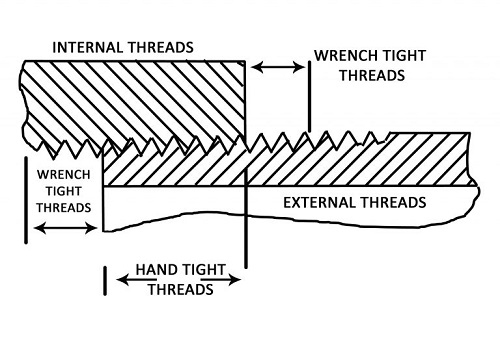
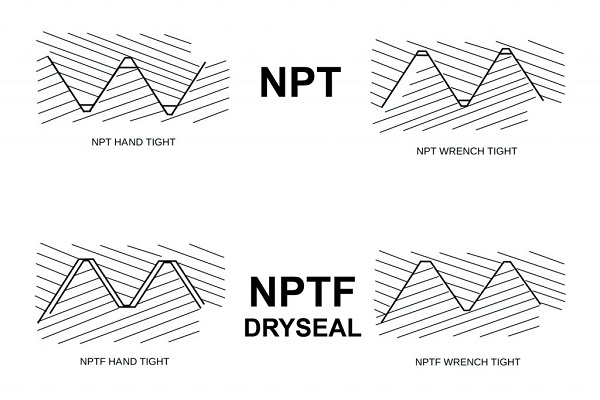
The difference it is the application. NPT threads are used in different applications. One of them being internal and external fittings used for mechanical purposes other than plumbing, like shelving supports. But the most common applications are those that carry air, fluids or gasses where the assembly includes some type of sealants like Teflon tape or sealing compound that is not functionally objectionable. That is that it can withstand the temperature or pressure it may be subjected to or it will not dissolve or contaminate the fluids or gasses that flow through. NPTF threads, also called “Dryseal”, are used for applications that carry fluids or gasses where the use of sealants such as Teflon tape or sealing compounds are functionally objectionable due to dissolving and/or contaminating the fluids or gasses that flow through the fittings and pipe. Obtaining a seal without sealants is where NPTF also gets the name “Dryseal”. The second difference is the width of flats on the crest and roots of the thread. But before we discuss this, we need to first explain what “hand tight” and “wrench tight” means. When you screw together an internal and external pipe or pipe fitting by hand and it comes to a stop, the length of overlapped threads of the internal and the external fittings are called “hand tight” threads. The threads beyond the “hand tight” threads on both the internal and external fitting are called “wrench tight” threads. These threads are provided for the required wrenching necessary to complete the assembly.
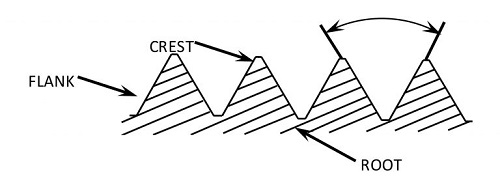
NPTF threads, on the other hand, are dimensioned so the crests and roots, when assembled “hand tight “, come in contact with each other and results in a space between the internal and external thread flanks. When wrenching the threads, the crests and roots are crushed together till the thread flanks come together forming a seal around the entire thread form, eliminating the need for sealant, thus the name Dry seal.
Because of the differences between NPT and NPTF threads, the tooling to produce parts and the gages used to inspect them are different. If the job at hand calls for NPT, use tooling and gages for NPT and if it calls for NPTF, use NPTF tooling and gages. The US standards that cover NPT and NPTF threads are:
Conclusion Even if NPT and NPTF are same with thread angle, thread diameter etc, are not interchangeable as per specification below:
Both NPT and NPTF have the same threads-per-inch, pitch diameters, and taper-per-inch. The differences come in the major and minor diameters, the root and crest of the threads. The NPTF thread crests fall with in the parameters of the NPT requirements, but have a smaller range than the NPT. The NPTF thread roots are different than the NPT thread roots. NPTF thread roots are designed to interfere with the crest of the mating thread with the intention of creating a mechanical seal through thread form deformation at assembly. NPTF threads have two classes identified: Class 1 and Class 2. NPT thread roots are designed to allow clearance with the mating thread crests on assembly. While NPT & NPS threads will engage and seem like they fit - they will not seal properly with each other causing leaks. Creating a leak free NPT connection involves the use of thread sealant tapes, including the NPS connection but in this case they are are sealing by O-ring. National Pipe Taper Fuel (NPTF), also called Dryseal American National Standard Taper Pipe Thread, defined by ASME B1.20.3, is designed to provide a more leak-free seal without the use of PTFE tape (aka "Teflon") or other sealant compound. NPTF threads have the same basic shape but with crest and root heights adjusted for an interference fit, eliminating the spiral leakage path. www.bennypass.it |
||||||||||||||||||||||||||||||||||||||||||||||||||||||||||||||||||||||||||||||||||||||||||||||||||||||||||||||||||||||||||||||||||||||

+(39) 347 051 5328
Italy - Kazakhstan


09.00am to 18.00pm
About
We offer the best and economical solutions, backed by 27+ years of experience and international standards knowledge, echnological changes, and industrial systems.
Our Services
Marketing Materials


Marketing Materials1


