
Optimized inverter system
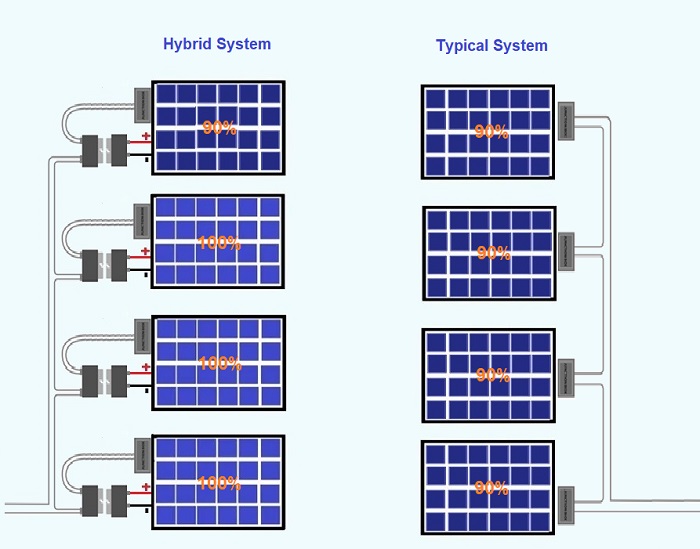
A hybrid of microinverters and string inverters separates the two jobs of an inverter. Optimisers behind each panel carry out the role of MPPT, therefore isolating any shading or fault issues. These optimisers are connected to a central inverter that can work more efficiently. It is always presented with the same voltage from the panels (string inverters have to deal with variable voltages). These systems are also internet-connected, which allows proactive maintenance. So if there's a fault, your installer will get an email alert and respond quickly and accurately.
As can be seen from figure 1, the difference between typical and hybrid systems is significant. Below is the difference:
Note: the system will continue to work regularly but will send a fault to the general control unit or even via the internet by sending a mail to the installer or an SMS to the system's owner. Let's say that the hybrid system is the spearhead of the Solar PV Inverter.
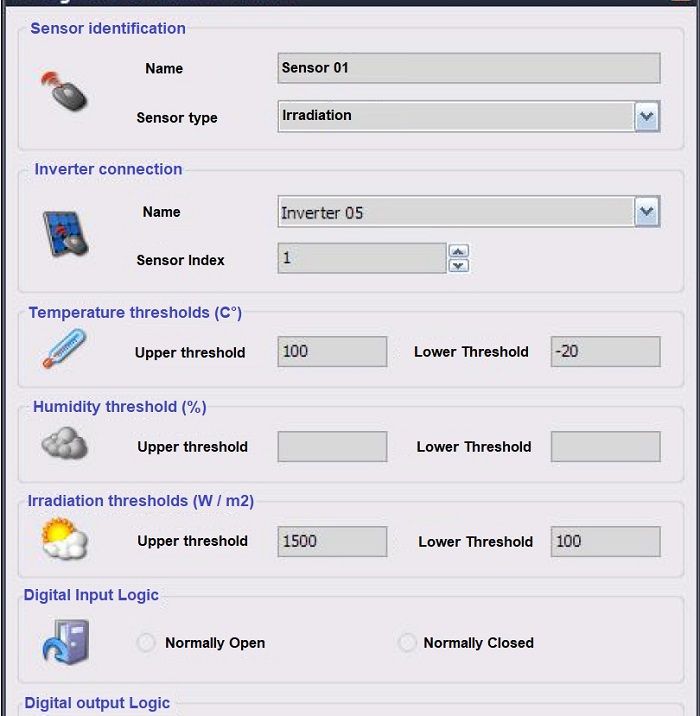
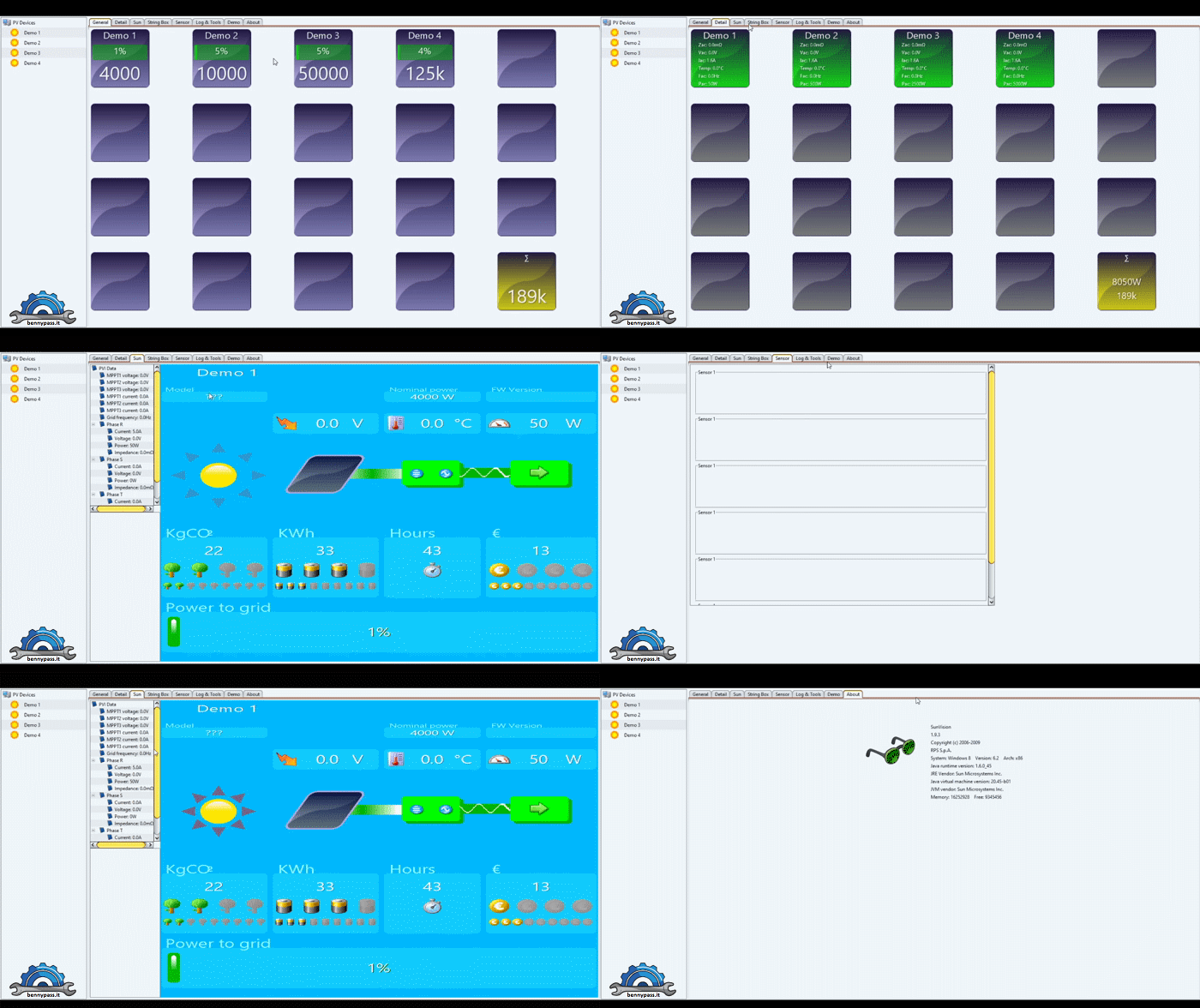
Supervision program There are many supervision programs for managing a hybrid of microinverters. One is the "Sun Vision", which can monitor anything on a solar panel system. Figure 2 shows some sensors that are of fundamental importance for a solar panel system.
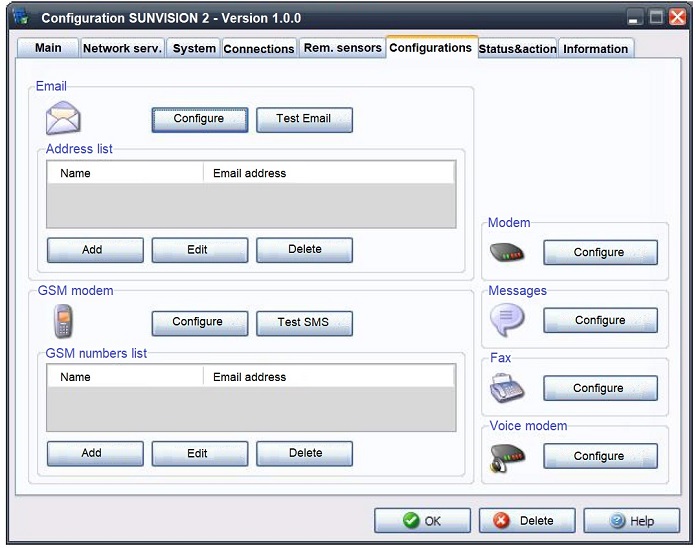
As can be seen from Figure 2, a single inverter that includes a single panel can monitor all. Figure 3 shows an example of an inverter configuration. Now with internet technologies, you can control everything remotely. Figure 3 shows a typical configuration via the internet, complete with an email to receive any failures or yields.
Another good thing about this program is the visualization page where the various current absorption is represented, both towards the accumulators and towards the users, from the external temperature to the absorptions of every single panel, etc. Figure 4 below shows this page.
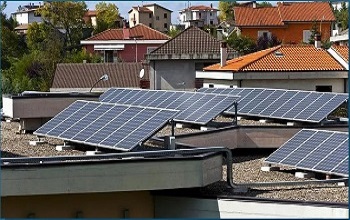
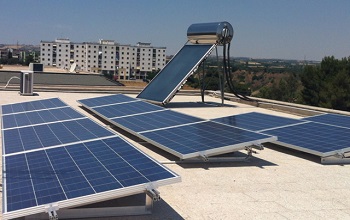
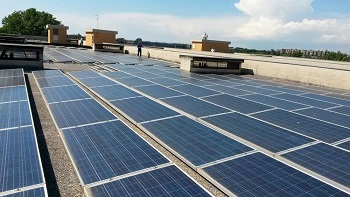
The sun tab is divided into two parts, as seen in Figure 4. The instantaneous electrical input parameters for each tracker (PV generator voltage, input current for the models that support this feature) and the output parameters for each phase (grid voltage, current and power fed into the grid) are shown on the left-hand side, while the right-hand side displays the information identifying the inverter, some instantaneous parameters and the cumulative parameters such as the counters measuring the amount of energy produced and the total hours of operation, in graphic/digital form. These cumulative parameters are used to calculate the gain and the equivalent mass of CO2 expressed in Kg that has not been emitted into the atmosphere using solar energy rather than fossil fuels. For more details click here for the PDF file or here to download the program. There are also other programs better than Sun Vision, where via the internet it is possible to check the analogue values of current and voltage, etc. I like this program because I know it very well; the essential thing is intuitive functionality in terms of configuration. Installations completed Making a profitable investment is significant, especially choosing the right components. The figures below are the just completed systems by my company
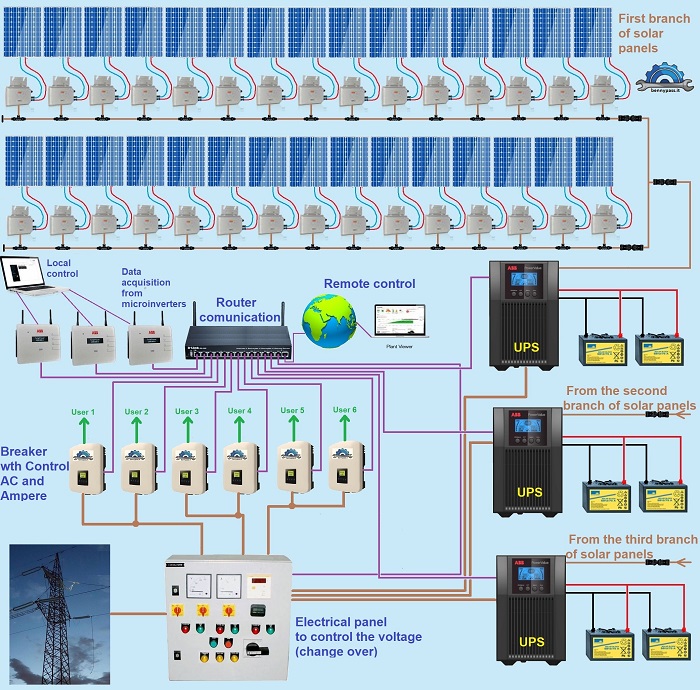
Microinverter System Surely one of the most beautiful works is represented in figure 7 which installed 90 panels divided by three branches of 30 panels, each one connected with a CCD It is costly, but it must be 100% reliable and last many years. Figure 9 shows the connections between all devices
As you can see from figure 9, there are a lot of components, each with a specific function. Below the list
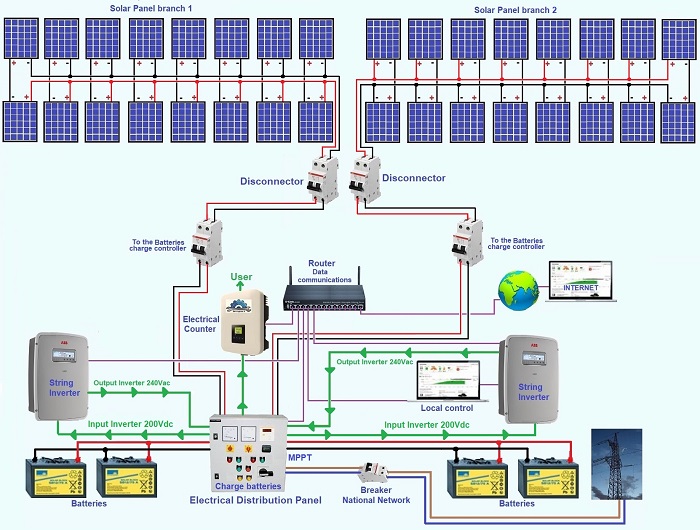
The total price of all devices including manpower is 59650€ which is divided by 6 families, it becomes 9941€. Calculating with a monthly bill of 120 euros, which in a year is 1440€. Capital recovery of 9900€ for each family will be seven years) After seven years it is only profit. Also, consider that the Electrical panel that built our company, thanks to MOSFETs and the other components, can sell energy to the government if not used entirely. At the end of the works, will remain annual maintenance of 1000€ which is divided by six families = 166 euros. The great thing is that all devices (excluding batteries) are for 15 years insured (no extra money from the client). Note: For natural disasters and therefore, the breakage of the solar panels, the insurance is not covered; it should be different insurance. The most interesting thing about this system is to monitor the performance of each solar panel to understand if its performance is normal or if there is degradation over timeq2, including monitoring the solar panel surface if it requires cleaning. String inverter The second circuit I want to introduce is the string inverter system. This system is the most commonly used and probably least expensive, but it works very well. Figure 8 represents the string inverter we built two years ago for a family. Figure 10 below shows the circuit.
Below is the components list
Total price 13500€. The system has been built for a dental practice. The output capacity is about 6KW. With a lower capacity, the price will be less; for example, half power (3KW) will be more or less 9000€ Between the microinverter system and string inverter system, the "Electrical Distribution Panel" is present, where inside it is present a bidirectional counter to withdraw energy from the national network in case solar panels will not be 100% due to cloudy weather and batteries are flat. Consider also in reverse mode, which means selling energy to the national network in case this energy will not use during the day. Also, in this circuit, as the microinverter circuit, it is possible to monitor the system's operation remotely by PC. However, unlike the microinverter system, it is not possible to monitor the single panel because the inverter is one for all panels. Partial breakage or degradation of a panel must also be considered, compromising the other panels' functioning. Also, troubleshooting is not easy to identify which panel is damaged or with low performance. Click here to learn how to calculate energy consumption.
Conclusion Unfortunately, when you decide to install a photovoltaic system, there are many things to consider, and sometimes the photovoltaic system is unsuitable for that geographical area. Disadvantages of solar panels
Recommendations
|
2 |


+(39) 347 051 5328
Italy - Kazakhstan


09.00am to 18.00pm
About
We offer the best and economical solutions, backed by 27+ years of experience and international standards knowledge, echnological changes, and industrial systems.
Our Services
Marketing Materials


Marketing Materials1


