
Production of a photovoltaic panel The factors that affect the production efficiency of a photovoltaic system are basically two:
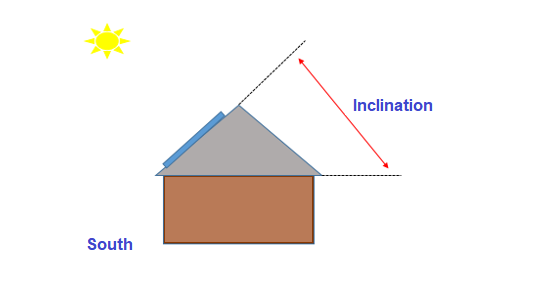
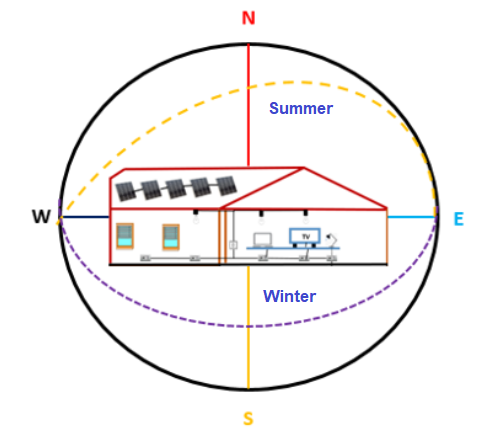
External factors The inclination, or Tilt, of the photovoltaic modules, is the best angle of a preference concerning the ground and allows you to capture the irradiation better. At our latitudes, the optimal tendency is around 30/35 degrees. For example: with an inclination of 60 °, the sun's rays are better exploited in the winter, and with 20 ° in the summer, an average that is valid throughout the year is about 30 °. The formula for the inclination that does not consider the changes that should be made in the months of the year, but is an average, reliable, between winter and summer production is this: Optimal inclination = 3.7 + (0.69 x Latitude) For Eg Milan has a latitude of 41.89º. Tilt = 3.7 + (0.69 x 41.89) = 32.6º Eg Palermo: latitude 38º. Tilt = 3.7 + (0.69 x 38) = 30º Figure 3 shows this
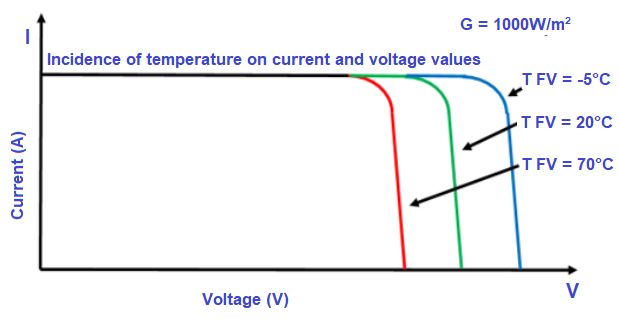
If you think that the higher the temperature, the greater the energy production: it is wrong. Solar panels perform better with a temperature around 25 ° C; the higher it is, the lower the performance, see Figure 5
Cleaning and Shading. Dust and dirt can cover the cells and prevent the absorption of sunlight, such as the presence of shadows such as trees, chimneys, etc., which reduce its productivity.
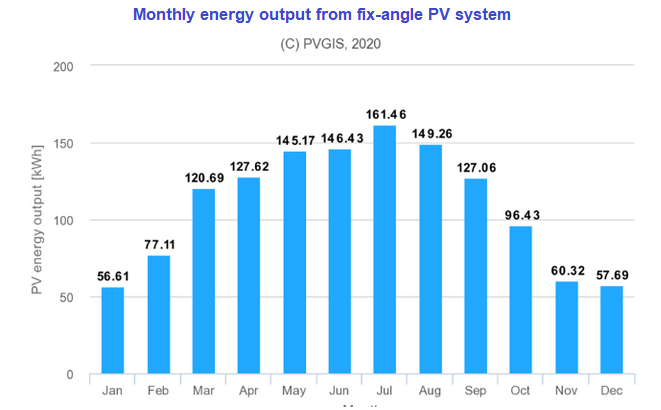
External factors The internal factors are none other than the installed products that make up the photovoltaic system. If they are not managed correctly, they generate the so-called system losses due to the inverter, cables, charge controller, etc. In practice, the internal factors can be expressed in the quality of the components, which is fundamental. And in the years of life, which with the passage of time the devices suffer a decline in performance, for this reason, it is good to choose a photovoltaic panel certified up to at least 25 years of operation. Tool for calculating the production of the photovoltaic system To calculate the production of the photovoltaic system, an online simulator PVGIS (Photovoltaic Geographical Information System) could be used. With this calculator, we can obtain the monthly photovoltaic production in Kwh in relation to the monthly irradiation of the place chosen for all months of the year, and the daily irradiance of the place chosen.
www.bennypass.it
|

+(39) 347 051 5328
Italy - Kazakhstan


09.00am to 18.00pm
About
We offer the best and economical solutions, backed by 27+ years of experience and international standards knowledge, echnological changes, and industrial systems.
Our Services
Marketing Materials


Marketing Materials1


