
How Does a Gas Regulator Work
Working in the HVAC, combustion, propane, and industrial markets requires tools and equipment that can handle the demands of process complexity in a safe and efficient manner. One area you should never skimp on is that of your gas regulators. These handy devices work hard to ensure the gas flowing through the lines into the equipment does so at the right pressure. Too much gas pressure can lead to a catastrophic explosion, harming others and destroying property. Conversely, not having enough pressure will render your equipment useless. We understand that the world of regulators can be a little confusing. Each type serves a different purpose based on the application. Although you can rely on experts like us to help you out, understanding what a regulator is, how it works, the difference between pressure reduction and pressure regulation, and dual-stage vs. single-stage will aid you in finding the best product for the job.
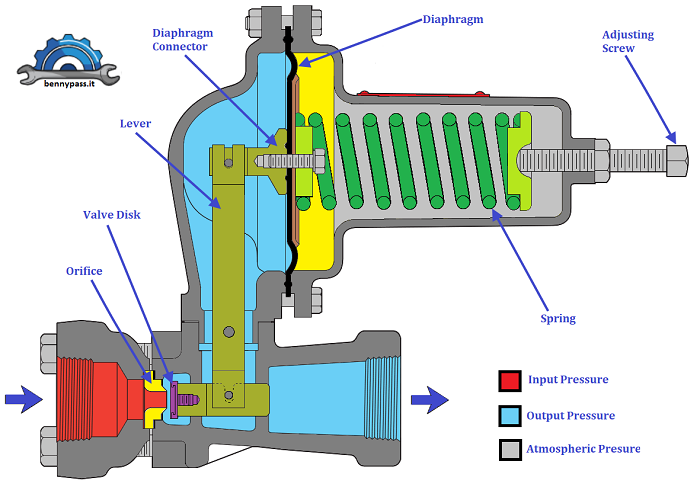
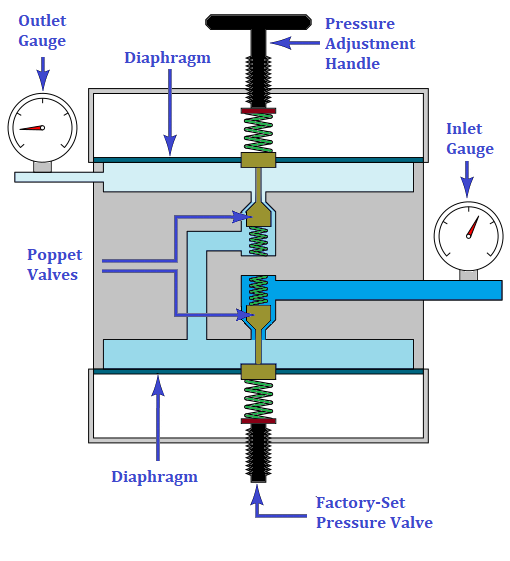
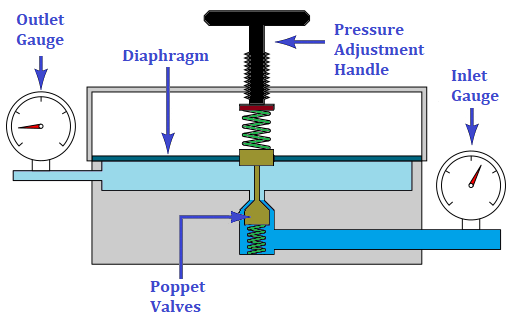
What is a Gas Regulator? Designed in 1835, the regulator’s concept is easy, and its impact has been long-lasting. There are various types of regulators, but their function is the same: to use a valve system to control natural gas or propane pressure or other gas flow. Common appliances that use regulators include gas stoves, propane grills, or oxy-fuel bottles for welding. Each type of regulator’s components consists of a set spring attached to a rod that runs down from a set screw through a diaphragm into the valve. There are three primary operating components working together to regulate the pressure within the valve. The loading mechanism determines the delivery pressure. Most often, it is spring. The sensing element, or diaphragm, senses the force against the spring. Finally, the control element accomplishes the reduction of the inlet pressure through to the outlet pressure. How Does a Gas Regulator Work? Gas enters the regulator’s chamber, putting pressure on the diaphragm. The diaphragm then moves upward as controlled by the set spring. This allows a specific flow of fuel from the source to the appliance or device. Adjusting the control knob determines the rate of flow and the pressure. Turning clockwise will push the diaphragm down and allow more gas to come into the valve. Turn counter-clockwise to reduce the amount of fuel and pressure. Figure 2 and Figure 3 below shows the typical working principle of gas regulators
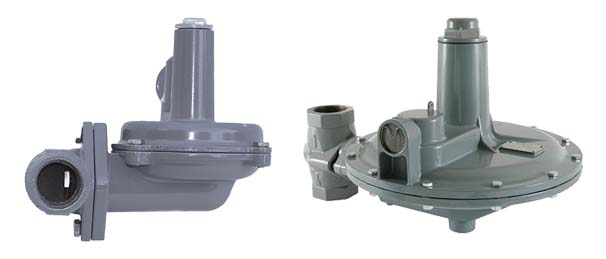
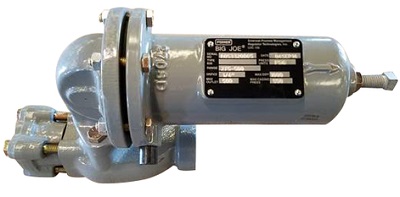
The mechanics of the gas regulator work well together. However, there is another component that comes into play called the surrounding air. Atmospheric pressure, based on the elevation above sea level that the building sits, will affect gas pressure. The inner parts work by sensing the pressure both upstream and downstream. The air pressure affects the way the regulator senses downstream pressure. The two regulators in Figures 2 and 3 are the best. Figure 2 shows the Fisher (Emerson) R622 reducer, while figure 3 shows the Fisher (Emerson) R630 reducer. When using a regulator to adjust the pressure of the methane or propane (LPG), you must be very careful to choose the correct reducer but, above all, the reliable one. Maintenance is essential. Let's see how these two reducers work Fisher (Emerson) R622
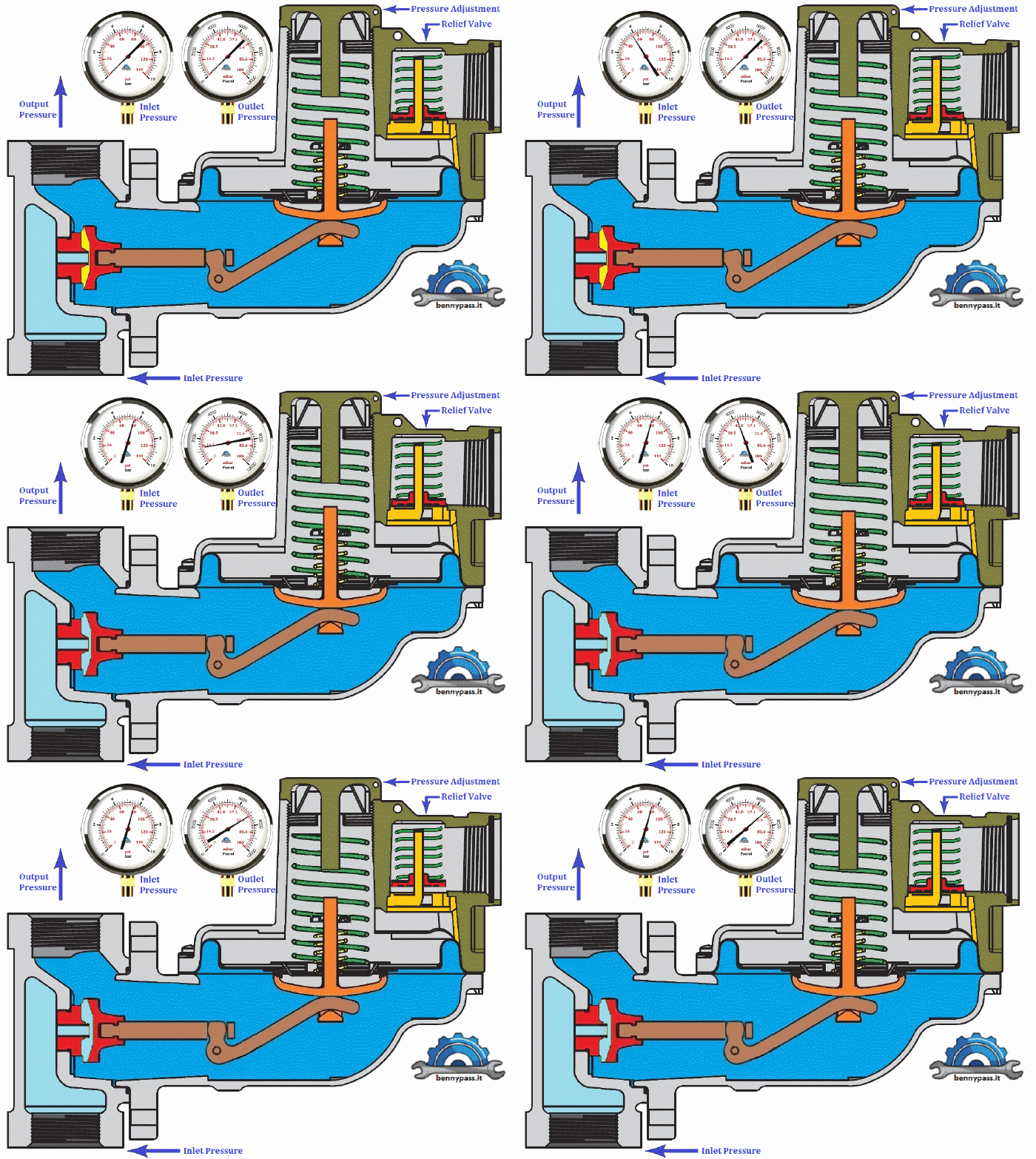
Figure 4 Type R622 direct-operated, spring-loaded regulators provide economic pressure reducing control in various residential, commercial, and industrial applications. These regulators can be used with natural, manufactured, or propane gases and have the same inlet and outlet pressure capabilities. In addition, Type R622 regulators have internal relief across the diaphragm to help minimize overpressure. Any outlet pressure above the start-to-discharge point of the non-adjustable relief valve spring moves the diaphragm off of the relief valve seat, allowing excess pressure to bleed out through the screened spring case vent (see Figure 2) Note: If gas escaping through the Type R622 internal relief valve could constitute a hazard, the spring case vent must be piped to a location where escaping gas will not be hazardous. If the vented gas will be piped to another location, obstruction-free tubing or piping at least equal to the vent, and the end of the vent pipe must be protected from anything that might clog it. Working Principle When downstream demand decreases, the pressure under the diaphragm increases. This pressure overcomes the regulator setting (which is set by the control spring). Through the action of the pusher post assembly, lever, and valve stem, the valve disk moves closer to the orifice and reduces gas flow. If demand downstream increases, the pressure under the diaphragm decreases. Spring force pushes the pusher post assembly downward and the valve disk moves away from the orifice allowing flow through the body to the downstream system. Type R622 regulators include an internal relief valve for overpressure protection. Application They are typically connected to gas generators, domestic LPG systems, or LPG and methane distribution stations. There are also many configurations depending on which internal spring is installed. Click here if you want to buy it. Also, for any questions, you can contact us by email. Click here for PDF manual of R622 Fisher (Emerson) 630
The Type 630 Series consists of self-operated, spring-loaded Type 630 Big Joe® pressure regulators and Type 630R relief valves, which are designed for maximum inlet 1pressures to 500 psig / 103 bar and outlet pressures from 3 to 500 psig / 0.21 to 34.5 bar. Specifications
Type 630 can be used with natural gas, air, or a variety of other gases for such applications as first-stage farm-tap or high-pressure industrial regulators. They can be converted to a relief valve in the field. What is the Difference Between Pressure Reduction and Pressure Regulation? The application between the two types is the main difference. A pressure reduction regulator is used to reduce the input pressure of the gas so that it is at the ideal pressure at the outset. It is a normally open valve installed upstream of the pressure-sensitive equipment it needs to regulate, as it controls downstream pressure. Pressure regulation is often called a back-pressure regulator or back-pressure valve. Its purpose is to maintain a set pressure at the inlet. It is a normally closed valve and is installed in parallel with or just after sensitive equipment to maintain upstream pressure. Dual-Stage versus Single-Stage – Why Does it Matter? Dual-stage regulators Two-stage regulators are two regulators in series in the same housing that operate to reduce the pressure progressively in two steps instead of one. The first stage, which is preset, reduces the pressure of the supply gas to an intermediate stage; gas at that pressure passes into the second stage. The gas emerges from the second stage at a pressure (working pressure) set by the user by adjusting the pressure control knob at the diaphragm loading spring. Two-stage regulators may have two safety valves so that if there is any excess pressure between stages due to a leak at the first stage valve seat, the rising pressure will not overload the structure and cause an explosion. An unbalanced single-stage regulator may need frequent adjustment. As the supply pressure falls, the outlet pressure may change, necessitating adjustment. In the two-stage regulator, there is improved compensation for any drop in the supply pressure in the two-stage regulator.
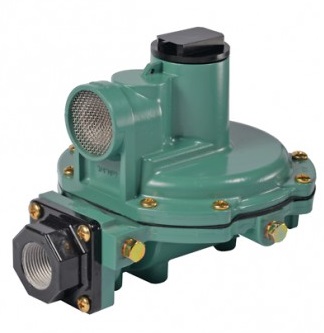
Single-stage regulators High-pressure gas from the supply enters the regulator through the inlet port. The inlet pressure gauge will indicate this pressure. The gas then passes through the normally open pressure control valve orifice. The downstream pressure rises until the valve actuating diaphragm is deflected sufficiently to close the valve, preventing any more gas from entering the low-pressure side until the pressure drops again. The outlet pressure gauge will indicate this pressure. The outlet pressure on the diaphragm and the inlet pressure and poppet spring force on the upstream part of the valve holds the diaphragm/poppet assembly in the closed position against the force of the diaphragm loading spring. If the supply pressure falls, the closing force due to supply pressure is reduced, and downstream pressure will rise slightly to compensate. Thus, if the supply pressure falls, the outlet pressure will increase, provided the outlet pressure remains below the falling supply pressure. This is the cause of the end-of-tank dump where the supply is provided by a pressurized gas tank. The operator can compensate for this effect by adjusting the spring load by turning the knob to restore outlet pressure to the desired level. With a single-stage regulator, when the supply pressure gets low, the lower inlet pressure causes the outlet pressure to climb. If the diaphragm loading spring compression is not adjusted to compensate, the poppet can remain open and allow the tank to rapidly dump its remaining contents.
Choosing which type to use should be based on the required consistency of gas flow needed for operating. Consider what kind of gas flow is required, and then make your choice. Our expert team can help you find a suitable gas regulator for your application
Recommendations Because the regulator is such an important device in any propane gas system, it is important to know how the regulator works. A better understanding of propane regulator operation is imperative for customers to have so that the recommendations concerning regulators from the propane company representative are fully understood. When the subject of regulator replacement is addressed by the propane company, be sure to listen and heed their advice. Above all else, DO NOT ATTEMPT TO MODIFY OR TAMPER WITH A PROPANE REGULATOR.
|

+(39) 347 051 5328
Italy - Kazakhstan


09.00am to 18.00pm
About
We offer the best and economical solutions, backed by 27+ years of experience and international standards knowledge, echnological changes, and industrial systems.
Our Services
Marketing Materials


Marketing Materials1


