
How can work the Cylinder Gas Regulators
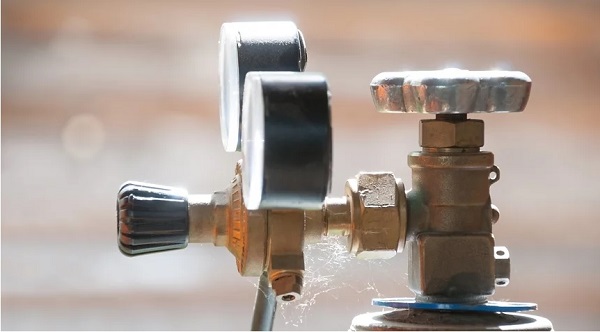
A gas regulator is an internal valve system used externally to control the pressure of a gas cylinder. It helps reduce the cylinder native pressure down to the desired outlet pressure. It's very important to use one to make sure the amount of output pressure is correct for the application it's intended for. There are different types of regulators, each meant for specific jobs based on long-term, heavy-duty cycles, and short-term, light-duty cycle applications.
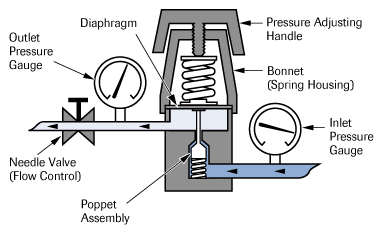
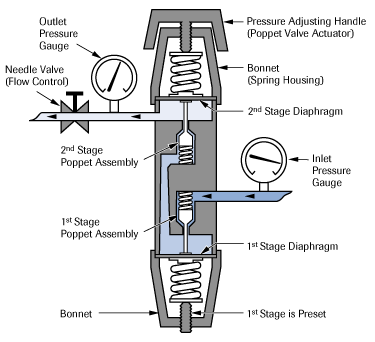
Single-Stage Regulators These kinds of regulators are used for short term applications. They use only one step to control the amount of pressure. This is a great choice for small gas-related jobs. However, if you need to work with gas on a long term basis or long duty cycle, you’ll need a dual-stage regulator instead ( see Figure 2 below)
Dual-Stage Regulators If you require a long work duty regulator, it’s recommended you go with a dual-stage regulator. As the name suggests, there are two stages to help regulate the gas pressure. It is strongly recommended to use dual-stage regulators on jobs that require large volumes of gas over a long period of time. Dual-stage regulators can be used for short-term applications as you would with a single-stage regulator. One drawback for dual-stage regulators is their cost. It would be more cost-effective to go with the single-stage rather than dual-stage if you just need one for small jobs.
Gas regulators must be used only on gas tanks. You cannot use a gas regulator on a liquid gas tank. In this case, a liquid-gas regulator would be used for this application. This is due to the corrosive nature of liquid gasses. An example would be a CO2 tank. Liquid CO2 is normally at around -70 degrees Fahrenheit in its liquid state. This extreme cold would seize the regulator's internal components and destroy any seals or gauges within. This can cause very dangerous conditions to the operator and his surroundings. How To Use a Regulator
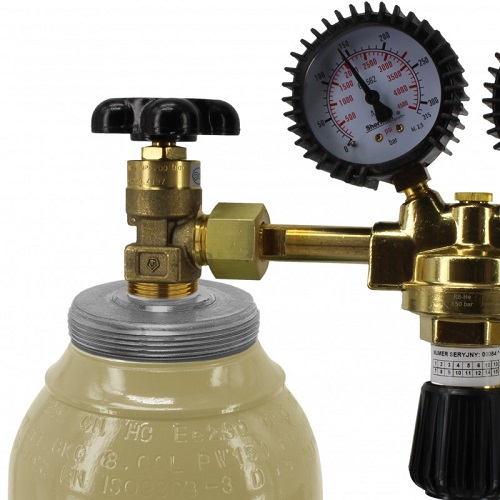
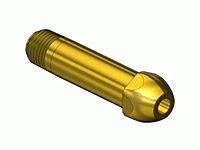
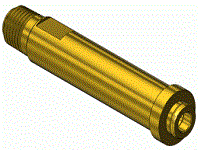
Connect the gas regulator to the gas tank’s valve inlet port. There is an adjustment screw that controls a spring on the regulator. That spring helps open and close the valve in small increments. Once the regulator has been carefully tightened, open the gas tank’s main valve. At this point, you can fasten the regulator screw clockwise or counterclockwise. This is what makes the regulator control the amount of pressure to be outputted. You want to fasten the screw until it outputs the desired amount of outlet pressure. There are 2 separate gauges used to display pressure. The first one shows the inlet pressure or amount of pressure currently in your gas cylinder, while the second one tells the outlet pressure. Since the outlet pressure gauge is what shows the amount of pressure in the gas exiting the cylinder, you want to pay close attention to that regulator and gauge readings. You never want excessive pressure to come out, especially in enclosed areas, as that could lead to serious consequences depending on the gas used. Sickness and even death can occur without proper training and supervision. ALWAYS, when you have completed using your regulator, close the main valve and purge any remaining pressure from the regulator. This will prolong the life of the regulator as well as prevent any leaks or gas waste. There are two types of connection between cylinder and regulator, the figures below show the difference
As can be seen from the Figures, the British style does not require the gasket because the seal is made cone by cone between the valve cylinder and the regulator itself, while the German connection requires the Teflon gasket. Recommendation In the event of a leak between the thread of the valve on the cylinder and the connection nipples to the reducer, which can be British standard (cone by cone) or German standard (Gasket) connection, never apply the Teflon or another type of seal to the thread of valve on the cylinder for eliminating the leak. The thread cannot support the pressure inside the cylinder, especially when the pressure is over 200 bar. |

+(39) 347 051 5328
Italy - Kazakhstan


09.00am to 18.00pm
About
We offer the best and economical solutions, backed by 27+ years of experience and international standards knowledge, echnological changes, and industrial systems.
Our Services
Marketing Materials


Marketing Materials1


