
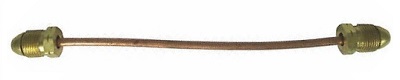
LPG Pigtail The propane tank and regulator connection is commonly called the pigtail or hogtail. The pigtail connects to the service valve of the propane tank and the inlet connection of the regulator. This connection is relatively small in diameter, which initially restricts gas flow from the tank to the regulator. Pigtails must be replaced when the regulator is replaced. Propane Regulators and Flexible Connectors The NFPA defines the tank and regulator's regulator connection (pigtail) as a flexible connector. Flexible connectors must be 36 inches or less, meaning the regulator will be installed no more than 36 inches away from the service valve. The primary reason for this 36-inch maximum length is protection against tank pressure being delivered to the downstream piping in the event of a leak. If there is a leak in the system, the regulator acts as a protective device and will not allow the tank's full LP Gas vapor pressure to reach downstream. Pigtails also function as a protective measure against the movement in the gas line. They are "flexible" and will absorb the shock of sudden movement or jarring of the gas service line if accidentally bumped or moved out of place. Without the flexible regulator connection, the piping would be rigid and more susceptible to leaks forming if the piping, tank, or service line moves, either gradually or suddenly. See Figure 1 below
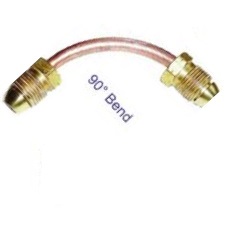
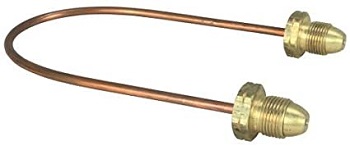
Propane regulator connections are available in varying lengths and bends. Although many of the pigtails installed are straight, the technician bends the connector to ensure that the regulator easily fits underneath the tank dome. Pigtails bent during fabrication are primarily used where space is an issue, such as in an underground tank installation. As per figures 2 and 3 below, the regulator connections are 90-degree bend pigtails. Notice that the longer bent pigtail allows the regulator to be installed closer to the service valve.
Because pigtails can catch or trap debris from the propane tank over time, they should be replaced any time the regulator is replaced. Remember that this type of connection does not require any sealant like Teflon on the thread. The seal is made through the pigtail cone and the valve seat. Benefit
Corrosion concerns
Copper Line Considerations In 1999, the International Association of Plumbing & Mechanical Officials (IAPMO) designated that copper tubing and fittings are allowable for gas-distribution systems, including propane. However, some individual states still have limitations on copper use for gas distribution tubing. Consumers should verify an individual state's laws with a certified propane professional before installing copper tubing. Copper Limitations Copper is typically corrosion-resistant but can develop problems if placed in specific soil types underground. Soils high in sulfate and chloride levels, deemed aggressive soils, can chemically react with the copper tubing surface. A catalyst for aggressive soil corrosion is water. Water within the soil, that cannot drain properly, provides a corrosion-friendly area for copper tubing. Installers must survey the installation site before laying any copper tubing, ensuring that the underground soil is stable for long term copper lines. Copper Line Protective Measures Propane (LPG) service lines must be installed at least 12 to 18 inches deep underground. This prevents damage to the line from vehicles or animals crushing the tubular shape, causing possible leaks. Copper lines can have protective tape or PVC (Polyvinyl Chloride) sheathed around the tube's exterior for extra protection against underground corrosion. Mixing Metals Copper is a metal that has Galvanic properties, developing corrosion when touching other metals, such as iron or steel. Copper lines must not mix with other metal line tubing. Installers should install pure and complete copper lines between the propane tank and the home. Warning Propane leaks can easily cause a fire hazard. Shut off the propane tank at its flow valve connection. Contact a propane service provider immediately for repairing the leak. Do not attempt to access the leak without a professional's guidance. |

+(39) 347 051 5328
Italy - Kazakhstan


09.00am to 18.00pm
About
We offer the best and economical solutions, backed by 27+ years of experience and international standards knowledge, echnological changes, and industrial systems.
Our Services
Marketing Materials


Marketing Materials1


