
Rotary, Centrifugal, Alternatives Pumps By definition, positive-displacement (PD) pumps displace a known quantity of liquid with each revolution of the pumping elements. This is done by trapping liquid between the pumping elements and a stationary casing. Pumping element designs include gears, lobes, rotary pistons, vanes, and screws. PD pumps are found in a wide range of applications -- chemical processing, liquid delivery, marine; biotechnology; pharmaceutical; as well as food, dairy, and beverage processing. Their versatility and popularity is due in part to their relatively compact design, high-viscosity performance, continuous flow regardless of differential pressure, and ability to handle high differential pressure. This article is made up of information from a variety of sources, including manufacturers, governmental agencies, industry trade organisations, and common PD industry knowledge, but the most important thing is from field experience. Difference between Rotary and Centrifugal Pump Rotary pumps operate in a circular motion and displace a constant amount of liquid with each revolution of the pump shaft. In general, this is accomplished by pumping elements (e.g., gears, lobes, vanes, screws) moving in such a way as to expand volumes to allow liquid to enter the pump. These volumes are then contained by the pump geometry until the pumping elements move in such a way as to reduce the volumes and force liquid out of the pump. Flow from rotary PD pumps is relatively unaffected by differential pressure and is smooth and continuous. Rotary PD pumps have very tight internal clearances which minimize the amount of liquid that slips back from discharge to the suction side of the pump. Because of this, they are very efficient. These pumps work well with a wide range of viscosities, particularly high viscosities. Centrifugal pumps differ from rotary pumps in that they rely on kinetic energy rather than mechanical means to move liquid. Liquid enters the pump at the centre of a rotating impeller and gains energy as it moves to the outer diameter of the impeller. The liquid is forced out of the pump by the energy it obtains from the rotating impeller. Centrifugal pumps can transfer large volumes of liquid but efficiency and flow decrease rapidly as pressure and/or viscosity increase. The table below shows comparisons between Rotary and Centrifugal Pumps
There are several rotary pumps. Let's say they are 5 (the most used ones)
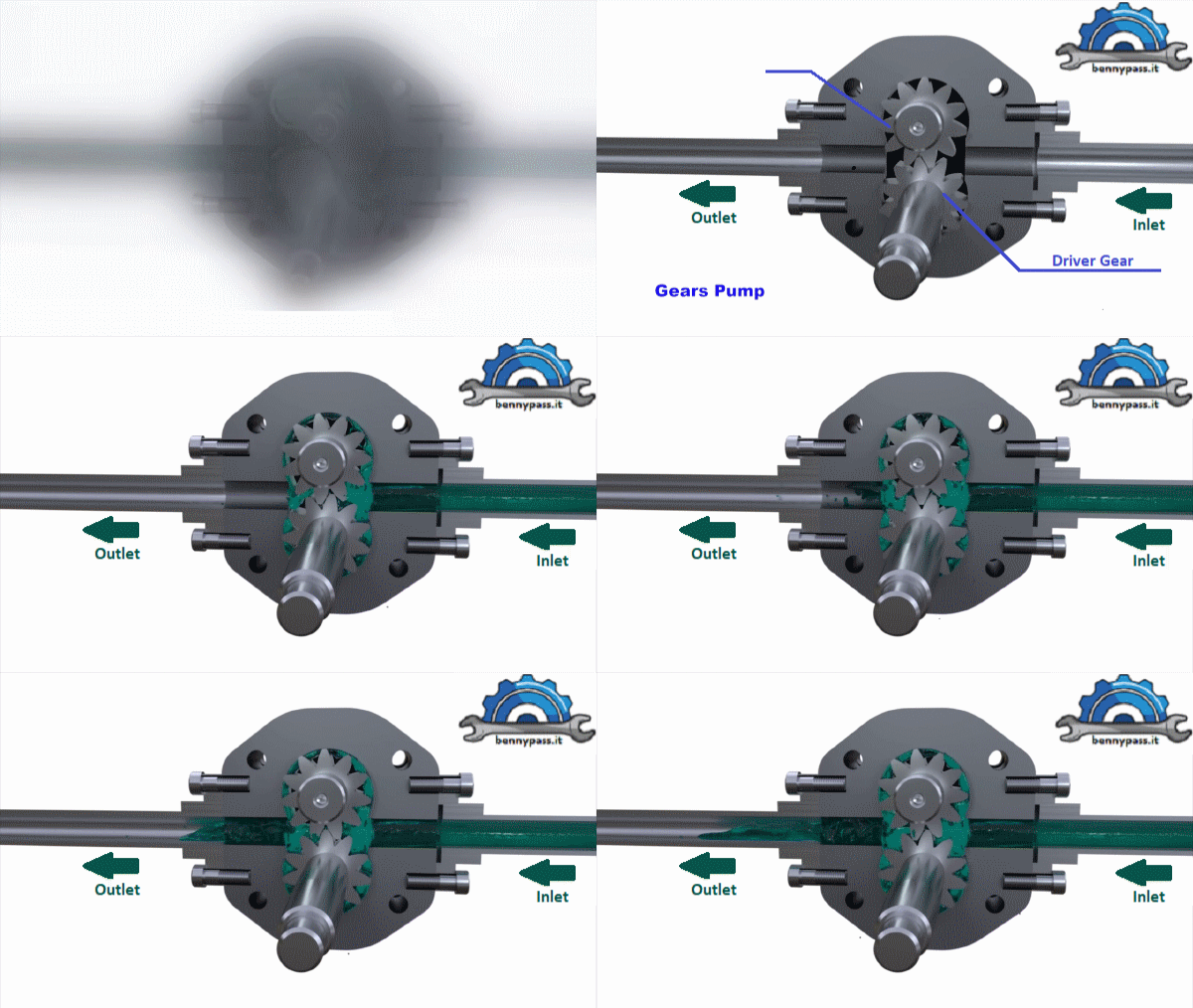
Rotary Gear Pump Figure 1 below shows the Rotary Gear Pump
Figure 1 Rotary Gear Pump Characteristic
For more details click here
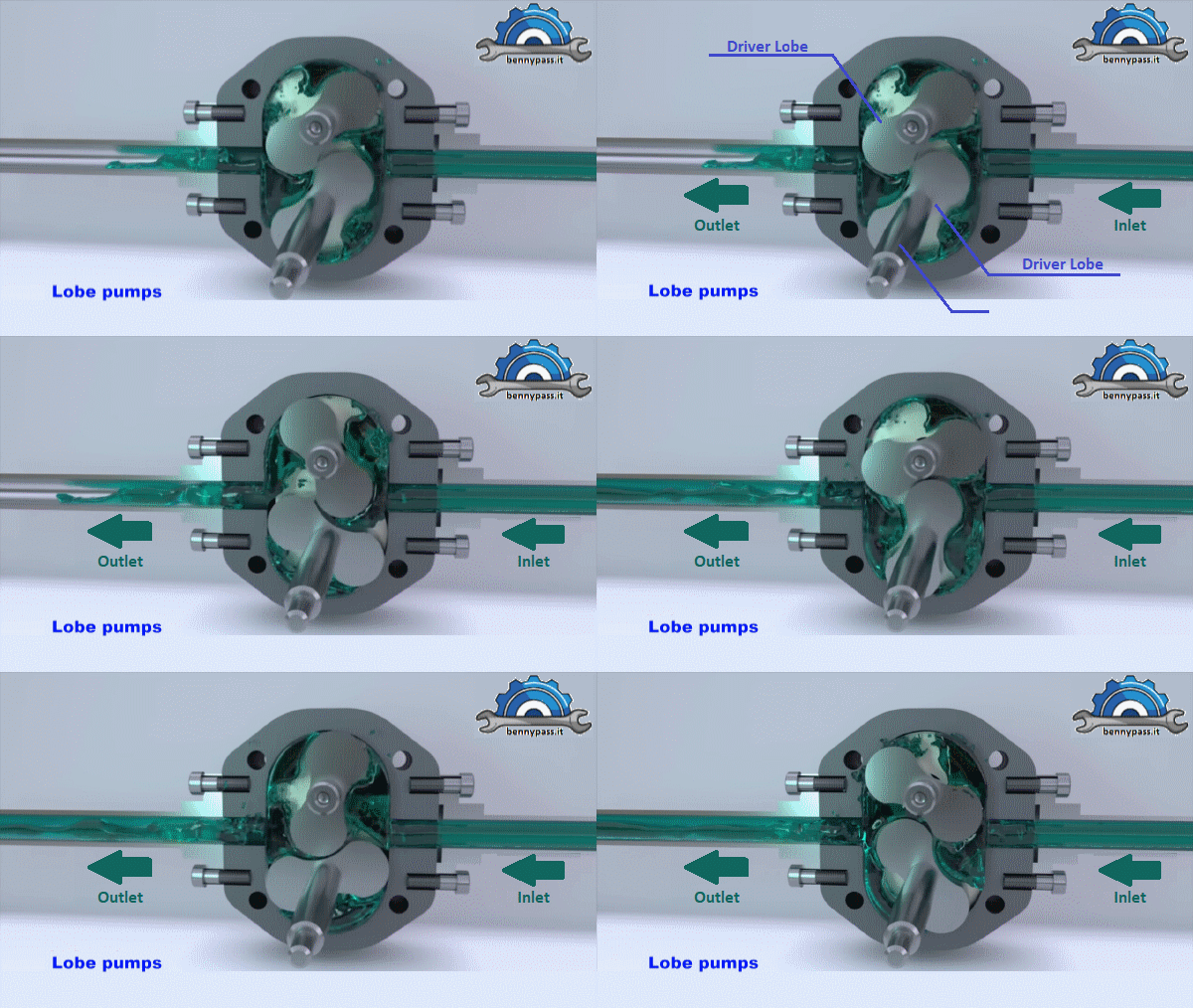
Rotary Lobe Pump Figure 2 below shows the Rotary Lobe Pump
Characteristic
For more details click here
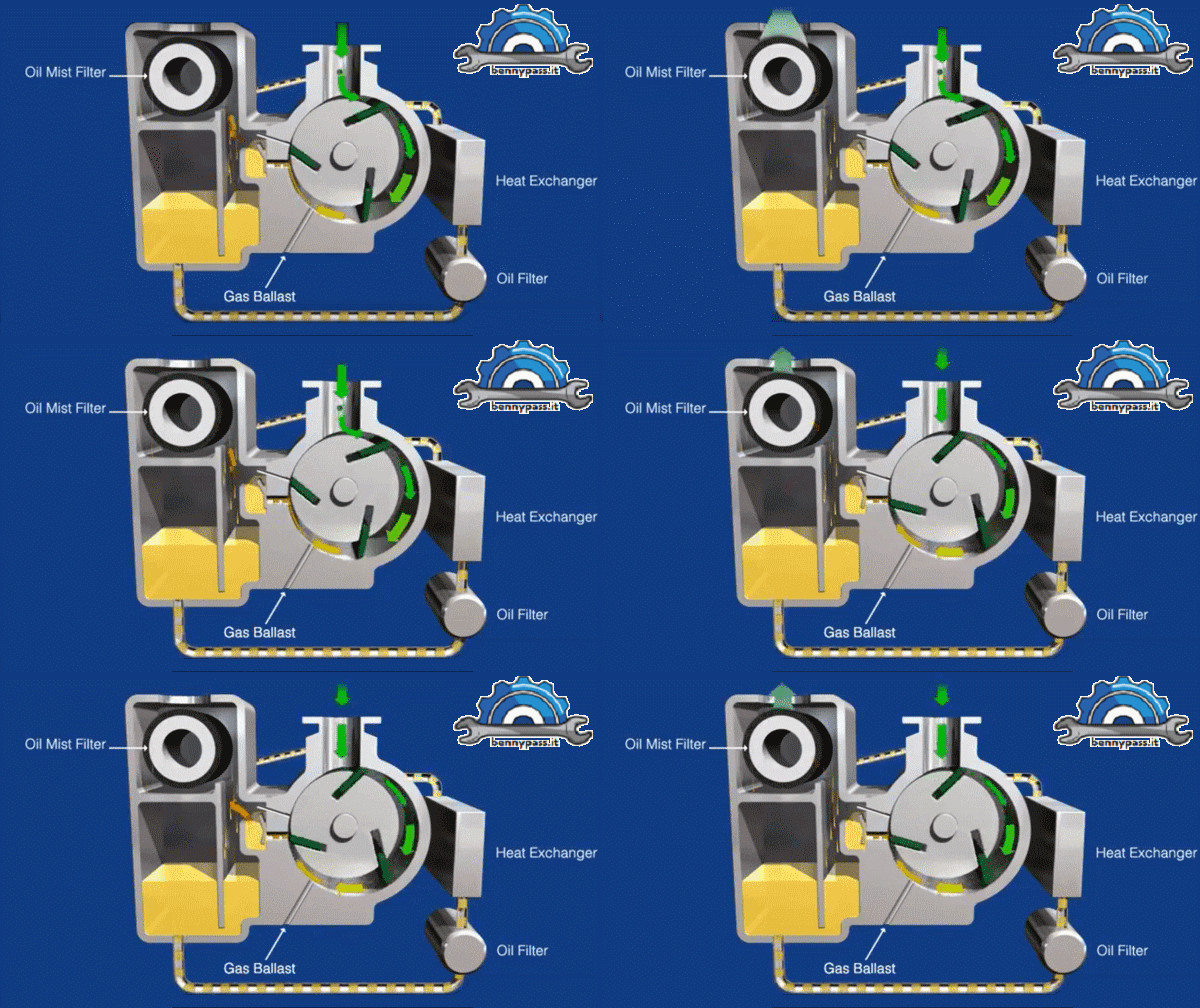
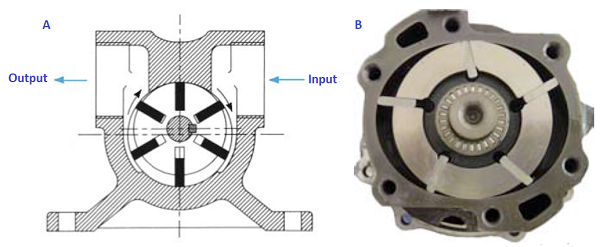
Rotary Vane Pump Figure 3 below shows the Rotary Vane Pump
Characteristic
Vane pumps, also known as a rotary vane or sliding vane pumps, operate via the positive displacement principle. Positive displacement pumps essentially move the fluid by trapping a fixed volume and forcing that trapped fluid into the discharge pipe. For more details click here
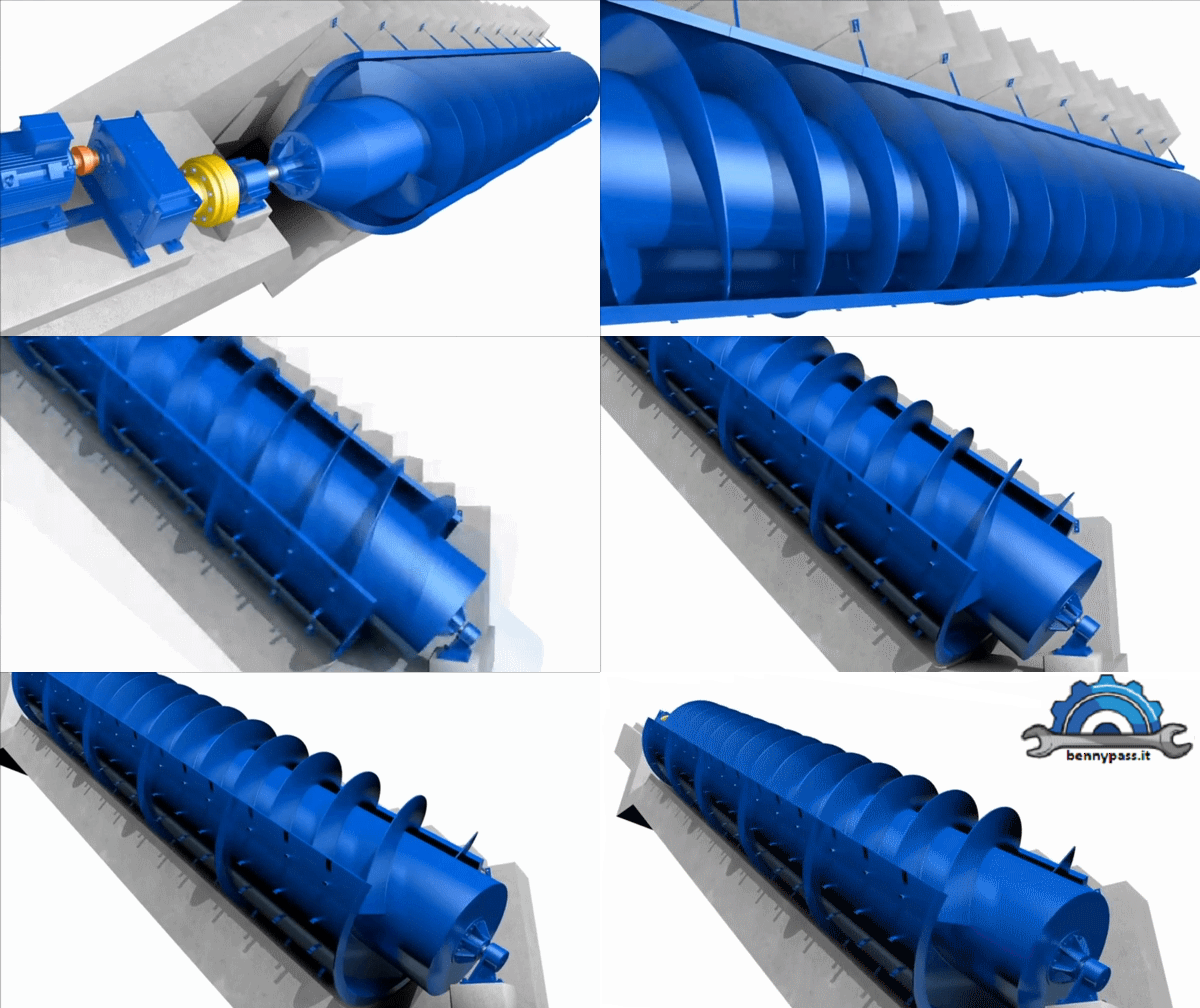
Rotary Screw Pump We certainly cannot forget who the inventor of this pump is the mythical and timeless Archimedes
Compared to centrifugal pumps, positive displacement pumps are the most effective ones, and screw pumps come under this classification. It came to know that conventional kinds of screw pumps were in availability in the ancient period itself, then after Archimedes pioneered the screw pump. The initially invented pumps consist of a cylinder, a revolving unit, and a spiral tube. With the advancements in technology, the operating methodologies also changed, and now they are serving wide applications in many industries. So, this article explains the concepts of the screw pump, its operating principle and the advantages of this apparatus. Figure 6 below shows the Rotary Screw Pump (Archimedes)
Characteristic
operating parameters
For more details click here Centrifugal Pump
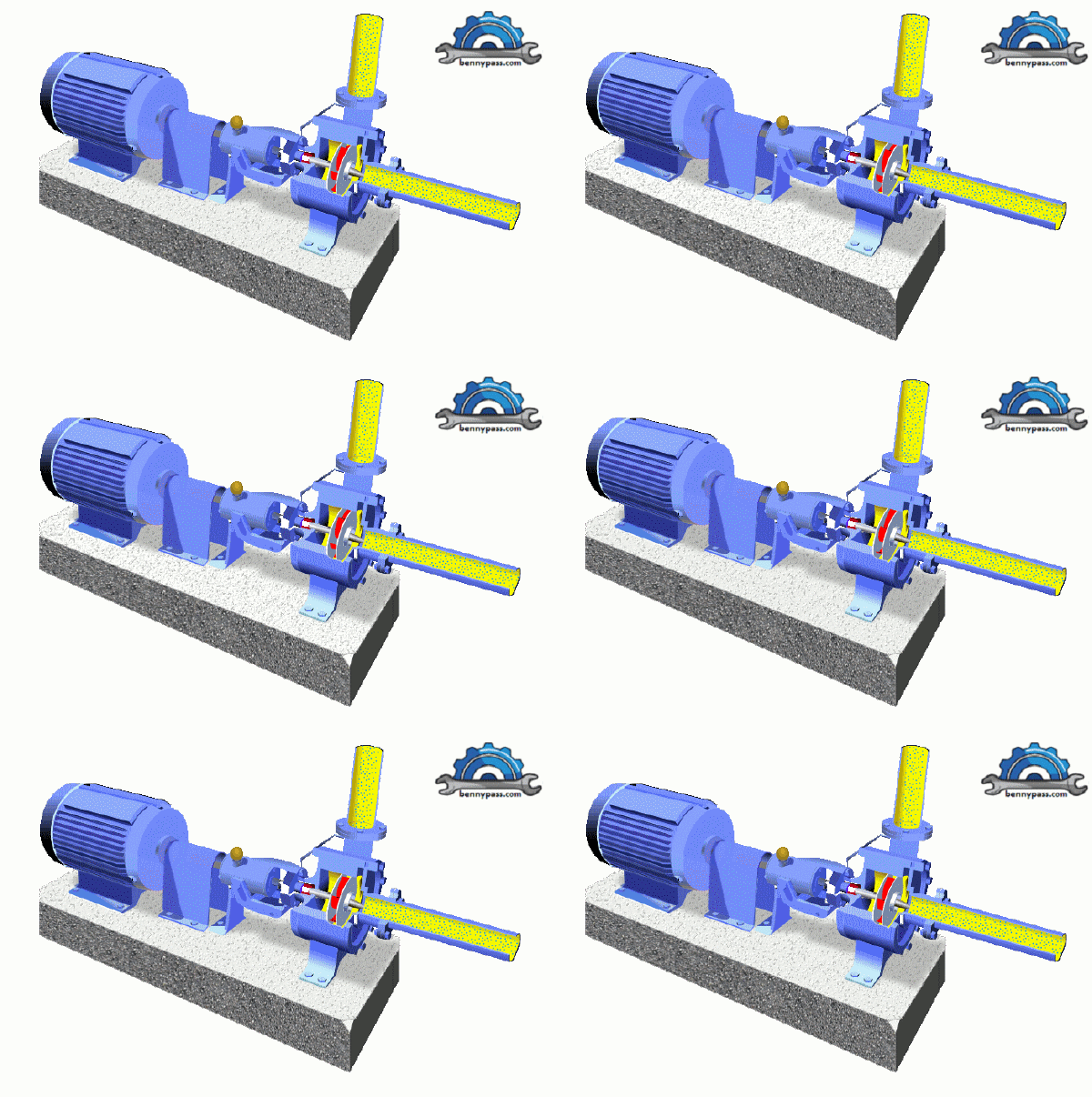
Centrifugal pumps basically consist of a stationary pump casing and an impeller mounted on a rotating shaft. The pump casing provides a pressure boundary for the pump and contains channels to properly direct the suction and discharge flow. The pump casing has suction and discharge penetrations for the main flow path of the pump and normally has a small drain and vent fittings to remove gases trapped in the pump casing or to drain the pump casing for maintenance. For more details click here
|
||||||||||||||||||||||||||||||



+(39) 347 051 5328
Italy - Kazakhstan


09.00am to 18.00pm
About
We offer the best and economical solutions, backed by 27+ years of experience and international standards knowledge, echnological changes, and industrial systems.
Our Services
Marketing Materials


Marketing Materials1


