
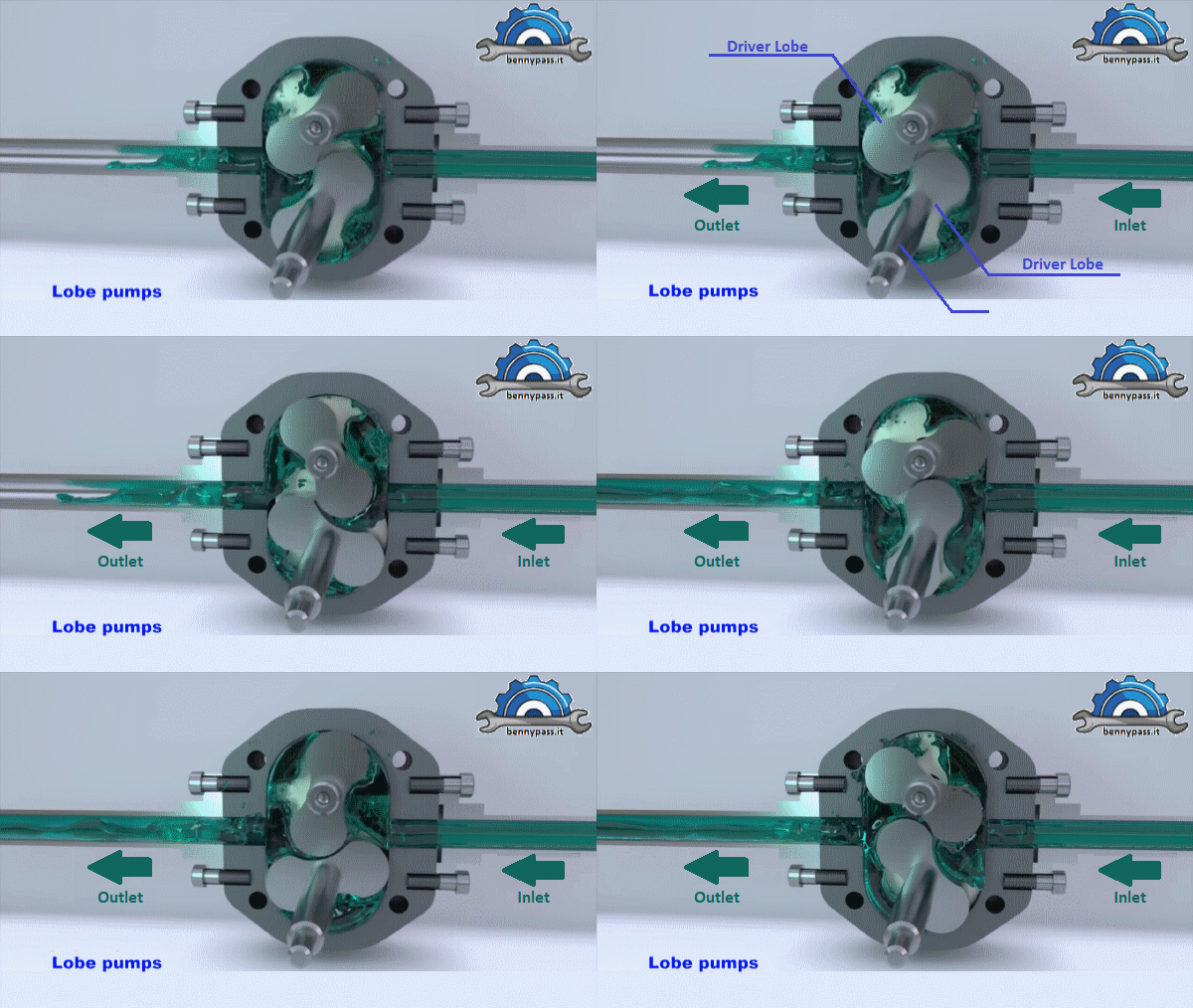
Working principle of Rotary Lobe Pump Rotary lobe pumps are popular in many industries, including food and drink, pharmaceutical, chemical and paper. The benefit comes from high efficiency, reliability, corrosion resistance, high sanitary characteristics and good clean-in-place and steam-in-place qualities. This means that cleaning occurs automatically without opening the parts (Cleaning Cycle). Thanks to their gentle pumping mechanism, lobe rotor pumps can handle solids without damaging or degrading the product and deal with very large particles compared to other positive displacement pumps. Figure 1 below shows its internal movement.
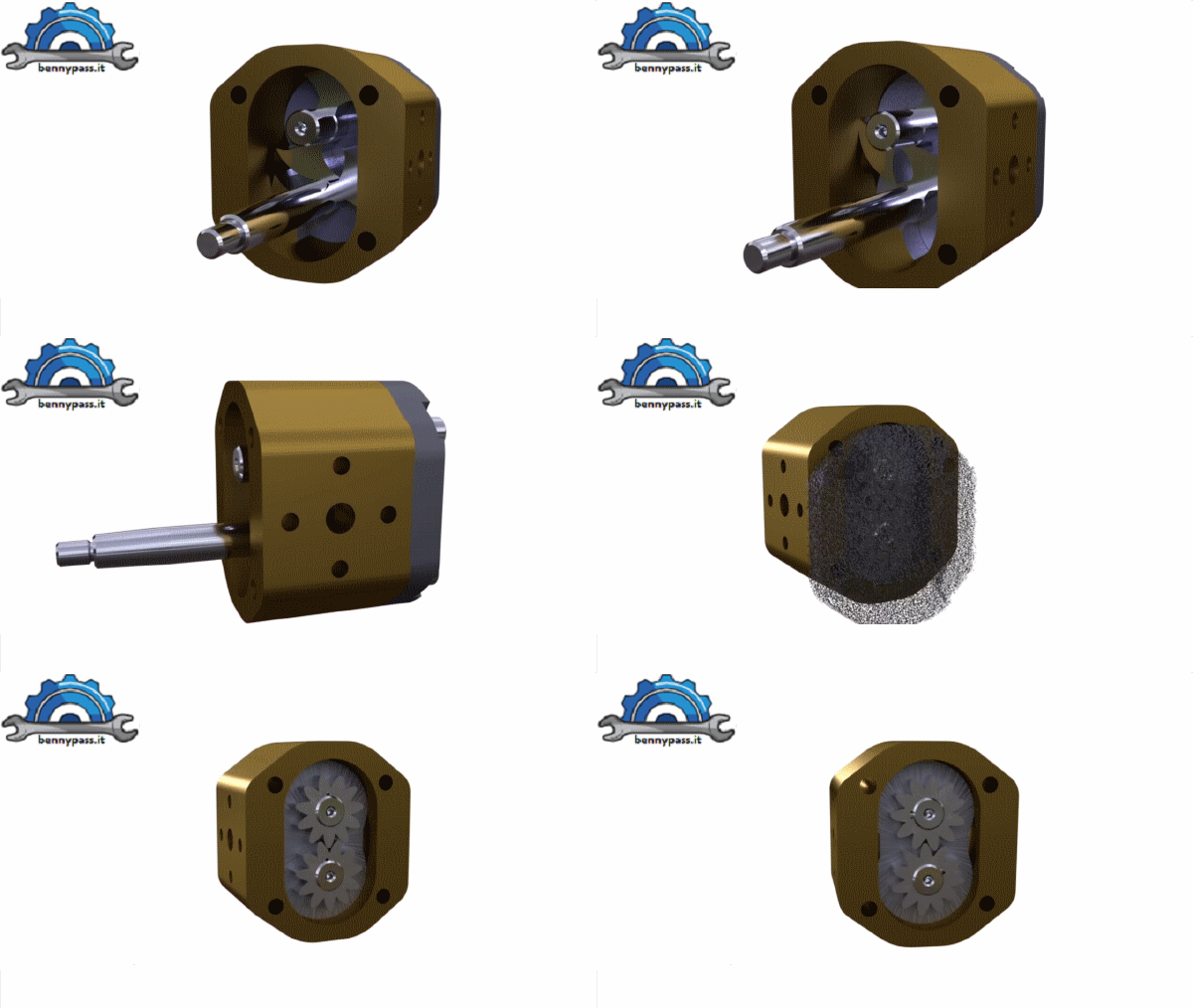
These pumps offer various lobe options, including single, bi-wing, tri-lobe (shown), and multi-lobe. Rotary lobe pumps are non-contacting and have large pumping chambers, allowing them to handle solids such as cherries or olives without damage. They are also used to handle slurries, pastes, and various other liquids. If wetted, they offer self-priming performance. A gentle pumping action minimises product degradation. They also provide reversible flows and can operate dry for long periods. Flow is relatively independent of changes in process pressure, so the output is constant and continuous. Rotary lobe pumps are suitable for industrial designs, including also sanitary designs. Regarding sanitary arrangement depends on service and specific sanitary requirements. These requirements include 3-A, EHEDG, and USDA. The manufacturer can tell you which certifications if any, their rotary lobe pump meets. How Lobe Pumps Work The location of Pump shaft support bearings is in the gearbox, and since the bearings are out of the pumped liquid. Pressure is limited by bearing location and shaft deflection. Lobe pumps are similar to external gear pumps in operation in that fluid flows around the interior of the casing. Unlike external gear pumps, the lobes do not make contact. Lobe contact will prevent by external timing gears located in the gearbox. The location of the Pump shaft support bearings is in the gearbox. Since the bearings are out of the pumped liquid, the pressure is limited by bearing location and shaft deflection. For more details see Figure 2 below
Lobe pumps are frequently used in food applications because they handle solids without damaging the product. Particle pumps can be much larger in lobe pumps than in other PD types. Since the lobes do not make contact and clearances are not as close as other PD pumps, this design handles low viscosity liquids with diminished performance. Loading characteristics are not as good as different designs, and insufficient suction ability. High-viscosity liquids require reduced speeds to achieve satisfactory performance. Reductions of 25% of rated speed and lower should be common with high-viscosity liquids. Industries in which a rotary lobe pump is commonly installed include:
Advantages
Disadvantages
|

+(39) 347 051 5328
Italy - Kazakhstan


09.00am to 18.00pm
About
We offer the best and economical solutions, backed by 27+ years of experience and international standards knowledge, echnological changes, and industrial systems.
Our Services
Marketing Materials


Marketing Materials1


